Braces definitely change how you need to floss, especially for kids. They create tricky spaces and surfaces where plaque and food can hide, making effective cleaning harder without the right tools and techniques. Using special flossing tools like floss threaders or water flossers can help you clean around brackets and wires more easily. Staying consistent and making flossing fun are key. Keep going to discover simple tips to make flossing easier and more effective during your orthodontic journey.
Key Takeaways
- Braces create additional surfaces, making traditional flossing less effective without specialized tools.
- Kids need engaging techniques and fun tools like floss picks to encourage consistent flossing with braces.
- Flossing around brackets and wires requires specific methods, such as floss threaders or water flossers.
- Proper technique and tools reduce discomfort, bleeding, and plaque buildup during orthodontic treatment.
- Professional guidance helps address challenges and ensures effective flossing habits are maintained for kids with braces.
How Braces Make Flossing More Important for Kids
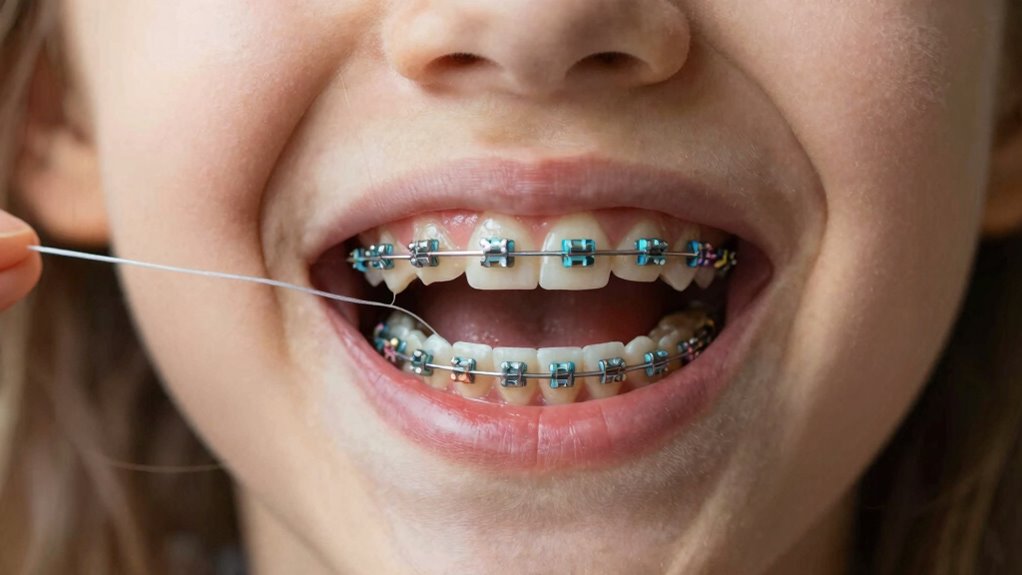
Have you ever wondered why flossing becomes even more important once your child gets braces? Braces create additional spaces and surfaces where food particles and plaque can hide, making orthodontic hygiene more challenging. It’s essential for plaque prevention, which keeps your child’s teeth and gums healthy during orthodontic treatment. It’s especially crucial to maintain good oral hygiene during orthodontic treatment to prevent complications. When you prioritize thorough flossing, you’re helping your child maintain good oral health and ensuring their braces work effectively. Remember, consistent flossing now sets the foundation for a healthier smile long after the braces come off. Additionally, using specialized tools like floss threaders can make the process easier and more effective for kids with braces. Proper flossing techniques can also reduce the risk of tooth decay, which is especially important with the increased plaque retention caused by braces. Ensuring proper dental care during orthodontics can also help prevent the need for additional dental procedures later on.
Choosing the Best Flossing Tools for Kids With Braces
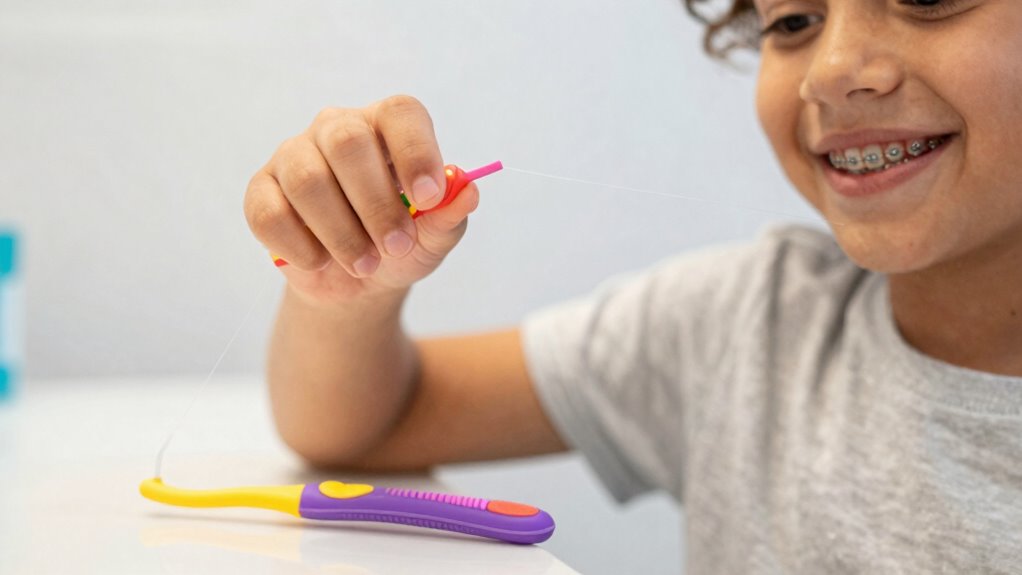
Choosing the right flossing tools can make a big difference in maintaining your child’s oral health with braces. Many flossing myths suggest that traditional floss isn’t effective, but specialized tools can overcome these challenges. For kids with braces, floss threaders, orthodontic flossers, or interdental brushes are excellent choices, making it easier to clean around brackets and wires. These tools help establish consistent oral hygiene habits and prevent plaque buildup. Incorporating effective cleaning techniques or landscaping techniques can also inspire a more engaging approach to daily routines, including oral care. By choosing the right flossing aids, you encourage your child to develop better oral hygiene habits and keep their smile healthy and bright.
Step-by-Step Flossing Guide for Braced Smiles
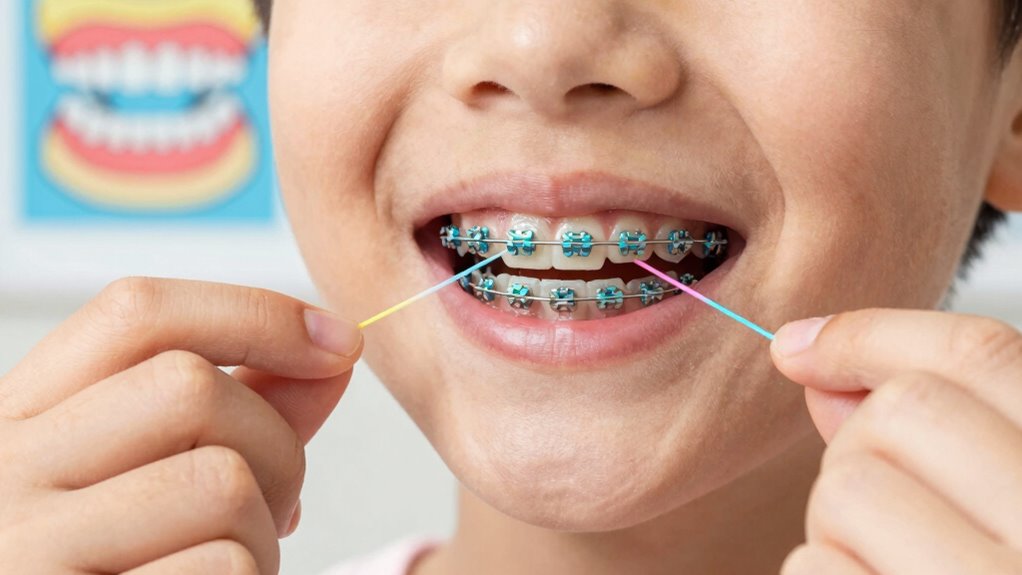
To keep your braces clean and healthy, mastering proper flossing technique is essential. Using the right tools, like floss picks or special orthodontic floss, makes the process easier and more effective. Let’s walk through a simple, step-by-step guide to help you floss confidently with braces. Incorporating durable materials in your flossing tools ensures they withstand regular use and effectively clean around brackets and wires. Paying attention to passive voice detection can also help you write more clearly and confidently. Proper piercing care and hygiene practices can also prevent infections that might complicate your oral health routine. Additionally, choosing high-quality floss with easy-to-grip handles can make the process smoother and more comfortable. Recognizing the signs of effective flossing can help ensure that your routine is thorough and beneficial.
Proper Flossing Technique
Flossing with braces might seem tricky at first, but mastering the proper technique guarantees your smile stays healthy and your braces stay in good shape. To develop good flossing habits, start by cutting about 18 inches of floss and winding most of it around your middle fingers. Gently slide the floss between your teeth, making sure to reach under the wires. Use a gentle sawing motion and curve the floss around each tooth in a C-shape. Move the floss up and down to remove plaque and debris. Be thorough but gentle to avoid damaging your gums. Incorporating sustainable textile care practices, such as choosing eco-friendly floss options, can also contribute to environmental conservation. Additionally, selecting trusted gold IRA markets can provide a secure way to invest in precious metals as part of your overall financial planning. Consistent flossing is essential for maintaining dental hygiene and preventing cavities and gum issues around your braces. Practicing proper flossing techniques can also help improve your overall oral health and make flossing easier over time. Remember, developing good oral hygiene habits early on can foster a positive attitude towards maintaining your dental health in the long run.
Tools for Braced Teeth
Using the right tools makes flossing with braces much easier and more effective. Start with floss specifically designed for braces, like floss picks or orthodontic flossers with stiff ends. These tools help you navigate around brackets and wires comfortably. When choosing toothpaste variety, opt for fluoride toothpaste that offers cavity protection and freshens breath. Using the appropriate tools also helps you maintain your desired flossing frequency—daily flossing is essential for preventing plaque buildup and cavities. Electric flossers or water flossers can make the process faster and gentler, especially for kids. Remember, the right tools not only make flossing easier but also more thorough, ensuring your braces stay clean and your smile stays healthy. Proper oral hygiene techniques are key to avoiding common issues like gum disease and decalcification. Incorporating good oral hygiene practices can further support your efforts and keep your mouth healthy. Additionally, understanding how to properly use orthodontic-friendly flossing tools can improve your overall oral care routine. Using specialized flossing tools designed for braces ensures that every nook and cranny is thoroughly cleaned, supporting healthier teeth and gums.
Common Flossing Challenges Kids Face and How to Fix Them
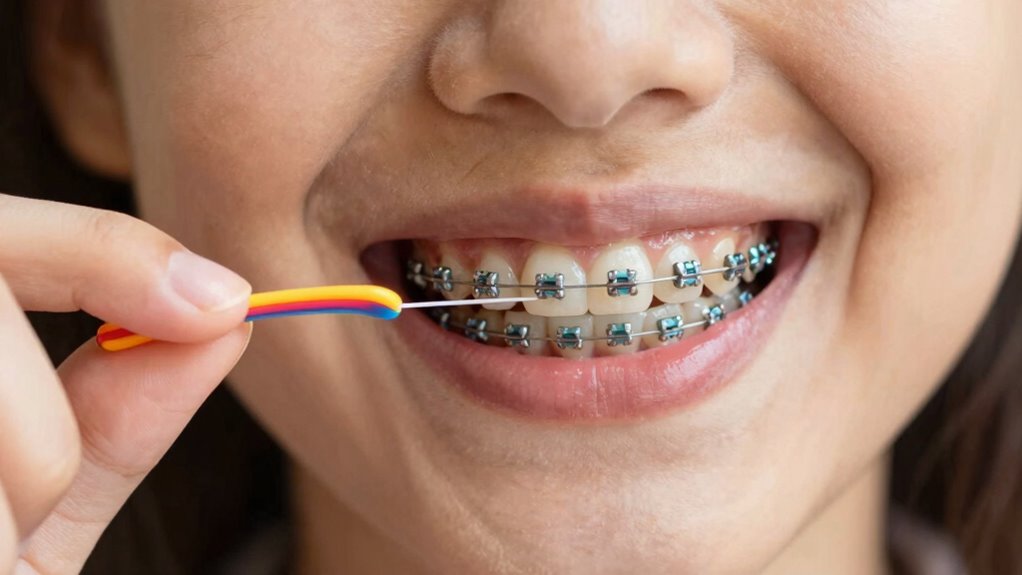
Many kids find flossing tricky because they struggle to reach all their teeth or keep the floss from slipping away. This can be frustrating and may hinder proper dental hygiene. To fix this, try using floss picks or water flossers, which are easier for small hands. Parental guidance is essential to teach correct technique and encourage consistency. Here’s a quick guide:
| Challenge | Solution | Tip |
|---|---|---|
| Floss slipping away | Use shorter floss sections | Keep a steady grip |
| Hard to reach molars | Use floss picks or water flossers | Focus on back teeth |
| Discomfort or bleeding | Be gentle and use soft floss | Rinse with water afterward |
Incorporating proper dental tools can also make the process smoother for kids, especially since some electric options resemble electric dirt bikes in their efficiency and ease of use. Understanding how contrast ratio impacts image quality can help in choosing the right tools and techniques for effective flossing. Additionally, exploring the variety of flossing methods can help identify the most comfortable and effective approach for each child. With patience and guidance, flossing becomes easier, helping maintain good dental hygiene.
Making Flossing Fun and Part of Your Daily Routine
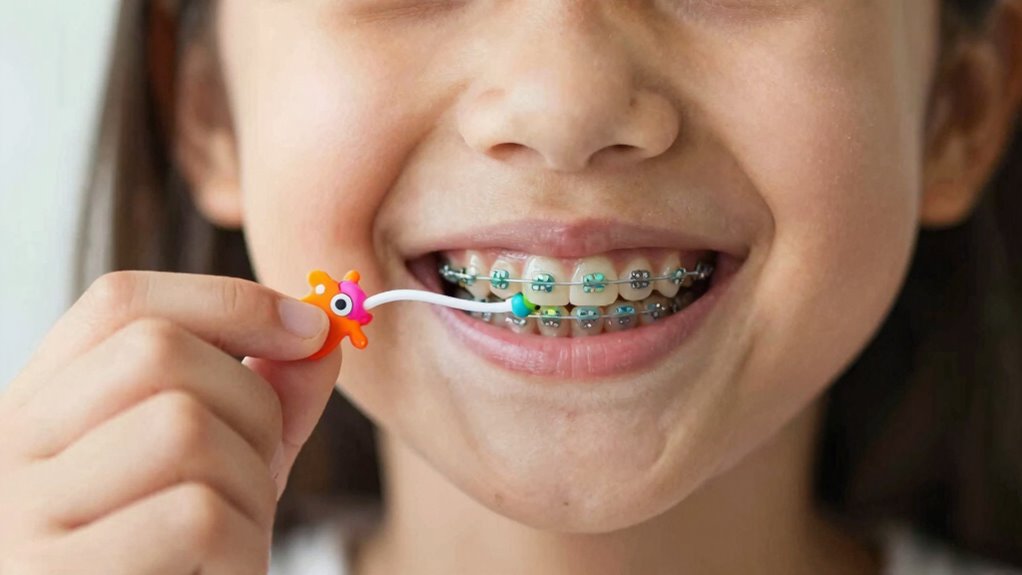
Turning flossing into a fun part of your child’s daily routine can make a big difference in their willingness to keep up with it. Use creative rewards like stickers or extra storytime to motivate them. Let your child choose colorful or themed floss picks to make the process more engaging. Address common flossing myths, like the idea that flossing is unnecessary or painful, by explaining how it keeps their teeth healthy and comfortable. Make it a bonding activity by singing songs or telling jokes while flossing. Consistency is key, so set a specific time each day—like after brushing—to build the habit. When flossing feels like a positive experience, your child will be more likely to stick with it long-term.
When to Talk to Your Dentist About Flossing Problems
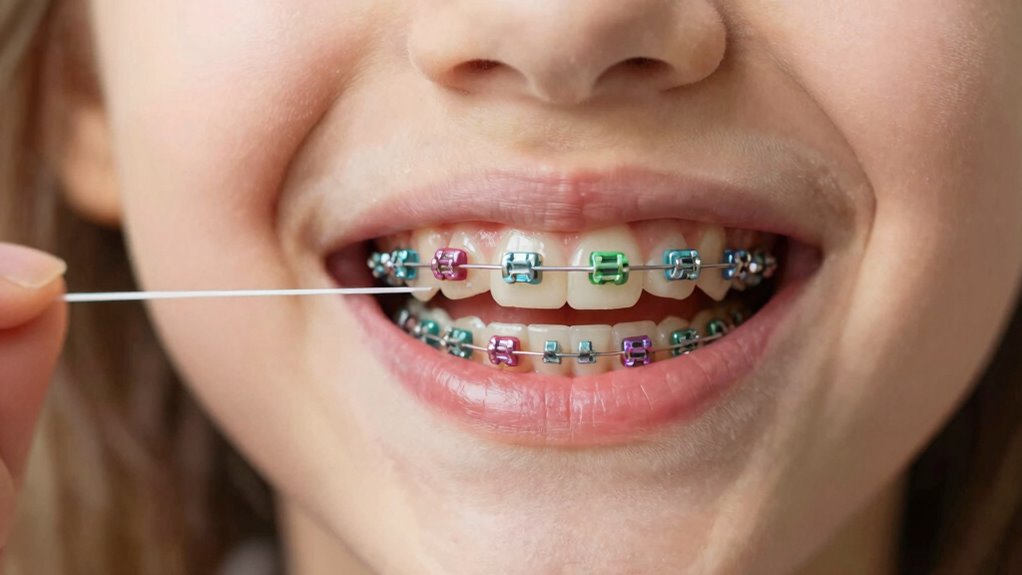
If your child consistently struggles with flossing despite your efforts, it’s important to know when to seek professional advice. Persistent flossing problems, especially if your child has dental anxiety or low flossing motivation, may need a dentist’s guidance. Consider talking to your dentist if:
- Your child experiences pain, bleeding, or discomfort even after trying different techniques.
- Flossing becomes a source of anxiety, making your child dread dental routines.
- Despite encouragement, flossing remains a challenge, impacting their oral health.
A dentist can suggest alternative tools or methods, and help address underlying issues like dental anxiety that hinder proper flossing. Early intervention ensures your child develops healthy habits and keeps their smile bright.
Frequently Asked Questions
Can Kids With Braces Floss Without Special Tools?
Kids with braces can floss without special tools, but it’s a bit tricky. You should try alternative flossing methods like floss threaders or water flossers, which make flossing with braces easier and more effective. These tools help clean around brackets and wires better than regular floss. Encourage your child to be gentle and patient. Regular flossing, even with braces, keeps their teeth healthy and prevents cavities.
How Often Should Kids With Braces Floss Daily?
Kids with braces should floss at least once a day to maintain good oral hygiene and prevent plaque buildup. You need to pay attention to diet restrictions, avoiding sticky or hard foods that can damage braces. Flossing daily helps remove food particles trapped between teeth and around brackets, reducing the risk of cavities and gum issues. Consistency is key to keeping teeth healthy and avoiding future dental problems.
Are There Specific Flossing Techniques for Different Types of Braces?
Think of orthodontic flossing as maneuvering a maze—you need different tools for different paths. For traditional braces, use orthodontic flossing with a floss threader to clean around brackets and wires. For Invisalign or removable appliances, regular flossing works well. Your approach should adapt to your braces type, ensuring thorough cleaning. Always follow your orthodontist’s guidance for the best flossing techniques to keep your teeth healthy and your smile bright.
What Are the Signs of Flossing Problems in Kids With Braces?
If your kid struggles with oral hygiene due to orthodontic challenges, watch for signs like swollen gums, bleeding when flossing, or persistent bad breath. These issues indicate flossing problems that can lead to plaque buildup and cavities. Encourage gentle flossing with braces and remind them to be thorough. Regular dental check-ups help identify and address any flossing difficulties early, ensuring they maintain healthy teeth and gums despite their orthodontic treatment.
How Can Parents Encourage Consistent Flossing Habits in Children With Braces?
Think of motivating your child as planting a garden where consistency blooms. You can encourage regular flossing by offering motivational rewards and providing parental supervision, turning flossing into a positive routine. Celebrate small victories to boost their confidence, and gently remind them if they forget. Your support creates a nurturing environment, making flossing with braces feel less like a chore and more like a step toward a sparkling smile.
Conclusion
Remember, flossing with braces is like tending a delicate garden—you need patience and the right tools to keep everything thriving. By making it a fun part of your daily routine, you’ll protect your smile and make flossing feel less like a chore. Keep up with your dentist’s advice, and soon, flossing will become second nature—your secret weapon in maintaining a healthy, radiant smile that blooms with confidence every day.