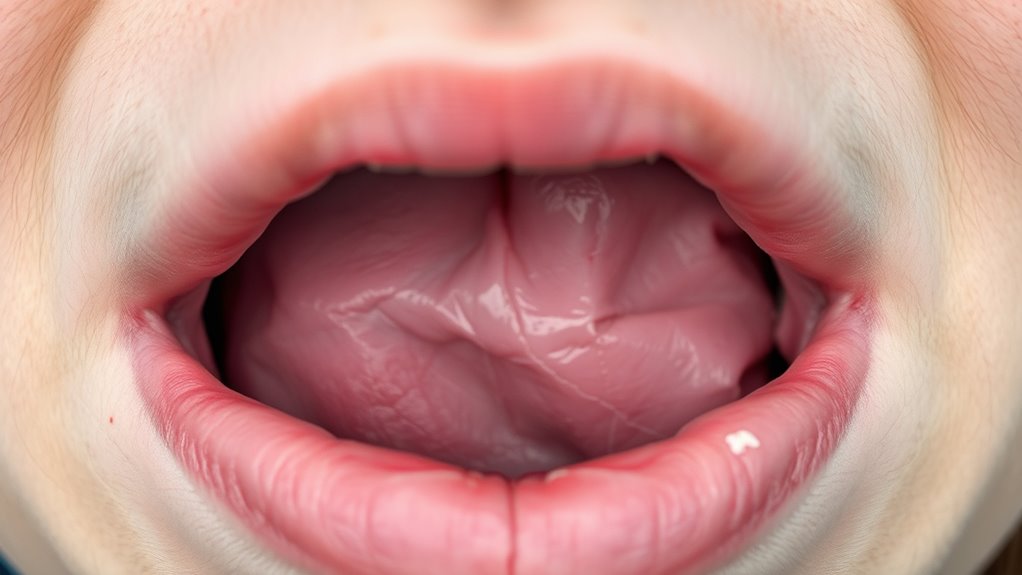

Exposure to cold, dry air can cause dehydration and irritation of your oral mucosa, leading to discomfort and potential tissue damage. As moisture evaporates from your mouth, you’ll notice dryness, soreness, and a higher risk of developing ulcers or cracks. This environment also reduces saliva production, increasing vulnerability to bacteria, cavities, and infections. To protect yourself, consider using humidifiers and staying hydrated. Discover more ways to guard your oral health in such conditions.
Key Takeaways
- Cold, dry air causes dehydration and soreness of the oral mucosa, weakening tissue defenses.
- Reduced humidity decreases saliva production, leading to dry mouth and difficulty swallowing.
- Mucosal irritation from moisture loss can result in redness, soreness, and small ulcers.
- Dry conditions promote bacterial growth, increasing risks of cavities, bad breath, and gum issues.
- Protective measures like humidifiers and hydration help maintain oral tissue health in cold, dry environments.
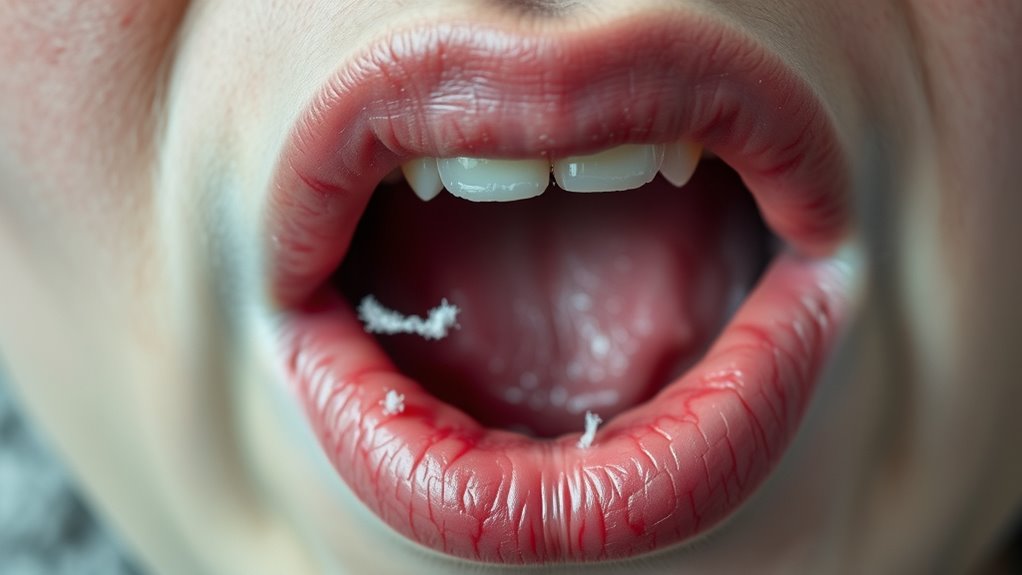
Cold, dry air can substantially affect your oral mucosa, leading to discomfort and potential health issues. When you’re exposed to low humidity and chilly temperatures, your mouth’s tissues become vulnerable to dryness and irritation. One of the most common problems you might notice is dry mouth, which occurs when saliva production decreases due to the chilly environment. Saliva plays an essential role in protecting your oral tissues, neutralizing acids, and washing away bacteria. Without enough saliva, your mouth feels parched, making it difficult to speak, swallow, or even taste properly. The sensation of dryness isn’t just uncomfortable; it can also set the stage for more serious issues.
Mucosal irritation is another significant concern when you’re exposed to cold, dry air. The thin lining of your oral cavity, known as the mucosa, is delicate and sensitive. Cold air strips away the moisture that keeps these tissues healthy and resilient, leading to redness, soreness, and even small ulcers. This irritation can make eating and drinking painful, especially when consuming hot, spicy, or acidic foods. Over time, persistent mucosal irritation can weaken your oral defenses, increasing the risk of infections or further tissue damage. If you notice a burning sensation or persistent soreness, it’s often a sign that your mucosa is struggling to cope with the dry environment.
Additionally, decreased saliva production can further compromise your oral health, as saliva’s antibacterial properties help prevent infections. When your oral mucosa gets irritated or dry, it also affects your overall oral health. Dry mouth creates an environment conducive to bacterial growth because saliva’s antibacterial properties are diminished. This can lead to an increased risk of cavities, bad breath, and gum disease. Additionally, mucosal irritation can cause cracks or fissures in the tissues, which not only hurt but also serve as entry points for bacteria. If you’re frequently exposed to cold, dry air—whether outdoors during winter or in air-conditioned spaces—you need to take steps to protect your mouth. Using a humidifier, staying well-hydrated, and avoiding excessive mouth breathing can help preserve moisture in your oral tissues.
Frequently Asked Questions
Can Cold, Dry Air Cause Long-Term Oral Health Issues?
Cold, dry air can lead to long-term oral health issues if you don’t take precautions. It often causes dry mouth and mucosal irritation, which may increase your risk of cavities, gum disease, and infections over time. To protect your mouth, stay hydrated, use a humidifier, and avoid prolonged exposure to harsh conditions. Regular dental check-ups also help catch any issues early, maintaining your oral health despite environmental challenges.
How Does Humidity Level Affect Oral Mucosa During Winter?
During winter, humidity fluctuations can markedly affect your oral mucosa. Low humidity dries out your mucosal tissues, reducing their resilience and making them more prone to irritation and cracking. When humidity levels drop, your mouth struggles to stay moist, increasing discomfort and the risk of infections. You can help maintain mucosal resilience by staying hydrated, using a humidifier, and avoiding prolonged exposure to cold, dry air.
Are There Specific Signs Indicating Damage From Dry Air?
You might notice dry mouth symptoms or mucosal dryness, often signs of damage from dry air. Coincidentally, these symptoms can occur after exposure to cold, dry conditions. If your lips crack, your tongue feels rough, or you experience soreness, these are clear indicators of mucosal dryness. Pay attention to these signs, as they suggest your oral tissues are struggling with the lack of moisture, risking further damage if unaddressed.
What Preventive Measures Protect Oral Mucosa in Cold Environments?
To protect your oral mucosa in cold environments, you should establish moisturizing routines like using lip balms or oral gels to keep tissues hydrated. Applying protective barriers, such as a scarf or mask, helps shield your mouth from dry, cold air. Additionally, stay well-hydrated and avoid irritants like tobacco or alcohol, which can exacerbate dryness and damage. These measures help maintain mucosal health and prevent discomfort.
Does Dry Air Affect Saliva Production or Composition?
Dry air acts like a relentless thief, stealing moisture from your mouth. It causes saliva viscosity to increase, making it thicker and less effective at protecting your mucosa. As mucosal hydration drops, your saliva’s ability to lubricate and neutralize acids diminishes. This dehydration can lead to discomfort, dry mouth, and increased vulnerability to irritation. Staying hydrated helps maintain saliva’s natural flow and preserves mucosal hydration, fighting back against the dry air‘s harsh grip.
Conclusion
If you don’t protect your mouth from cold, dry air, you might wake up with a cracked, bleeding mess that feels like you’ve been chewing on ice cubes all night. Ignoring these effects could turn your smile into a disaster zone, making everyday talking and eating unbearable. So, don’t risk turning your mouth into a battlefield—cover up, stay hydrated, and give your oral mucosa the love it desperately needs before it’s too late!