After your kids enjoy sticky treats like taffy, it’s important to encourage them to brush thoroughly to remove leftover sugar and residue. Show them how to focus on back molars and use fluoride toothpaste for extra protection. Flossing after brushing can also clean between teeth. Consider adding mouthwash to complete the routine. By establishing these habits, you help prevent cavities and get your kids on the path to healthier smiles. Keep going to learn more tips!
Key Takeaways
- Teach kids to brush thoroughly, focusing on back molars where sticky taffy often lodges.
- Use fun timers or songs to ensure brushing lasts at least two minutes after treats.
- Incorporate flossing to remove residue between teeth, especially after sticky sweets.
- Encourage rinsing with kid-friendly mouthwash to neutralize acids and clean residual sugars.
- Establish a consistent post-treat brushing routine to promote lifelong oral hygiene habits.
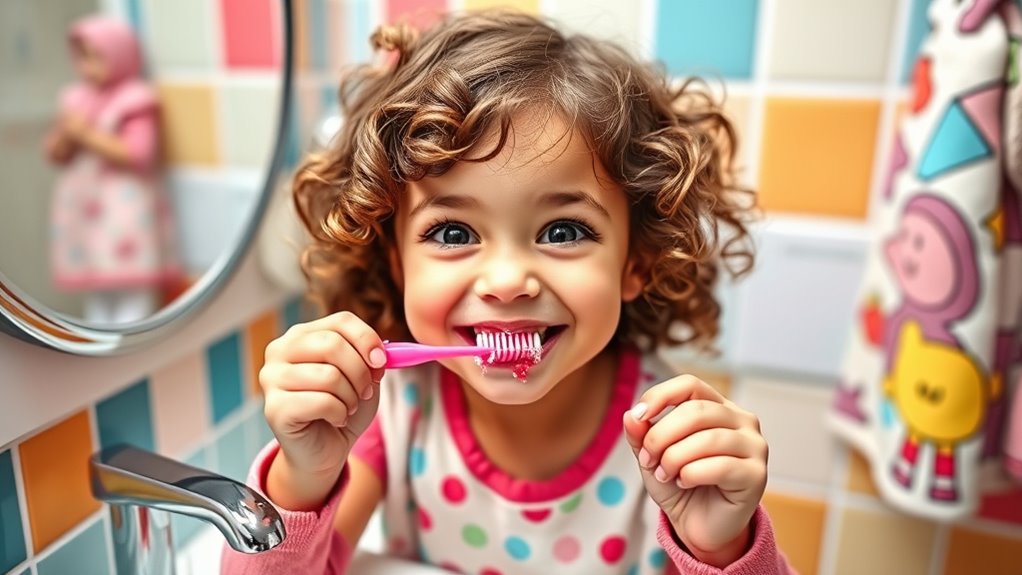
Have you ever wondered why sticky treats like taffy can be so tricky for kids to clean off their teeth? It’s because the gooey texture clings stubbornly to the enamel, making it easy for sugar and residue to linger. That’s why establishing effective post-treating routines is vital. You want your child to understand that brushing isn’t just about freshening their breath; it’s about preventing cavities and maintaining healthy teeth. After indulging in sticky sweets, encourage your kid to brush thoroughly, paying special attention to the back molars where taffy often gets stuck. Using a fluoride toothpaste can help strengthen enamel and fight off decay. Make brushing a fun, engaging activity, maybe by setting a timer or playing their favorite song so they know when the two-minute mark hits. Consistency is key, so ensure they brush after every sticky treat, not just sometimes. Regular use of fluoride can also promote collagen production, which contributes to healthier, more resilient skin around the mouth area.
In addition to brushing, you should incorporate flossing habits into their routine. Flossing is vital because it removes debris and plaque lodged between teeth where a toothbrush can’t reach effectively. Kids often find flossing tedious, so teach them how to do it gently but thoroughly. Show them how to slide the floss carefully between each tooth, curving it around the base to remove any stuck particles. Regular flossing helps prevent cavities and gum issues that can arise from the sugary, sticky residue left behind after treats like taffy. To instill good habits, make flossing a part of their daily routine, ideally right after brushing. Using flavored floss can make the experience more appealing, encouraging kids to stay consistent.
Mouthwash routines are also beneficial, especially after sticky treats. A kid-friendly mouthwash with a mild flavor can help rinse away residual sugars and neutralize acids that cause tooth decay. While mouthwash isn’t a substitute for brushing or flossing, it can be a helpful addition, making your child’s mouth feel fresh and clean. Teach your child to swish for about 30 seconds, ensuring they don’t swallow the rinse. Incorporate mouthwash into their routine to reinforce the importance of oral hygiene, especially after indulging in sticky sweets. When you combine brushing, flossing, and mouthwash routines, you create a holistic approach that keeps their teeth healthier and stronger. These habits, practiced regularly, will serve your child well as they grow, helping them enjoy treats without compromising their dental health.
Frequently Asked Questions
How Often Should Kids Brush After Eating Sticky Treats?
You should encourage your kids to brush their teeth at least twice a day, especially after eating sticky treats like taffy. Follow the frequency guidelines to prevent sugar impact from lingering on their teeth, which can cause cavities and decay. Remind them to brush thoroughly, focusing on those sticky areas, and consider rinsing with water afterward to help remove leftover sugar. Consistent brushing is key to maintaining healthy teeth.
What Types of Toothbrushes Are Best for Kids?
You might think all toothbrushes are the same, but the best for kids feature soft bristles and an ergonomic handle. These details matter because soft bristles gently clean without harming delicate gums, while an ergonomic handle makes brushing easier and more comfortable for small hands. Choosing the right toothbrush helps your child develop good habits, especially after sticky treats like taffy, ensuring their teeth stay healthy and clean.
Are There Alternative Ways to Clean Teeth After Taffy?
After taffy, you can help your kids clean their teeth by encouraging them to chew sugar-free gum with xylitol, which helps remove sticky residues and neutralize acids. Using sugar substitutes in gum or mouthwash can also support oral health. While brushing is ideal, these alternatives give extra protection when brushing isn’t immediately possible, reducing the risk of cavities and keeping your child’s smile healthy.
How Can I Motivate My Child to Brush Regularly?
You can boost your child’s brushing motivation by turning it into a fun, kid-friendly routine. Make brushing feel like a game or challenge, offering praise or small rewards for consistency. Let them choose their toothbrush or flavored toothpaste to increase engagement. Establish a regular schedule, so brushing becomes a natural part of their day. When kids see brushing as enjoyable and routine, they’re more likely to stick with it.
When Should I Start Teaching Kids Proper Brushing Techniques?
You should start teaching kids proper brushing techniques around age 2 or when they can comfortably hold a toothbrush. Use age-appropriate guidance to make learning fun and easy. Early dental education helps establish good habits and guarantees they understand the importance of oral care. By introducing brushing early, you set the foundation for a lifetime of healthy teeth and gums, making regular brushing a natural part of their routine.
Conclusion
Think of sticky treats like taffy as tiny invaders clinging to your child’s teeth. Brushing acts as the brave knight, sweeping away the stubborn residue and protecting their smile’s castle. When you teach them to brush after indulging, you’re equipping them with a powerful shield against cavities and decay. With each brushstroke, you’re guiding them to conquer the sticky invaders, keeping their smile shining bright like a fortress guarded by a vigilant hero.