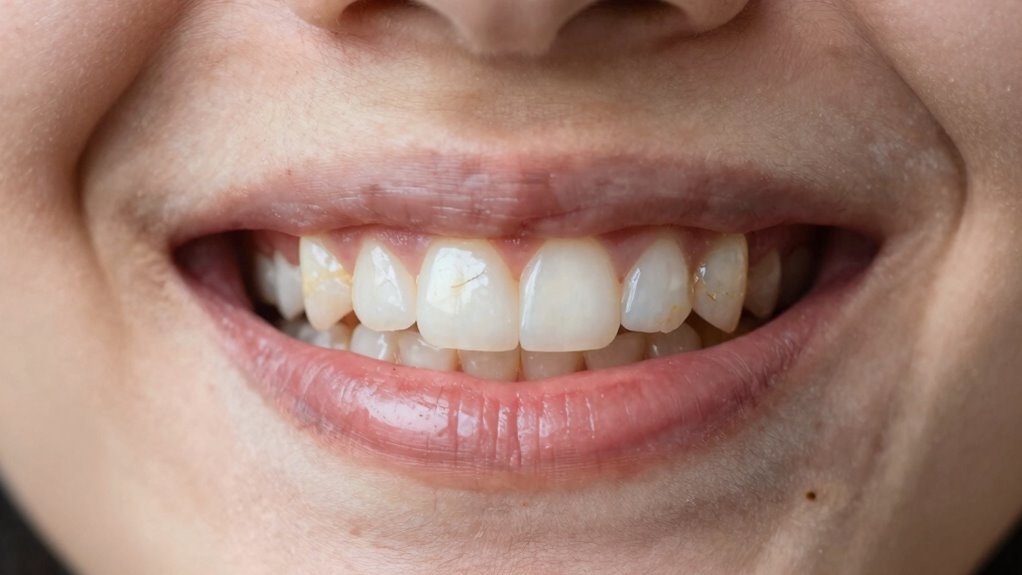

To spot enamel trouble before your summer vacation, look for signs like teeth appearing dull, transparent, or shiny at the edges. Pay attention to increased sensitivity to hot, cold, or sweet foods. Check for rough, uneven spots or chips that indicate enamel is thinning or wearing down. Use a mirror regularly to catch early changes. Addressing these issues early can help protect your smile during trips. Keep going to discover simple tips for maintaining strong enamel.

Turn the school run and nap time into listening time
- Thousands of audiobooks, podcasts and originals
- Listen on your phone, tablet or Echo — also offline
- Cancel anytime
Key Takeaways
- Look for teeth that appear dull, transparent, or have a shiny, glassy surface.
- Check for increased sensitivity to hot, cold, or sweet foods and drinks.
- Examine teeth for rough, uneven areas or chips indicating enamel thinning.
- Notice any color changes or discoloration on tooth edges.
- Be alert to discomfort or pain when eating or drinking, signaling enamel erosion.

As summer vacation approaches, it’s important to assess your dental health, especially your enamel, to avoid any surprises at the beach or on trips. Your enamel is the hard, protective outer layer of your teeth, and it plays a vital role in keeping your teeth strong and resistant to decay. When enamel begins to erode, your teeth become more vulnerable to sensitivity, discoloration, and cavities. Recognizing early signs of enamel trouble now can save you discomfort and costly dental visits later.
Prepare your smile for summer by checking your enamel health now to prevent surprises on your trip.
One of the most effective ways to protect your enamel is by considering dental sealants. These clear or tooth-colored coatings are applied to the chewing surfaces of your molars and premolars, creating a barrier against food particles and bacteria that can cause decay. If you already have dental sealants, check with your dentist to guarantee they’re intact and providing proper coverage. Sealants can help prevent enamel erosion by reducing the risk of cavities, especially if your enamel has weakened over time.
To spot signs of enamel erosion yourself, pay attention to changes in your teeth’s appearance and sensation. Do your teeth look dull, transparent at the edges, or have a shiny, glassy look? These are common indicators of enamel loss. You might also notice increased sensitivity to hot, cold, or sweet foods and drinks. If certain areas of your teeth feel rough or uneven, it could be a sign that enamel has worn thin or begun to chip away. Regularly examining your teeth in the mirror can help you catch these early signs before they worsen.
Certain habits can accelerate enamel erosion, so be mindful of your daily routines. Consuming acidic foods and beverages like citrus fruits, soda, or wine can weaken your enamel over time. Brushing too aggressively or using a hard-bristled toothbrush can also contribute to enamel loss. If you notice any of these issues, it’s wise to consult your dentist. They can recommend treatments or protective measures to reinforce your enamel before your summer plans unfold. Additionally, understanding the importance of biodiversity can inspire you to adopt more eco-friendly habits that also benefit your oral health, such as reducing waste from disposable dental products. Being aware of dental health practices can further empower you to take proactive steps to maintain your enamel’s integrity.
Maintaining proper hydration by drinking water throughout the day also plays a crucial role in enamel preservation, as it helps neutralize acids and wash away harmful substances. Prevention is key when it comes to enamel health. Using fluoride toothpaste helps strengthen enamel and makes it more resistant to acids. Drinking plenty of water, especially after meals, helps wash away acids and food particles that can erode your enamel. Incorporating proper oral hygiene into your daily routine, including flossing and gentle brushing, can significantly reduce enamel erosion risks. Scheduling a dental check-up before your vacation allows your dentist to evaluate your enamel’s condition and recommend protective solutions, such as fluoride treatments or sealants, if necessary. Taking these steps now guarantees that you can enjoy your summer adventures with a healthy, confident smile, free from enamel troubles.
As an affiliate, we earn on qualifying purchases.
Frequently Asked Questions
Can Enamel Damage Be Reversed Without Dental Procedures?
Enamel damage from erosion isn’t fully reversible without dental procedures, but you can support natural remineralization to strengthen your teeth. Using fluoride toothpaste, reducing acidic foods, and drinking plenty of water helps protect and remineralize enamel. Avoid aggressive brushing, which worsens erosion. While these steps won’t fully restore damaged enamel, they can halt further deterioration and improve overall enamel health, giving your teeth a better chance to recover naturally.
How Often Should I Visit the Dentist for Enamel Checkups?
Did you know that visiting the dentist twice a year reduces your risk of enamel erosion by 25%? You should see your dentist for enamel checkups every six months, as this supports enamel mineralization and overall oral health. Regular visits help catch early signs of damage, allowing you to maintain strong enamel. Coupled with good oral health habits, these checkups keep your smile healthy and summer-ready.
Are Whitening Products Safe for Weakened Enamel?
Whitening products can be risky if your enamel is weakened, as they may cause further damage or increase sensitivity. Before using them, consider professional dental stain removal options instead. If you choose OTC whitening, look for products with lower peroxide levels and consult your dentist. This cautious approach helps minimize whitening risks while protecting your enamel, ensuring your smile stays healthy and bright for summer vacation.
What Foods Can Help Strengthen Enamel Naturally?
Imagine you’re enjoying a crunchy apple, and it helps strengthen your enamel naturally. Foods rich in calcium and phosphates, like dairy products, are excellent for this. Natural remedies and dietary supplements, such as cheese or leafy greens, can boost enamel health. Incorporate these into your diet regularly to protect your teeth. Doing so can prevent future damage and keep your smile strong for summer adventures.
Is Tooth Sensitivity Always a Sign of Enamel Trouble?
Tooth sensitivity often signals enamel erosion, but it’s not always a sign of trouble. If you experience tooth pain when eating hot, cold, or sweet foods, it could be enamel weakening. Keep in mind, enamel erosion exposes dentin, increasing sensitivity. If sensitivity persists, visit your dentist. Addressing enamel erosion early can prevent more serious problems and keep your teeth healthy for summer vacations.
Conclusion
By catching the signs of enamel trouble early, you can prevent your smile from becoming a summer spoiler. Think of your enamel as the armor protecting your teeth—once it’s compromised, your smile’s defenses weaken. Regular check-ups, good oral hygiene, and paying attention to changes in color or sensitivity can keep your teeth strong and summer-ready. Don’t wait until problems multiply; act now and keep your smile shining brighter than the summer sun.
Fall Picks
fall essentials
As an affiliate, we earn on qualifying purchases.