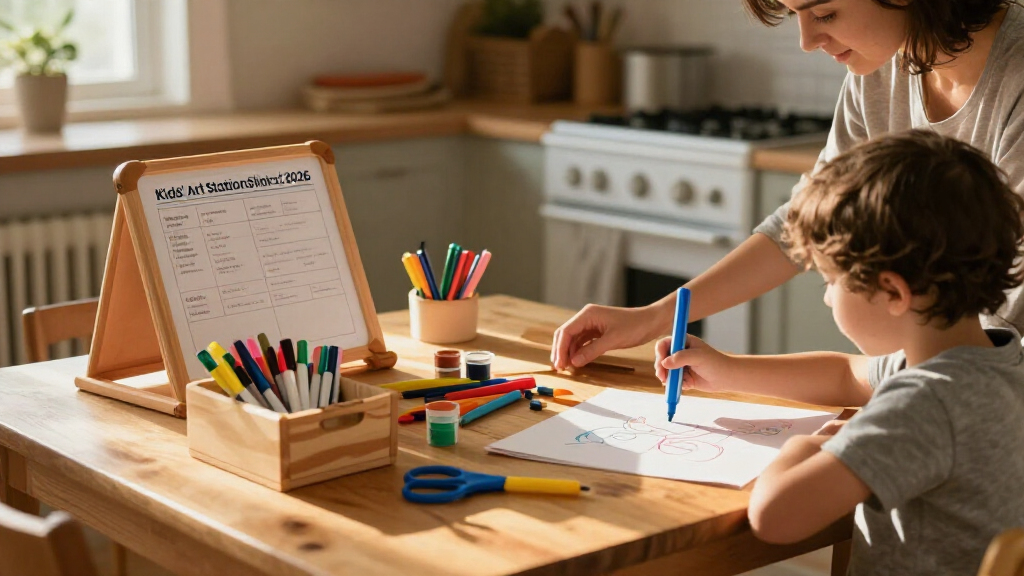

This checklist is for families putting together a kids’ art station, whether you’re starting from scratch or filling a few gaps. It covers everyday supplies and practical setup ideas, with each section focused on choosing a useful fit for your child and workspace.

Turn the school run and nap time into listening time
- Thousands of audiobooks, podcasts and originals
- Listen on your phone, tablet or Echo — also offline
- Cancel anytime
The sections follow the main jobs an art station supports: coloring, drawing, shaping, cutting, and storing supplies. Some picks have a named product; others offer buying advice without a specific product recommendation.
Use the list as a starting point, then check each item against your child’s age, how they like to create, and the space available. For products whose names suggest a different use than the section, check the intended use before adding them to the station.
Washable Markers
Markers make it easy to add bold color, and a washable option can be appealing for a shared art area. The listed pick is called “Washable Temporary Hair Color Spray for Kids and Adults”, which describes a spray rather than markers. That mismatch matters: a product name alone does not establish that it works as a drawing marker or belongs on paper. Check the package directions and intended surfaces before considering it for this slot.
A common buying mistake is relying on one word in a product name, such as “washable,” without checking what the item is designed to do. For markers, look for a clearly labeled marker set and confirm the washable claim, recommended age, and cleanup directions. Consider whether the tips and barrels are comfortable for your child to hold, and whether the set includes colors suited to their projects. Keep the art station’s work surface and nearby materials in mind, too: a product intended for hair may have different use and cleanup instructions than drawing supplies. Choose paper-ready markers that match the child and the activity.
What to look for:
- Packaging that identifies the item as markers for drawing
- Washability and cleanup directions for the surfaces you use
- Age guidance and any stated supervision needs
- A grip and tip style your child can handle
- A color selection suited to their usual projects
Washable Temporary Hair Color Spray for Kids and Adults

Add vibrant temporary color, highlights, or playful accents to dry, styled hair with an easy spray-on application. The quick-drying color is designed to reduce transfer after drying and washes out with shampoo.
Pros:
- Easy spray-on application
- Washes out with shampoo
- Quick-drying formula designed to reduce transfer
- Suitable for costumes, parties, cosplay, and themed events
Cons:
- Temporary color is not intended to last beyond washing
- No product size or specific color details provided
Best for: Families seeking a marker set labeled for paper use
Not ideal for: Anyone treating the listed hair color spray as a marker
Bottom line: Confirm the product is intended for drawing before placing it in a marker slot.
Colored Pencils
Colored pencils offer a straightforward way to add color to drawings, and this slot has no specific product pick. Choose a set based on how your child uses pencils: younger artists may benefit from barrels that are easy to grip, while children making detailed drawings may prefer a pencil they can control precisely. Check the age guidance and handling instructions on the package.
A frequent mistake is selecting a set without considering the paper and the child’s grip. Very smooth or thin paper may not suit the pressure a child uses, and a pencil that feels awkward can make longer drawing sessions frustrating. Look at the pencil shape and size, and consider whether sharpening and storage will be manageable at your station. If the pencils will be shared, a set that is easy to identify and return to its container can help keep the workspace orderly. Match pencil feel to the child and the kinds of projects they enjoy, rather than choosing by color count alone.
What to look for:
- Age guidance and safe handling instructions
- A barrel shape and size comfortable for the child’s grip
- Pencils suited to the paper used at the art station
- A sharpening method an adult or child can manage
- A case or container that keeps pencils together
Drawing Paper Pad
A paper pad gives children a dedicated place to draw and helps keep loose sheets together. The listed pick is called “Drawing Glove, 3-Layer Palm Rejection Digital Art Glove for Graphic Ta”, which describes a glove, not a paper pad. Its name does not establish that it includes paper or serves as a drawing surface, so confirm the product’s contents and intended use before assigning it to this slot.
When buying a pad, check its dimensions against the table or tray where your child will draw, as well as how they plan to use it. A compact pad may be easier to store; a larger one can give broad gestures more room. Check the product description for the paper type and whether it suits the materials your child will use. A common mistake is choosing a pad based on its title alone without checking its contents, size, or stated use. If the child draws digitally, a glove may have a separate role, but it does not replace a paper pad based on the name provided. Prioritize paper dimensions and stated use that fit the station.
What to look for:
- A product clearly identified as a drawing paper pad
- Dimensions that fit the work surface and storage space
- Paper details that match the intended drawing materials
- A binding or sheet format that suits how the child works
- Clear confirmation of what is included in the package
Drawing Glove, 3-Layer Palm Rejection Digital Art Glove for Graphic Tablet, Arti

This drawing glove features palm rejection and a comfortable design, making it ideal for digital and traditional art. It reduces friction during drawing and is suitable for both hands, providing a clean and smooth experience for artists and hobbyists.
Pros:
- Palm rejection for smooth drawing experience
- Comfortable fit with ergonomic design
- Suitable for both digital and traditional art
Cons:
- Limited to extra small size in this package
- Only available in one size per package
- May not fit larger hands comfortably
Best for: Children who need paper for drawing at the station
Not ideal for: Anyone expecting the listed glove to provide drawing paper
Bottom line: Check the product contents and choose a pad sized for the child’s workspace.
Modeling Clay
Modeling clay gives children a hands-on way to make shapes and small creations. The listed pick is “Modeling Clay Kit, 24 Colors Air Dry Clay”, which identifies itself as an air-dry clay kit. Before choosing it, read the package directions to understand how it is meant to be shaped, handled, and left to dry. The product name alone does not specify age suitability or other handling details.
A common mistake is planning projects without checking the drying and storage instructions. Air-dry materials may need a place to sit undisturbed, so consider where finished pieces can remain and how opened clay should be stored. Check the recommended age, any supervision guidance, and whether the kit’s contents suit your child’s planned projects. Think about cleanup, too: a washable work surface or a dedicated mat can help define the clay area. Make sure the child can reach and return the materials safely, and keep the project size appropriate for the available workspace. Good drying and storage planning helps the clay fit into a busy art station.
What to look for:
- Directions that explain shaping, drying, and storage
- Age guidance and any supervision instructions
- Colors and included materials suited to planned projects
- A suitable place for creations to dry undisturbed
- A work surface and cleanup plan for clay activities
Modeling Clay Kit, 24 Colors Air Dry Clay

This air dry modeling clay kit includes 24 colors, tools, animal accessories, and a project booklet, making it ideal for creative arts and crafts for kids and adults. The soft, non-messy clay dries naturally within 24-48 hours, perfect for sensory play, school projects, and gifts.
Pros:
- Complete kit with a variety of colors and accessories for creative projects
- Soft, non-messy, and easy to use for all ages
- Air dries naturally within 24-48 hours, no baking required
- Great for sensory play, school projects, and gifts
Cons:
- Clay needs 24-48 hours to fully dry, which may require planning
- Limited to air drying, not suitable for long-term durability outdoors
- Some users may find the clay too soft for detailed sculpting
Best for: Children who want to shape and keep clay creations
Not ideal for: Workspaces without room to leave projects undisturbed
Bottom line: Read the kit directions and plan a safe place for clay projects to dry.
Child-Safe Scissors
Scissors let children cut paper for collages, crafts, and other projects, but this slot has no named product pick. Choose scissors designed for the child’s age and ability, and follow the package’s supervision guidance. Consider whether your child is right- or left-handed and check which hand the scissors are designed to fit.
A common mistake is choosing scissors that are too large or uncomfortable for small hands. Check the handle opening and how easily the child can open and close the blades under supervision. Read the product information for intended materials and safety directions; do not assume that a “child” label means the scissors suit every age or activity. Store them where an adult can manage access, and establish a clear spot for returning them after use. If several children share the station, choose a size and design that the intended users can handle. The right choice supports comfortable, supervised cutting at the art table.
What to look for:
- Age guidance and stated supervision requirements
- Handle size suited to the child’s hands
- A design that fits the child’s dominant hand
- Materials the scissors are intended to cut
- A storage spot that supports adult supervision
Art Supply Organizer
An organizer gives supplies a home and can make it easier for children to find and put away their materials. The listed pick is “SYKIARIOL Rolling Cart with Drawers, Craft Organizers and Storage, Gre”, which describes a rolling cart with drawers. Check the full product details for its dimensions, drawer layout, and intended use so you can tell whether it fits your station and the supplies you want to store.
A common mistake is choosing storage before measuring the available space or considering who will use it. Measure the spot where the cart will sit and check that there is room to move it if needed. Think about which supplies belong in drawers and whether your child can reach them comfortably. Check product information for assembly and any stated use guidance, and consider what should be kept out of a child’s reach. A cart can help group materials, but a layout only works if everyday supplies are easy to put back. Organize by activity or material, and keep frequently used items accessible to the child.
What to look for:
- Cart dimensions that fit the intended location
- Drawer layout suited to the supplies you need to store
- Easy access for the child who will use the art station
- Product details on assembly and intended use
- A place for the cart that keeps the workspace clear
SYKIARIOL Rolling Cart with Drawers, Craft Organizers and Storage, Green

This versatile rolling cart features 8 spacious drawers with a wooden tabletop, providing ample storage for crafts, office supplies, and more. Made of metal, wood, and plastic, it offers durability, mobility, and easy organization for various spaces.
Pros:
- Ample storage with 8 drawers for different categories
- Sturdy and durable with water and rust-resistant frame
- Easy to move with lockable, smooth-rolling wheels
- Versatile for use in various rooms and for multiple purposes
Cons:
- Assembly may require time and effort despite instructions
- Plastic drawers might be less durable over long-term use
Best for: Families who want drawers for organizing craft supplies
Not ideal for: Art stations without room for a rolling cart
Bottom line: Check the cart’s dimensions and drawer layout against your space and supplies.
Build the station in a practical order: start with the supplies your child uses most, then add a comfortable drawing surface and a place to store materials. Next, choose cutting and modeling supplies that match the child’s age, abilities, and available workspace. For the listed spray and glove, confirm their intended use before treating them as markers or paper.
You do not need to assemble everything at once. Begin with a few well-matched materials, make room for your child to reach and return them, and adjust the setup as their projects change. A comfortable, easy-to-use station can make creative time simpler for the whole family.