
Social media has raised your expectations for the Tooth Fairy’s visits by showcasing elaborate displays that set a high bar. Seeing others’ impressive surprises online makes simple gestures feel inadequate, pushing you to up your game. You might feel pressure to create magical scenes that match viral trends, but the real magic lies in love and effort. If you want to learn ways to keep the magic meaningful without stress, keep going.

Turn the school run and nap time into listening time
- Thousands of audiobooks, podcasts and originals
- Listen on your phone, tablet or Echo — also offline
- Cancel anytime
Key Takeaways
- Social media showcases elaborate Tooth Fairy visits, raising children’s expectations for more impressive surprises.
- Parents feel pressured to replicate viral displays, often increasing the scale of their efforts.
- Viral trends create a perception that extraordinary gestures are the standard, heightening perceived norms.
- Children compare their experiences to curated online posts, leading to inflated expectations.
- The focus shifts from love and effort to impressiveness, risking the true magic of simple, heartfelt gestures.
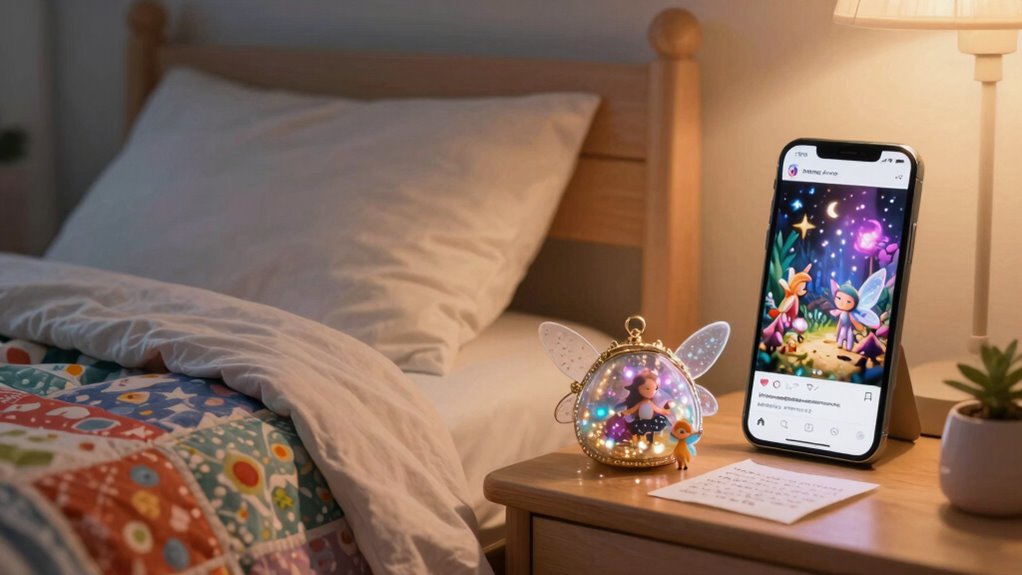
Social media has transformed how children and parents perceive the Tooth Fairy’s role, often setting lofty expectations based on curated posts and images. On platforms like Instagram and TikTok, you see countless stories of elaborate Tooth Fairy visits—sparkling dollar bills, tiny notes, themed surprises—that create a standard that feels almost impossible to meet. These viral trends quickly spread, making it seem like everyone’s child is waking up to a fairy-crafted spectacle. As a parent, you might feel pressured to keep up or wonder if your simple approach will disappoint your child when they compare your efforts to what they see online.
This influence isn’t accidental. Viral trends shape what many families think is normal or expected. A quick scroll can reveal a flood of posts showcasing fairy dust, miniature gifts, or elaborate setups, fueling the idea that the Tooth Fairy must be extravagant. When your child’s friends or classmates post similar images, it can intensify their curiosity and expectations. This is where parental influence becomes particularly powerful. Your own social media activity, whether you realize it or not, can feed into these perceptions. If you’ve shared photos of impressive Tooth Fairy displays or read trending ideas online, your child might come to expect a similar experience from you. Even if you prefer a simple approach, the pervasive nature of these viral trends can make you question whether your efforts are enough.
You might find yourself feeling the need to go bigger, adding more magic and surprise to meet these online standards. But it’s essential to remember that the true magic of the Tooth Fairy lies in the joy and comfort you provide, not in the size of the surprise. The influence of social media often blurs the line between what’s meaningful and what’s merely impressive. Recognizing that your involvement and the love you put into these moments matter more than flashy displays can help you set realistic expectations. Understanding social media’s impact can help you maintain perspective and focus on what truly matters—your child’s happiness and trust. Ultimately, kids appreciate the thought behind the gesture, not the extravagance.
The true magic is in your love and effort, not flashy surprises or social media trends.
While viral trends can inspire fun ideas, they shouldn’t define your approach. Instead, use them as creative sparks rather than rules. Your child’s sense of wonder and trust in you will grow when they see that the magic doesn’t rely on elaborate setups but on your genuine effort. Remember, social media shapes perceptions, but your influence and love create lasting memories. Viral trends influence perceptions, and being aware of this can help you keep your focus on creating meaningful experiences that will foster your child’s trust and joy.
Products Worth Considering

Garmin Venu 3 Fitness Smartwatch, 45 mm, Black

Oral-B iO Series 3 Rechargeable Electric Toothbrush for Adults, Black, with 2 Brush Heads and Travel Case

OMRON VIVA 360+ Body Composition Monitor and Smart Scale
As an affiliate, we earn on qualifying purchases.
Frequently Asked Questions
How Do Parents Foster Imagination About the Tooth Fairy?
You foster imagination about the tooth fairy by engaging in fantasy reinforcement and imaginative storytelling. Share creative tales about her magical world, perhaps describing her tiny fairy friends or secret fairy homes. Leave small, enchanted surprises or notes that spark curiosity. Encourage your child to ask questions and imagine her adventures. This active storytelling makes the experience more magical, helping them believe and develop their imagination while strengthening your bond.
Are There Cultural Differences in Tooth Fairy Traditions?
You’ll find that cultural variations in tooth fairy traditions are fascinating. For example, in some countries like Spain, kids find a mouse or rat instead of a fairy. Global traditions vary widely, influenced by local folklore and customs, showing how different cultures celebrate childhood milestones. These differences highlight the rich diversity and creativity around the world, reminding you that the magic of childhood is uniquely shaped by your family’s cultural background.
How Do Social Media Trends Influence Children’s Beliefs?
You see social media trends shape children’s beliefs by exposing them to virtual reality experiences and influencer culture that make fairy tales more vivid and believable. Kids might start to expect immersive stories or magical interactions, blurring the lines between fantasy and reality. Influencers sharing fairy-related content can reinforce these ideas, making the tooth fairy seem more real and enchanting, which influences their expectations and understanding of traditions.
What Are the Emotional Impacts of Social Media on Children’s Expectations?
You might notice that 65% of children feel increased peer pressure from social media to match others’ expectations. This can lead to heightened anxiety and disappointment when reality doesn’t meet online portrayals. Social media amplifies materialism, making kids believe they need more expensive or extraordinary experiences. These emotional impacts can cause stress, envy, and lowered self-esteem, affecting their overall happiness and shaping unrealistic expectations about childhood and beyond.
How Can Families Create Personalized Tooth Fairy Experiences?
You can create personalized tooth fairy experiences by incorporating unique touches that dispel common Tooth fairy myths and add magical surprises. Leave handwritten notes, use special fairy dust, or craft tiny gifts that reflect your child’s interests. Personal touches make the experience memorable and authentic, fostering wonder and excitement. By customizing these moments, you turn a simple tradition into a treasured memory, making the magic feel real and meaningful for your child.
Conclusion
You might be surprised to learn that 65% of parents now report feeling pressure to make the Tooth Fairy experience as magical as those shared on social media. As you navigate these new expectations, remember that the true magic comes from the joy and surprise you create for your child. Social media can inspire, but the most meaningful moments are the genuine ones you share—no filters needed.