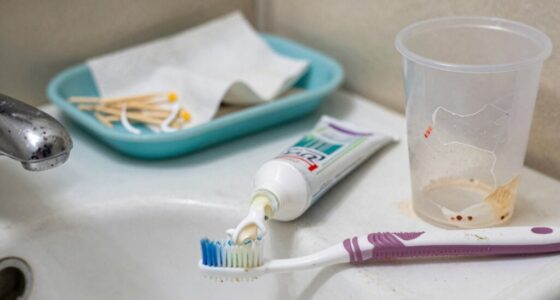
When talking to kids about cavities, focus on positivity and teamwork. Explain that everyone can develop healthy teeth by supporting their mouth’s tiny ecosystem and making good choices. Emphasize that brushing twice a day, flossing, and eating smart snacks help keep their smile bright. Avoid guilt or shame—instilling confidence encourages better habits. If you keep exploring, you’ll find helpful ways to guide your child towards a healthy, happy smile.

Turn the school run and nap time into listening time
- Thousands of audiobooks, podcasts and originals
- Listen on your phone, tablet or Echo — also offline
- Cancel anytime
Key Takeaways
- Use positive language to focus on learning and improvement, not blame or guilt.
- Explain cavities as a common part of oral health that everyone can prevent with good habits.
- Emphasize that supporting a healthy mouth ecosystem helps reduce cavities naturally.
- Reinforce that effort and consistent care lead to healthier teeth, boosting confidence and motivation.
- Approach the topic as a team effort, encouraging kids to feel empowered and in control of their habits.

Talking to kids about cavities might seem challenging, but it’s an essential step in helping them develop good oral health habits. Kids often associate dental visits with fear or shame, so your goal is to create a positive, non-judgmental conversation. Instead of making them feel guilty about their habits, focus on teaching them how to improve. Explain that cavities happen when bacteria in their mouth produce acids that attack the teeth, especially when they eat or drink too many sugary foods and drinks. Emphasize that everyone can have healthy teeth, but it takes consistent effort and good dental hygiene. It’s also helpful to teach them about the importance of biodiversity, as a healthy ecosystem in their mouth can help balance bacteria and reduce cavities. Understanding oral microbiome diversity can empower kids to see their mouth as a tiny ecosystem they can care for. You might also share that supporting this diversity helps maintain a healthy balance of bacteria, which is crucial for preventing cavities and other oral health issues. Additionally, explaining how microbial balance impacts oral health can help them understand the role of a healthy mouth environment.
Creating a positive chat about cavities encourages kids to develop healthy dental habits with confidence and kindness.
When discussing dental hygiene, highlight that brushing twice a day with fluoride toothpaste and flossing daily are the best ways to keep their teeth strong. Make it clear that brushing isn’t a punishment but a superpower that helps fight off cavity-causing germs. Use positive language, like “brushing keeps your smile bright,” and show enthusiasm for their efforts. If they forget or rush through their routine, avoid scolding. Instead, gently remind them about how good it feels to have a clean, fresh mouth. Praise their efforts when they do well, so they associate good dental hygiene with positive feelings. Reinforcing the idea that good habits are a form of self-care can motivate them to keep trying.
Talking about sugar intake requires a gentle approach. Kids often love sweets, but it’s important they understand how sugar affects their teeth. Instead of saying, “You shouldn’t eat candy,” explain that too much sugar feeds the bacteria that cause cavities. Offer healthier snack options like fruit, yogurt, or nuts, and explain that these foods help keep their teeth strong. Teach them that treats are okay occasionally, but moderation is key. When they understand the connection between sugar and cavities, they’re more likely to make smarter choices without feeling shamed. Explaining how oral microbiome health influences cavity risk can help them see the bigger picture of maintaining overall oral health.
Throughout the conversation, keep your tone supportive and encouraging. Let them know that even if they’ve had a few cavities before, they can always improve with better habits. Avoid using words that might make them feel bad about themselves; instead, focus on what they can do now. Reinforce that everyone makes mistakes, but what matters is trying again and doing better. By framing the talk as a team effort and emphasizing their control over their health, you help prevent feelings of shame. This positive approach not only educates them but also builds their confidence to take charge of their dental hygiene and sugar intake, setting them up for healthier smiles in the future.
Products Worth Considering

Oral-B iO Series 3 Rechargeable Electric Toothbrush for Adults, Black, with 2 Brush Heads and Travel Case

Philips Sonicare DiamondClean 9000 Electric Toothbrush Bundle, HX9912/72

Withings Body Scan Smart Scale with Segmental Body Composition and ECG, Black
As an affiliate, we earn on qualifying purchases.
Frequently Asked Questions
How Can I Encourage My Child to Brush Without Making It a Battle?
You can encourage your child to brush without a battle by using positive reinforcement, like praise or small rewards, to make brushing enjoyable. Be a role model by brushing your teeth together and showing enthusiasm for good oral habits. Keep routines consistent, and avoid nagging, so brushing feels like a fun part of daily life. This approach builds their confidence and helps them develop healthy habits without feeling pressured or shamed.
What Are Fun Ways to Teach Kids About Cavity Prevention?
You can make learning about cavity prevention fun by debunking dental myths with your child, turning it into a game. Use colorful charts or stories to explain how sugary snacks and drinks harm teeth, encouraging healthier alternatives like crunchy fruits and veggies. Celebrate small wins, like brushing well or choosing water over soda, to motivate them. This playful approach helps kids understand cavity prevention without fear, making good habits stick naturally.
How Do I Handle My Child’s Fear of Dental Visits?
You can help your child overcome their fear of dental visits by offering dental reassurance and understanding their child anxiety. Stay calm, use positive language, and explain what to expect in simple terms. Bring along a comfort item, and praise their bravery afterward. Consistent, gentle reassurance helps your child feel safe, making future visits less intimidating. Remember, your calm attitude can substantially ease their anxiety and build trust.
When Should I Start Flossing My Child’s Teeth?
You should start flossing your child’s teeth as soon as they have two teeth that touch, usually around age two or three. Make it fun by telling stories about the Tooth Fairy and dental visits, so flossing becomes a positive routine. Show them how it helps prevent cavities and keeps their smile bright. Consistent flossing now sets healthy habits, making future dental visits easier and less stressful.
How Can I Tell My Child They Have Cavities Without Upsetting Them?
You can tell your child they have cavities by being honest yet gentle, emphasizing that everyone gets cavities sometimes, which helps counter cavity myths. Reassure them that dental visits are normal and no reason for dental anxiety. Use positive language, like “We’ll take care of your teeth together,” to boost their confidence. Focus on prevention and teamwork, so they don’t feel ashamed or scared about their dental health.
Conclusion
As you gently explain cavities, imagine the tiny, invisible invaders retreating from your child’s smile, leaving behind a shining, healthy grin. When you approach the conversation with kindness, it’s like planting a seed of confidence that grows stronger with each brushstroke and choice. Soon, those little battles become part of your shared routine, turning worries into proud moments. Together, you’re not just fighting cavities—you’re nurturing a lifelong habit of caring for their beautiful, radiant smile.