
Spring fruits are great for kids because they’re fresh, flavorful, and packed with nutrients like vitamin C and antioxidants. However, choosing the right timing is key, as early cherries or late-season berries might not be as ripe or tasty. Serving fruits at their peak guarantees your kids get the maximum health benefits and enjoyment. Pay attention to local harvest schedules for the best results—stay tuned to discover when and how to serve these seasonal delights perfectly.
Key Takeaways
- Serving fruits at their peak ripeness ensures optimal flavor and maximum nutritional benefits for children.
- Early or late-season fruits may be less flavorful and have diminished nutrients, reducing health benefits.
- Local harvest calendars help identify the best timing for fresh, in-season spring fruits.
- Imported or stored fruits often lack the full nutritional value and taste of fresh, in-season options.
- Incorporating seasonal, local fruits supports sustainability and reduces exposure to preservatives and artificial treatments.
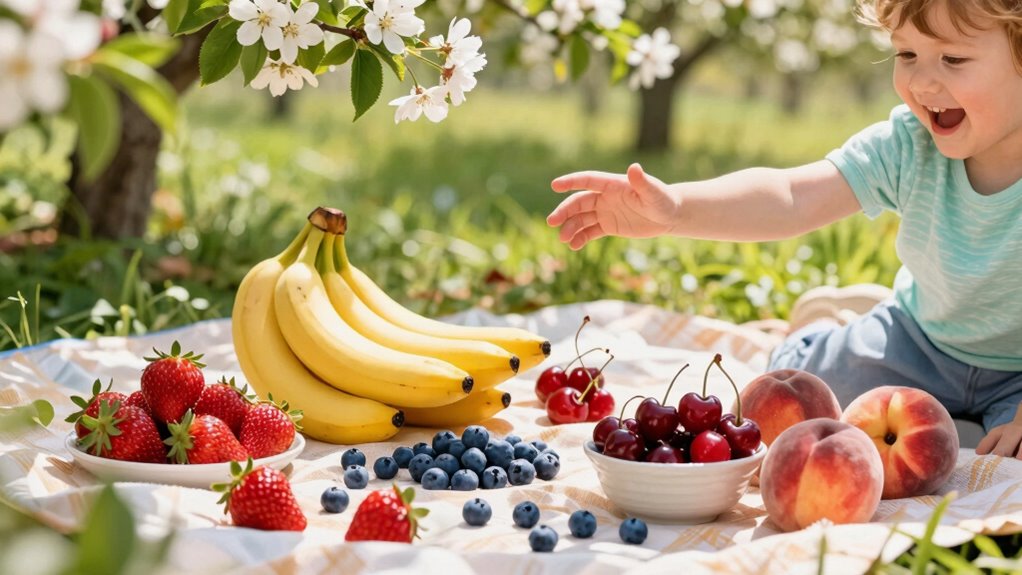
Spring is a fantastic time to introduce kids to fresh, seasonal fruit, but not all options are ideal at every point in the season. As the seasons change, so does the availability of various fruits. Understanding the seasonal availability helps you choose the freshest, most flavorful options for your kids. When fruit is in season, it’s usually at its peak of ripeness, which means better taste and higher nutritional benefits. For example, strawberries and cherries are at their prime in early spring, offering bright, juicy bites that are rich in vitamin C, antioxidants, and fiber. Incorporating these into your child’s diet can boost immunity and support digestive health.
Spring offers fresh, ripe strawberries and cherries packed with vitamins to boost kids’ immunity and health.
However, some fruits may be available earlier or later than you’d expect, and their nutritional benefits can vary depending on when they’re harvested. Relying on out-of-season produce often means choosing fruits that are imported or stored longer, which can diminish their vitamin content and flavor. For instance, while peaches might be available in grocery stores during early spring, they’re usually imported from warmer climates and may not offer the same nutritional punch as locally grown spring fruits. It’s best to wait until they’re truly in season to maximize both flavor and health benefits.
Timing is essential when it comes to offering certain spring fruits to your kids. Some fruits, like early cherries, are best enjoyed when they’re fully ripe, which is typically mid to late spring. Giving your kids fruit too early can lead to disappointment—they might find it sour or unripe—and it won’t provide the full nutritional benefits. Conversely, trying to introduce fruits too late in the season, when they’re past their prime, might mean sacrificing flavor and nutritional quality. Watching for local harvests and market supplies can guide you in serving fruits at their best.
Additionally, seasonal fruit availability can vary depending on your region, so paying attention to local harvest calendars can help you time your purchases more accurately. In addition to taste and nutrition, seasonal availability influences how you plan meals and snacks. Emphasizing in-season fruit ensures you’re offering your kids the freshest options, which are more likely to be free from preservatives and artificial treatments. It also helps support local farmers and reduces your carbon footprint. By paying attention to when fruits are naturally available, you can create a vibrant, healthful spring menu that maximizes nutritional benefits, delights your kids’ palates, and respects the environment. Remember, timing is everything—serve spring fruits when they’re at their peak, and your kids will reap the full benefits of these seasonal delights.
As an affiliate, we earn on qualifying purchases.
Frequently Asked Questions
Are Spring Fruits Safe for Children With Allergies?
Spring fruits can be safe for kids with allergies, but you should be cautious. Pollen allergies might trigger reactions, especially with fruits like cherries or strawberries, which can have cross reactivity concerns. Always check for allergy symptoms and consult your child’s doctor before introducing new fruits. Start with small amounts and monitor for any adverse reactions. Being aware of pollen allergies and cross reactivity helps guarantee your child’s safety during spring.
How Can I Tell if Spring Fruit Is Ripe?
You can tell spring fruit is ripe by observing clear harvest indicators and ripeness signs. Look for vibrant colors, firm but slightly yielding textures, and fresh aromas. Gently press the fruit—if it gives a little, it’s ready. Avoid fruits that are overly soft or have dull hues. Trust your senses, as these subtle clues reveal the fruit’s true maturity, ensuring you enjoy the best flavor and quality.
Can Kids Eat Spring Fruit if They Have a Sensitive Stomach?
If your kid has a sensitive stomach, they can eat spring fruit, but you should consider fruit variety considerations first. Some fruits might cause digestive discomfort, especially if they’re new to their diet or eaten in large amounts. Introduce spring fruits slowly, starting with milder options like strawberries or melons, and watch for any signs of discomfort. Always consult their pediatrician if you’re unsure about specific fruit types.
What Are the Best Ways to Store Spring Fruits?
Ever wondered how to keep your spring fruit varieties fresh? To store spring fruits properly, follow these fruit storage tips: keep berries in breathable containers in the fridge, store stone fruits at room temperature until ripe then refrigerate, and apples in a cool, dark place or fridge. Are you ready to maximize their freshness? Proper storage helps preserve flavor and texture, making your spring fruit experience even better.
Are Organic Spring Fruits Better for Kids?
Yes, organic spring fruit varieties are generally better for kids because they have higher levels of nutrients and fewer harmful pesticides. Organic options often retain more of their natural flavor and nutritional benefits, which helps support your child’s growth and immune system. By choosing organic spring fruits, you guarantee they get the maximum nutritional benefits, making them a healthier and safer choice for your kids.
Conclusion
Think of spring fruits as the vibrant colors in your child’s garden. While cherries and strawberries bloom early, their sweetness is best savored at just the right moment, like catching sunlight at dawn. By timing your fruit choices wisely, you nurture their health and happiness, turning each snack into a ripe, juicy treasure. With a little planning, you’ll help your kids enjoy spring’s orchard of flavors at its peak, making every bite a delightful splash of seasonal joy.