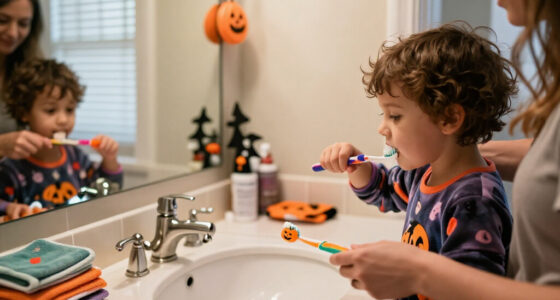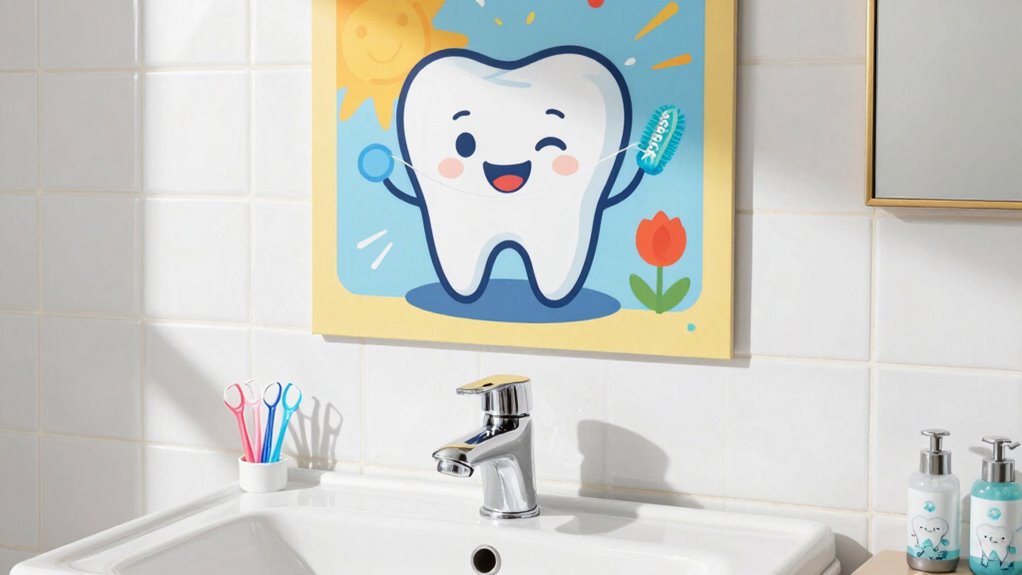

To remind your kids to floss without nagging, use colorful, fun visual cues placed in visible spots like mirrors or bathroom doors. Choose images or characters your child loves to make the cues appealing and engaging. Consistently display them to help your child associate the cues with their flossing routine, building independence over time. These simple visual reminders turn flossing into a positive habit, and keeping up can reveal even more helpful tips.

Turn the school run and nap time into listening time
- Thousands of audiobooks, podcasts and originals
- Listen on your phone, tablet or Echo — also offline
- Cancel anytime
Key Takeaways
- Use colorful stickers or characters placed on mirrors or bathroom doors to serve as fun, visual reminders for flossing.
- Choose engaging images or characters children love to make cues more appealing and attention-grabbing.
- Maintain consistency in cue placement and appearance to help children associate the visual prompt with flossing.
- Involve children in selecting or designing cues to foster ownership and encourage independent flossing habits.
- Over time, these visual cues help children internalize the routine, reducing the need for parental reminders.
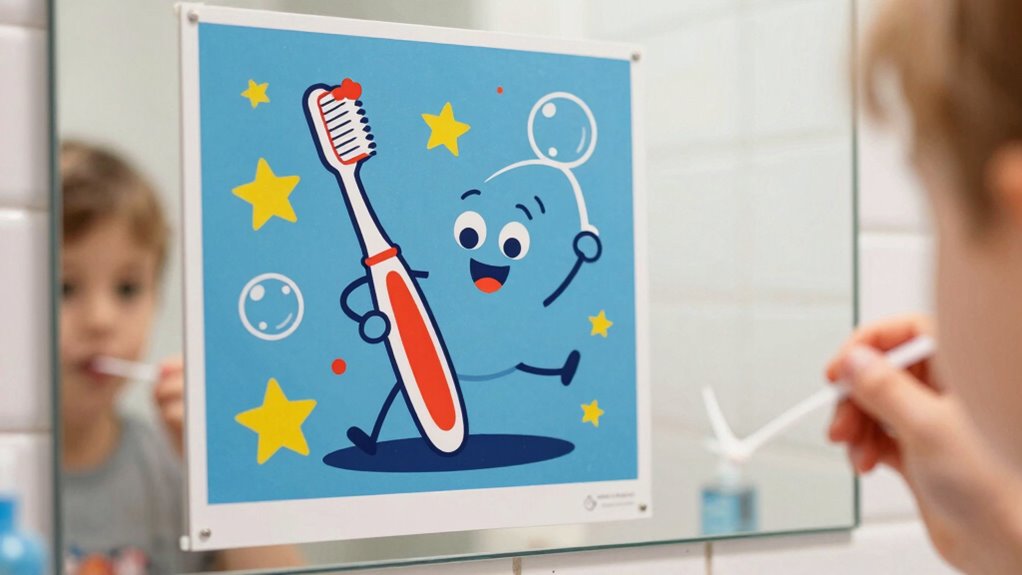
Reminding kids to floss can be a challenge, but a simple visual cue can make a big difference. Kids often forget or resist doing their dental habits, especially flossing, because they don’t see it as important or just find it boring. As a parent, your goal is to encourage consistent habits without turning every reminder into nagging. That’s where a visual cue comes in—an easy, effective parental strategy that subtly prompts your child to remember their flossing routine without creating tension.
The trick is to place a visual reminder somewhere your child will see it during their daily routine. For example, you could put a colorful sticker or a small note on their mirror or bathroom door. When they brush their teeth in the morning or before bed, the visual cue naturally catches their eye, prompting them to think about flossing afterward. This method leverages visual learning and makes the activity feel less like a chore and more like a part of their daily routine. Over time, these cues help your child develop better dental habits, making flossing feel less like an obligation and more like a normal part of their self-care.
To make this work effectively, you should consider your child’s interests. Use bright, fun images or characters they love to draw attention. For example, a cartoon smiley face holding a piece of floss or a star-shaped note can make the reminder more appealing. Keep the cue consistent in location and appearance so your child begins to associate it with their dental routine. As they get used to seeing it, they’ll start to remember to floss without needing constant reminders from you, reducing your role as a nagger and giving them more independence. Additionally, understanding the importance of visual learning can help you tailor cues that better resonate with your child’s preferences.
Incorporating visual cues into your parental strategies also encourages your child to take ownership of their oral health. You can involve them in choosing the reminder, making it a fun activity that empowers them to take responsibility. When they see the visual cue daily, it reinforces the importance of good dental habits and builds a sense of routine. Over time, this positive reinforcement will help them internalize the habit, making flossing a natural part of their personal hygiene. Recognizing the role of behavioral cues in habit formation can further enhance your approach and make the routine stick. Using consistent visual cues also helps your child associate the activity with positive feelings, which can strengthen their motivation to maintain the habit. Developing a habit formation strategy that incorporates visual cues can significantly improve long-term adherence to dental routines.
kids colorful bathroom mirror stickers
As an affiliate, we earn on qualifying purchases.
As an affiliate, we earn on qualifying purchases.
Frequently Asked Questions
How Effective Is This Visual Cue Trick Long-Term?
This visual cue trick can be quite effective long-term if you consistently reinforce it, aiding habit formation. Your parental influence plays a significant role in shaping your child’s routines; by regularly using visual cues, you encourage them to develop healthy habits independently. Over time, your child internalizes the cue, making flossing a natural part of their daily routine without nagging, leading to sustained dental hygiene habits.
Can This Method Work for Older Children?
Yes, this method can work for older children. Teenagers habits develop through consistent cues, visual reminders, and minimal nagging. Parental involvement remains essential, guiding them without overstepping. When you use clear visual cues, it reinforces their responsibility and independence. Just like with younger kids, repetition, positive reinforcement, and subtle reminders help teens incorporate flossing into their daily routine, making the habit feel natural rather than forced.
Are There Alternative Visual Cues for Different Age Groups?
Yes, you can use decorative stickers or color coding as alternative visual cues for different age groups. For younger children, bright stickers placed near their toothbrush or floss holder work well. Older kids might respond better to color-coded floss or a chart with different colors representing days of the week. These visual cues become engaging reminders, encouraging consistent flossing without nagging, while also making the routine more playful.
How Do You Introduce the Visual Cue to Reluctant Kids?
To introduce the visual cue to reluctant kids, start by explaining how it helps with their dental habits. Use motivation techniques like making it a game or offering small rewards. Show them the cue and let them place it themselves, so they feel in control. Keep it positive and fun, emphasizing that the cue is there to help them succeed, making flossing feel less like a chore and more like an achievement.
What Are Common Mistakes When Using This Visual Cue Trick?
You might think that relying solely on visual reminders will magically instill perfect dental habits, but common mistakes happen. Kids can ignore or forget the cues if they’re not engaging enough or if you don’t reinforce the importance. Overloading with too many reminders leads to desensitization, and inconsistent placement makes the cues ineffective. Remember, visual reminders work best when they’re simple, consistent, and paired with positive reinforcement, not just decoration.
Conclusion
Imagine a bathroom mirror, now adorned with a colorful floss sticker, catching your child’s eye like a friendly reminder. Just as a lighthouse guides ships safely to shore, this simple visual cue steers your kids toward daily flossing without nagging. It transforms a mundane routine into a playful habit, bridging the gap between resistance and responsibility. With a little creativity, you turn everyday spaces into gentle prompts, making oral care a natural part of their day.
Columbus Day / Indigenous Peoples' Day Picks
long weekend sales
As an affiliate, we earn on qualifying purchases.