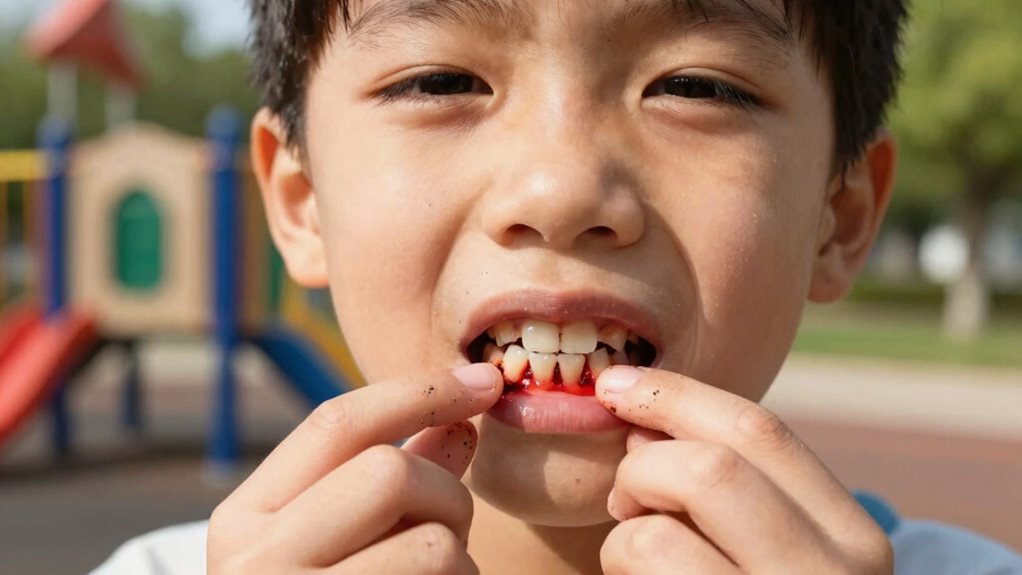

If a child’s tooth gets knocked loose at the playground, stay calm and assess the situation. Have your child gently bite on a clean cloth to control bleeding and reassure them to stay calm. Carefully examine the tooth without forcing it and rinse it with milk or saline. Keep the tooth moist and store it in milk or your child’s cheek pocket. Acting quickly can boost the chances of saving the tooth and preventing further injury—learn more about proper steps to take.
Key Takeaways
- Stay calm, assess the injury, and stop any bleeding by applying gentle pressure with a clean cloth.
- Gently examine the loose tooth without forcing it, and rinse it with milk or saline if possible.
- Store the tooth in milk or the child’s cheek pocket to keep it moist until professional help is available.
- Contact a dentist immediately for evaluation and follow their instructions for further care.
- Supervise the child closely, ensure safe play, and prevent future injuries through safety measures.
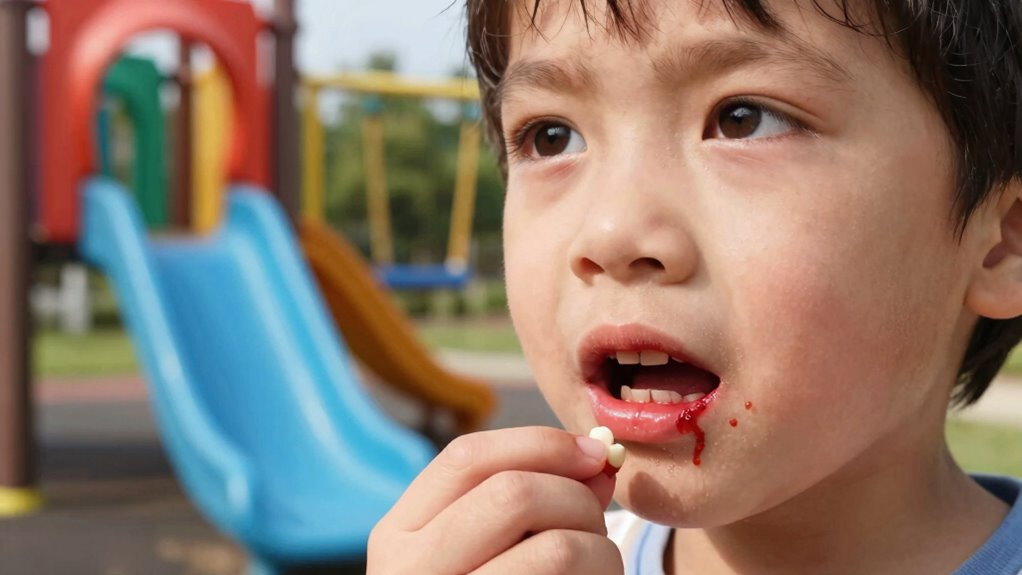
Accidents can happen quickly on the playground, and if your child’s tooth gets knocked loose, knowing what to do can make a big difference. A loose tooth after a fall or collision is a dental emergency, and acting promptly can help save the tooth or prevent further injury. Your immediate response is crucial, so stay calm and assess the situation carefully. Check if your child is in pain, bleeding, or if there’s any other injury that needs urgent attention. If there’s bleeding, gently have your child bite down on a clean cloth or gauze to control it. Keep them calm and reassure them that you’re there to help.
Once you’ve managed any bleeding, examine the loose tooth if possible. Be gentle—don’t try to force the tooth back into the socket unless you’re certain it’s clean and the tooth is stable. If the tooth is completely knocked out, time is of the essence. The faster you act, the better the chance of saving the tooth. Rinse the tooth gently with milk or saline solution; avoid scrubbing or using tap water, as this can damage the root. If your child can comfortably hold the tooth, do it by the crown (the part visible in the mouth) and keep it moist. Place it in a container with milk, or if your child prefers, hold it in their cheek pocket, but avoid storing it in water, which can damage the root. Additionally, understanding dental emergencies can help you respond more effectively in such situations. Recognizing proper first aid steps for dental injuries can also make a significant difference in outcomes. Practicing playground safety measures can significantly reduce the likelihood of such injuries occurring in the first place. Remember that prompt professional care is vital for the best prognosis.
Playground safety is always a concern, so once you’ve managed the emergency, inspect the area to prevent further accidents. Make sure equipment is in good condition and that the ground surface is soft enough to cushion falls. Educate your child about safe play and supervise them closely, especially around swings, slides, and climbing structures. Preventative measures are the best way to avoid dental emergencies, but if one does happen, quick, calm action is key.
After addressing the immediate injury, contact your dentist as soon as possible. They can evaluate the damage and determine if further treatment is needed, such as splinting or other procedures. Remember, even if the tooth seems to be stabilizing, professional assessment is essential. By staying calm, acting quickly, and prioritizing playground safety, you can help your child recover from a knocked-loose tooth and reduce the risk of further injury.

Dentists Complete Deluxe Total Dental Emergency Deluxe First Aid Kit Teeth-Dentures-Bridgework-Fillings The Most Complete Dental 1st Aid Kit in The Market
- Comprehensive Dental Emergency Kit: Most complete dental repair kit available
- Easy Dental Repairs: Quick fixes for teeth, crowns, bridges, fillings
- Temporary Dental Solutions: Provides temporary repairs for various dental issues
As an affiliate, we earn on qualifying purchases.
As an affiliate, we earn on qualifying purchases.
Frequently Asked Questions
How Can I Tell if a Tooth Is Truly Loose or Just Chipped?
You can tell if a tooth is truly loose by gently wiggling it with your finger or tongue; if it moves easily, it’s likely loose. If it only appears chipped or fractured, it probably isn’t loose. For accurate tooth stability and damage assessment, seek a dental assessment promptly. A professional can determine whether the tooth is truly loose or just chipped and recommend appropriate treatment for your oral health.
Should I Attempt to Reinsert the Knocked-Out Tooth Myself?
Ever wonder if you should try to reinsert a knocked-out tooth yourself? It’s best to avoid doing that, as improper handling can cause more damage. Instead, gently rinse the tooth with milk or saline, then keep it moist with dental floss or a clean cloth. You should see a dentist immediately for proper reattachment. Remember, maintaining good toothbrush care and avoiding unnecessary handling helps prevent further injury.
What Signs Indicate a Need for Urgent Dental Care?
If you notice severe pain, swelling, bleeding, or your tooth feels loose or shifted, you need urgent dental care. While maintaining good oral hygiene with gentle tooth brushing and using dental floss, avoid pushing or poking the tooth. These signs indicate a potential dental emergency that requires prompt professional treatment to save the tooth and prevent infection. Don’t delay—seek dental help immediately if these symptoms arise.
How Can I Prevent Future Dental Injuries on the Playground?
Coincidences happen when you least expect them, reminding you to prioritize your child’s safety. To prevent future dental injuries, focus on playground safety by supervising closely and choosing equipment suitable for their age. Teach your child to avoid risky behaviors, like climbing too high or rough play. Regularly check playground surfaces for cushioning, and guarantee safety rules are followed. These steps help reduce the risk of dental injuries and keep playtime fun and safe.
Is It Safe to Give Pain Relievers to a Child With a Loose Tooth?
Yes, it’s generally safe to give your child pain relievers like acetaminophen or ibuprofen for tooth sensitivity caused by a loose tooth, but always check the dosage and consult your child’s dentist first. Avoid giving aspirin, as it can increase bleeding. While managing pain, make sure your child continues gentle dental flossing around the loose tooth to keep the area clean. If pain persists or worsens, seek professional dental advice promptly.
Conclusion
Remember, acting quickly can save a loose tooth from further damage. Some say that gently pushing the tooth back into place can help preserve it, but don’t try this unless you’re sure—it’s best to see a dentist. While myths suggest that a tooth can be “repaired” at home, professional care is the safest route. Trust in expert advice, and you’ll give the tooth the best chance to recover and stay healthy.