
Start by setting clear expectations for chores and allowance amounts, using visual charts to track responsibilities. Explain budgeting and savings goals, encouraging your child to put a portion of their allowance aside before spending. Incorporate environmental and financial lessons through simple discussions about conservation and responsible money use. Keep routines manageable and review progress regularly to stay motivated. Want to learn more ways to set your child up for summer success? Keep exploring these helpful tips.
Key Takeaways
- Clearly define chores and expectations to teach responsibility and set a foundation for earning allowance.
- Establish a consistent schedule for allowance distribution to build routine and trust.
- Use visual tools like charts or jars to help kids track savings and spending goals.
- Teach the importance of saving a portion of allowance before spending.
- Incorporate discussions on environmental impact and financial literacy to promote responsible choices.
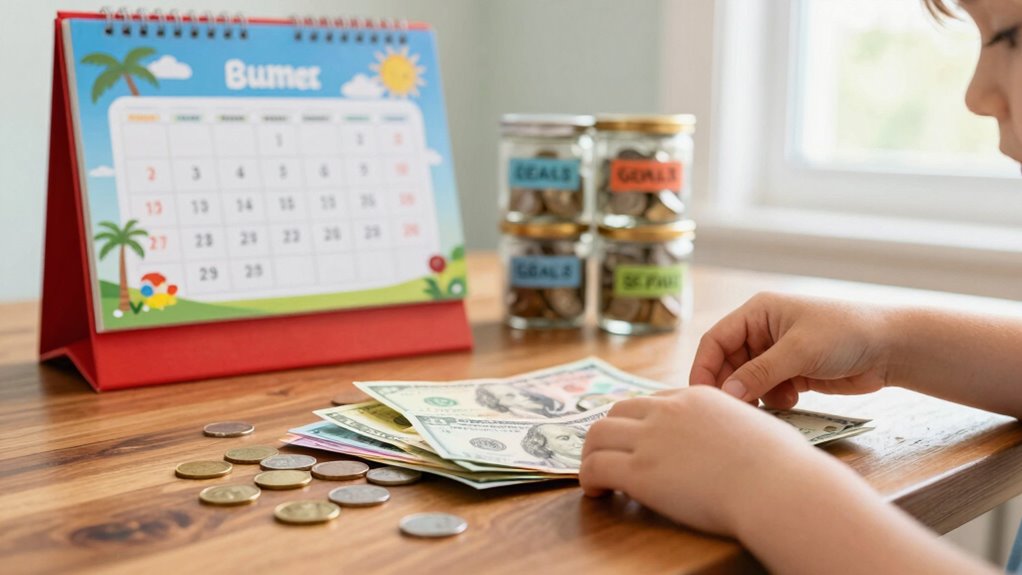
As summer approaches and kids start planning trips, outings, and other activities, it’s the perfect time to establish or review their allowance. Setting clear expectations now helps prevent surprises later and teaches responsible money habits. One effective way to do this is by introducing chore charts. Chore charts give your child a visual way to track their responsibilities, making it easier for them to understand that earning money is tied to completing tasks around the house. Whether it’s making their bed, taking out the trash, or helping with laundry, a chore chart keeps things organized and ensures they’re contributing to the household. This structure not only motivates them to stay on top of their chores but also reinforces the value of earning their allowance through effort.
As you set up their allowance system, it’s important to talk about savings goals. Kids often see money as something to spend immediately, but summer is the perfect opportunity to teach them about saving. Encourage them to set specific savings goals, like saving for a new toy, a trip with friends, or even a summer camp. Help them understand that a portion of their allowance should go toward these goals before they start spending freely. You can make this process more engaging by helping them create a visual savings chart or jar, so they can see their progress over time. This not only teaches delayed gratification but also instills a sense of responsibility and planning. Additionally, understanding the importance of biodiversity and conservation can be integrated into discussions about responsible resource use and environmental stewardship, which are valuable lessons for their overall development. Incorporating lessons about financial literacy can further empower them to make informed decisions about their money as they grow older. Building on this, teaching children about proper resource management can help them develop a sustainable mindset that benefits both their personal finances and the environment. Furthermore, emphasizing the connection between environmental impact and spending choices can help children recognize how their financial decisions can influence the world around them.
Starting an allowance with clear chores and savings goals also opens the door for ongoing conversations about money management. As they earn, save, and eventually spend, you can guide them through decisions about budgeting and prioritizing their wants versus needs. This practical experience prepares them for future financial independence. Summer is a natural time to practice these skills because of the relaxed schedule and increased opportunities for outings and activities requiring money. By establishing routines now, your child will have a solid foundation for managing their allowance wisely, making summer spending both manageable and meaningful.
Ultimately, the key is consistency. Keep the chores and savings goals simple and attainable, and review them regularly. When your child sees that their efforts are rewarded and that they’re making progress toward their goals, they’ll develop healthier attitudes about money that will serve them well long after summer ends.

Behavior Reward Chart System – Pad with 26 Chore Charts for Kids, 2800 Stickers to Motivate Responsibility & Good Habits
Sticker chore Chart pad for kids with 26 perforated pages and 2800 stickers
As an affiliate, we earn on qualifying purchases.
As an affiliate, we earn on qualifying purchases.
Frequently Asked Questions
How Much Allowance Should I Give My Child Initially?
You should start with an allowance that reflects your child’s age and responsibilities, typically $5 to $10 per week for younger kids. Follow allowance etiquette by setting clear expectations and consistent payments. Use reward systems to motivate responsible behavior and saving habits. Keep the initial amount manageable, and as your child demonstrates good money management, you can gradually increase the allowance to teach financial growth.
When Is the Best Time to Introduce an Allowance?
You should introduce an allowance when your child starts showing responsibility and curiosity about money—think of it as opening their financial literacy superpowers! This moment sparks essential parenting strategies that teach money management early on. Waiting too long risks missing the chance to build healthy habits. Starting now helps your kid develop confidence, learn budgeting skills, and prepare for summer spending adventures—setting the stage for lifelong financial success.
Should Allowance Be Tied to Chores or Responsibilities?
You should tie allowance to chores or responsibilities to teach accountability and work ethic. Using chore rewards as incentives encourages kids to complete tasks willingly, while responsibility incentives foster a sense of independence. Make sure the expectations are clear and consistent. This approach helps kids understand that earning money involves effort, setting a foundation for good financial habits and responsibility that benefit them long-term.
How Can I Teach My Child About Saving With Their Allowance?
Imagine planting a tiny seed of financial wisdom today, and watch it grow into a sturdy tree of savings tomorrow. To teach your child about saving with their allowance, introduce allowance etiquette by setting clear expectations and encouraging regular saving habits. Use their allowance as a tool for building financial literacy, showing them how to allocate funds for needs, wants, and savings. This hands-on approach nurtures responsible money habits and future financial confidence.
What Are Some Creative Ways to Track Allowance Payments?
You can make allowance tracking fun with allowance games, turning it into a rewarding activity. Incorporate digital tracking apps to keep things organized and transparent. These tools often include charts, goal-setting features, and reminders, making it easier to monitor payments. By combining allowance games with digital tracking, you keep your child engaged and accountable, helping them understand the importance of managing money while enjoying the process.

Mczxon Small Coin Bank Jars 4-Pack, 16oz Clear Plastic Coin Money Tip Coin Jars with Silver Slotted Lids, Small Clear Plastic Coin Money Piggy Banks Mason Jars for Adults Teens Kids Girls Boys
❤️Value Pack of 4: You Will Get 4 Plastic Plastic jar piggy banks with 4 Slotted Lids for…
As an affiliate, we earn on qualifying purchases.
As an affiliate, we earn on qualifying purchases.
Conclusion
As summer approaches, imagine your child’s allowance as a steady stream guiding their spending. By setting clear rules now, you help them build a safe, steady river of financial habits, avoiding the wild rapids of impulsive spending. With a solid start, they’ll navigate the summer days confidently, knowing their allowance is a gentle current carrying them toward responsible choices. Prepare today, so their summer adventures flow smoothly and responsibly.

Investing for Kids: How to Save, Invest, and Grow Money
As an affiliate, we earn on qualifying purchases.
As an affiliate, we earn on qualifying purchases.

Upgraded 2 in 1 Bedtime/Morning Routine Chart – Magnetic Chore Chart for Toddlers, Cute Visual Schedule Board for Home, Kids Checklist to Do List ADHD Tools
2024 UPGRADED 2-IN-1 MORNING/BEDTIME ROUTINE CHART FOR KIDS – The easy-to-slide sliders make it simple for little hands,…
As an affiliate, we earn on qualifying purchases.
As an affiliate, we earn on qualifying purchases.