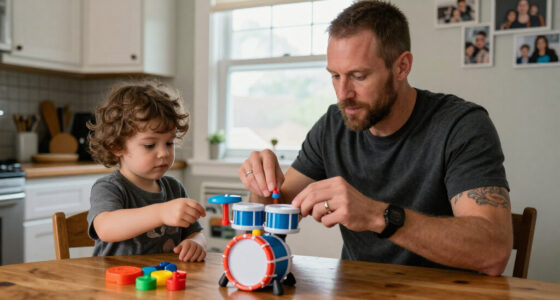

Focusing on thoughtful gift-giving helps you teach kids to appreciate quality over quantity. Encourage them to contemplate the recipient’s needs and feelings, making gifts more meaningful. Get them involved in choosing or creating presents to foster patience and emotional awareness. Show gratitude for every gift to reinforce genuine appreciation. By modeling mindful giving and emphasizing effort and connection, you help children develop empathy and gratitude. Keep exploring to discover more ways to nurture thoughtful generosity in your family.

Turn the school run and nap time into listening time
- Thousands of audiobooks, podcasts and originals
- Listen on your phone, tablet or Echo — also offline
- Cancel anytime
Key Takeaways
- Involve children in choosing or creating gifts to cultivate thoughtfulness and intentionality.
- Encourage reflection on the recipient’s interests and feelings to deepen emotional awareness.
- Model quality over quantity by demonstrating meaningful giving and expressing genuine gratitude.
- Use questions like “Why did you choose this?” to promote understanding of the gift’s significance.
- Enhance presentation with meaningful keepsakes or thoughtful wrapping to reinforce the value of gestures.
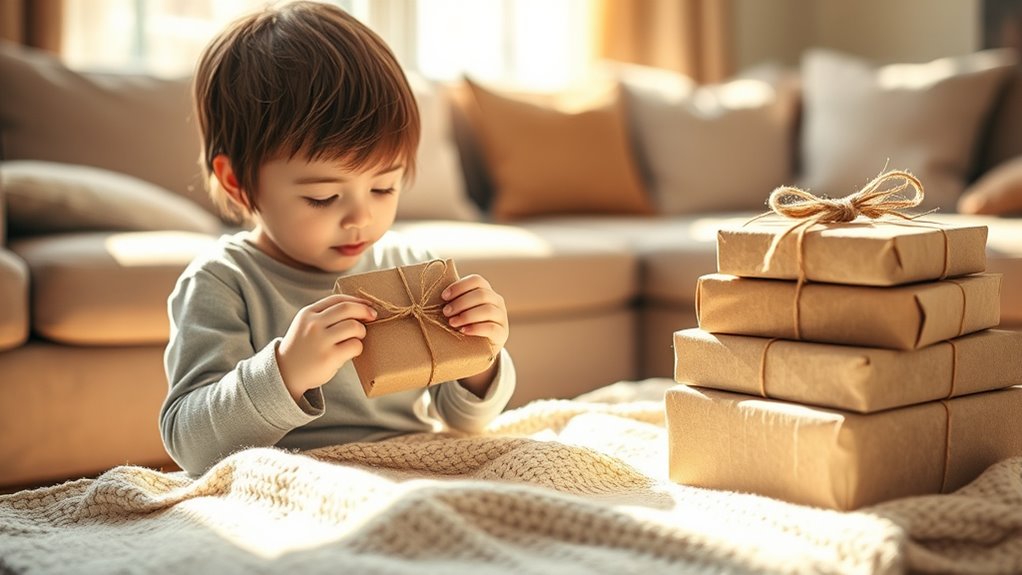
Giving gifts can be a meaningful way to show appreciation and strengthen relationships, but rushing into the process often leads to unnecessary waste or mismatched presents. When you focus on mindful gift-giving, you foster a deeper sense of gratitude development in both yourself and your kids. This approach encourages children to appreciate what they receive, rather than simply expecting more, helping them recognize the thought and effort behind each gift. As they learn to value meaningful gestures over material quantity, their emotional intelligence begins to grow. They start understanding the feelings that come with giving and receiving, which nurtures empathy and social awareness.
Teaching kids to be thoughtful about their gifts shifts the emphasis from just acquiring things to making genuine connections. When you involve them in choosing or creating presents, you help cultivate patience and intentionality. This process allows children to consider the recipient’s interests, needs, and preferences, rather than simply seeking instant gratification. As a result, they develop better emotional regulation—they learn to think before acting, which is essential for emotional intelligence. They become more aware of how their actions impact others, fostering compassion and kindness.
Involving kids in gift choices nurtures patience, intentionality, and emotional regulation, fostering compassion and genuine connections.
In practice, mindful gift-giving involves guiding your children to reflect on why they want to give a particular present. Ask questions like, “What do you think your friend would really enjoy?” or “How would you feel if someone gave you this gift?” These conversations teach kids to connect their actions with feelings, strengthening their emotional awareness. It’s not about the size or price of the gift but about the thoughtfulness behind it. When your child learns to give with intention, they begin to see giving as a way to express their appreciation and understanding, rather than just a transaction.
Additionally, modeling mindful giving yourself reinforces these lessons. When you prioritize quality over quantity and show gratitude for what you receive, your children notice and emulate your behavior. They learn that gratitude isn’t just about saying “thank you,” but also about recognizing the effort, emotion, and meaning behind each gift. Over time, this nurtures their ability to genuinely appreciate others, turning gift-giving into an opportunity for connection and emotional growth. Incorporating the concept of home furnishings, like thoughtful presentation or meaningful keepsakes, can also enhance the significance of the gifts exchanged. By fostering gratitude development and emotional intelligence, you help your kids grow into thoughtful, empathetic individuals who value meaningful relationships over material possessions.
Frequently Asked Questions
How Can I Encourage Lasting Values Over Material Possessions?
You can encourage lasting values by engaging in parent-child conversations about what truly matters, emphasizing kindness, gratitude, and sharing. Incorporate family traditions that focus on giving time or effort rather than material possessions, showing kids the importance of meaningful experiences. By consistently modeling these values yourself, you teach children to prioritize relationships and character over material things, helping them develop lasting values that transcend possessions.
What Are Effective Ways to Teach Kids Gratitude?
You can teach kids gratitude by encouraging daily gratitude journaling, where they write down things they’re thankful for. Practice expressing appreciation regularly, whether through saying thank you or writing notes. Make it a habit to discuss what they’re grateful for and highlight acts of kindness. This active approach helps them recognize the good in their lives, fostering a genuine sense of gratitude and making it a natural part of their daily routine.
How Do I Handle Peer Pressure Related to Gift-Giving?
Stand firm against peer influence and prioritize your child’s values over social acceptance. Teach them to recognize that giving shouldn’t be about impressing others or fitting in, but about kindness and thoughtfulness. Encourage open conversations about peer pressure, helping them develop confidence in their choices. Reinforce that true friendship respects their decisions, and that genuine social acceptance comes from authenticity, not material displays.
What Are Age-Appropriate Lessons on Generosity?
You can teach kids age-appropriate lessons on generosity by sharing experiences and exploring cultural traditions together. Encourage them to think about how giving makes others happy and discuss the importance of kindness. Involve them in small acts like donating toys or baking treats for neighbors. These activities help children understand that generosity isn’t about quantity but about heartfelt sharing, fostering empathy and a sense of community.
How Can I Balance Giving With Teaching Moderation?
You can strike a balance by setting clear gifting strategies that emphasize quality over quantity. Use moderation techniques like limiting the number of presents and encouraging meaningful choices. Explain that sometimes less is more, helping your child understand that thoughtful gifts carry more value. By doing so, you teach them that generosity isn’t about giving everything, but about making thoughtful gestures that truly matter, fostering gratitude and moderation in giving.
Conclusion
By teaching your kids to give with intention, you’re helping them see the true meaning behind each gift. When they learn to think before they act, they’ll realize that quality beats quantity every time. Remember, it’s not about how much they get but how much thought they put in. As you guide them, you’re planting seeds that will grow into kindness and gratitude—showing them that sometimes, less truly is more.
Fall Picks
fall essentials
As an affiliate, we earn on qualifying purchases.