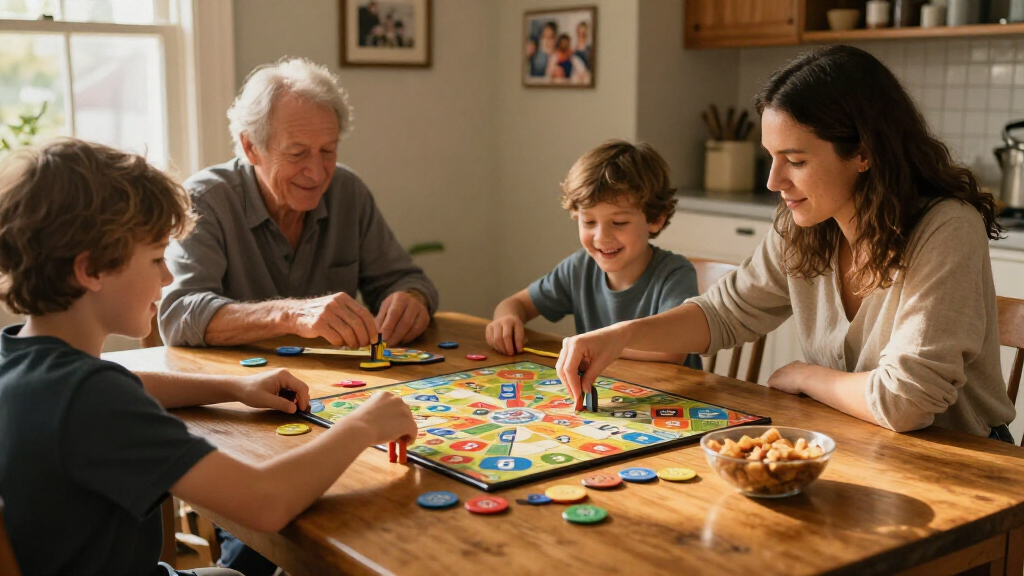

Finding family board games for all ages means balancing two competing needs: young kids need simple rules they can grasp in minutes, while adults and teens need enough strategy to stay engaged past the first few rounds. Taco Cat Goat Cheese Pizza earns the best overall spot because it nails this balance at a tiny price — a slap-match card game that a 6-year-old, a teenager, and a grandparent can all play together with zero learning curve. CATAN (6th Edition) is the standout pick for families with older kids ready to graduate to real strategy, while UNO remains the most reliable bridge game for mixed-age groups on a budget. The main tradeoff in this category is playing time versus accessibility: the deepest games exclude the youngest players, and the simplest ones bore the adults. Continue reading for the full breakdown of all 15 games, including who each one is for and who should skip it.

Turn the school run and nap time into listening time
- Thousands of audiobooks, podcasts and originals
- Listen on your phone, tablet or Echo — also offline
- Cancel anytime
Complete the kit


Key Takeaways
- Games with a playtime under 20 minutes (Taco Cat Goat Cheese Pizza, Tapple, Hedbanz) consistently worked better for mixed-age groups than hour-long classics like Monopoly, where younger players lost interest mid-game.
- The classics aren’t automatically the best picks: Twister and Candy Land excel for the under-7 crowd but actively exclude adults, which disqualifies them as true all-ages picks despite their fame.
- CATAN is the only game in the lineup that genuinely challenges adults, but its 10+ age rating and 60+ minute runtime make it a household upgrade, not a starter game.
- Party-style card games (Do You Really Know Your Family?, Hedbanz) deliver the strongest cross-generational laughter per dollar because conversation, not skill, drives the fun — leveling the field between kids and adults.
- Storage design emerged as a real differentiator: Connect 4’s all-in-one case and Monopoly‘s storage tray meaningfully reduce setup friction, which matters more than most buyers expect for repeat play.
| Hasbro Twister Classic Party Game |  | Best for Burning Off Energy | Players: 2–4 | Recommended age: 6 and up | Included: 1 vinyl mat, 1 spinner, instructions | VIEW LATEST PRICE | See Our Full Breakdown |
| Mattel Games UNO Card Game |  | Best Overall for Mixed Ages | Players: 2–10 | Recommended age: 7 years and older | Deck features: Action Cards, Wild Cards, 3 blank Wild Cards | VIEW LATEST PRICE | See Our Full Breakdown |
| Regal Games Set of 6 Classic Card Games for Kids |  | Best for Preschoolers | Included games: Old Maid, Go Fish, Slap Jack, Crazy 8’s, War, Silly Monster Memory Match | Number of games: 6 | Players: 2–6 | VIEW LATEST PRICE | See Our Full Breakdown |
| Monopoly Classic Board Game with Storage Tray and Larger Tokens |  | Best for Long Family Game Nights | Players: 2 to 6 | Recommended age: 8 years and up | Tokens: 8 metal tokens | VIEW LATEST PRICE | See Our Full Breakdown |
| Hasbro Connect 4 Game (2025 Edition) |  | Best Head-to-Head Quick Game | Players: 2 | Recommended age: 6+ | Edition: 2025 Edition | VIEW LATEST PRICE | See Our Full Breakdown |
| Hasbro Gaming Candy Land Kingdom of Sweet Adventures Board Game |  | Best for Preschoolers | Brand: Hasbro Gaming | Game: Candy Land Kingdom of Sweet Adventures | Recommended Age: 3 years and up | VIEW LATEST PRICE | See Our Full Breakdown |
| Taco Cat Goat Cheese Pizza Card Game |  | Best Compact Pick | Players: 2-8 | Recommended Age: 7+ | Play Time: 10-15 minutes per round | VIEW LATEST PRICE | See Our Full Breakdown |
| CATAN Board Game (6th Edition) |  | Best Strategy Game | Edition: 6th Edition | Players: 3-4 | Recommended Age: 10+ | VIEW LATEST PRICE | See Our Full Breakdown |
| Hasbro Gaming Trouble Board Game |  | Best for Young Kids’ Game Night | Players: 2-4 | Recommended Age: 5 and up | Game Type: Race board game | VIEW LATEST PRICE | See Our Full Breakdown |
| Sorry! Classic Board Game by Hasbro |  | Best Classic Family Rivalry | Brand: Hasbro | Recommended Age: 6 years and up | Players: Multi-player family game | VIEW LATEST PRICE | See Our Full Breakdown |
| Do You Really Know Your Family? Family Card Game |  | Best for Conversation | Age Range: Kids 8+, teens, and adults | Game Type: Card game | Included Components: Cards | VIEW LATEST PRICE | See Our Full Breakdown |
| Monopoly Game: Token Vote Edition |  | Best Classic Group Game | Players: 2-6 | Recommended Age: 8 years and up | Tokens Included: 8 (Top Hat, Rubber Ducky, Scotty, Hazel, Race Car, Penguin, Battleship, Thimble or other) | VIEW LATEST PRICE | See Our Full Breakdown |
| Hasbro Gaming Yahtzee Dice Game |  | Best Blend of Luck and Strategy | Brand: Hasbro Gaming | Game Type: Dice game | Players: 2 or more | VIEW LATEST PRICE | See Our Full Breakdown |
| Spin Master Games Hedbanz Picture Guessing Game, 2nd Edition |  | Best for Younger Kids | Brand: Spin Master | Edition: 2nd Edition | Players: 2-6 | VIEW LATEST PRICE | See Our Full Breakdown |
| USAOPOLY The Original Tapple Word Game |  | Best Fast-Paced Party Pick | Brand: USAOPOLY | Age Range: 8+ | Included Components: 144 categories (36 cards), Instructions, Portable Tapple Wheel | VIEW LATEST PRICE | See Our Full Breakdown |
| family board games for all age | Players | Recommended age | Game Type |
|---|---|---|---|
| Hasbro Twister Classic Party G | 2–4 | 6 and up | — |
| Mattel Games UNO Card Game | 2–10 | 7 years and older | — |
| Regal Games Set of 6 Classic C | 2–6 | — | — |
| Monopoly Classic Board Game wi | 2 to 6 | 8 years and up | — |
| Hasbro Connect 4 Game | 2 | 6+ | — |
| Hasbro Gaming Candy Land Kingd | 2-4 | 3 years and up | Beginner race board game |
| Taco Cat Goat Cheese Pizza Car | 2-8 | 7+ | — |
| CATAN Board Game | 3-4 | 10+ | Strategy board game |
| Hasbro Gaming Trouble Board Ga | 2-4 | 5 and up | Race board game |
| Sorry! Classic Board Game by H | Multi-player family game | 6 years and up | Race-to-home board game |
| Do You Really Know Your Family | — | — | Card game |
| Monopoly Game: Token Vote Edit | 2-6 | 8 years and up | Property trading board game |
| Hasbro Gaming Yahtzee Dice Gam | 2 or more | 8 years and up | Dice game |
| Spin Master Games Hedbanz Pict | 2-6 | 6 years and up | Picture guessing party game |
| USAOPOLY The Original Tapple W | — | — | — |
More Details on Our Top Picks
Hasbro Twister Classic Party Game
Most games in this roundup keep everyone seated, which makes Twister the outlier that gets kids moving. It earns its spot as the physical-play pick because it turns a rainy afternoon into an indoor activity that feels like a playground. Compared with Candy Land, which is purely luck-based and sedentary, Twister adds a real physical challenge even though strategy is minimal. The tradeoffs are real: you need clear floor space for the mat, and younger or less mobile family members may struggle with the balance demands. Team play helps include more than four people, but households wanting calm, sit-down evenings should look at UNO instead.
Pros:- Gets the whole group physically active rather than seated
- Works indoors or outdoors, suiting parties and gatherings
- Team play and tournament options extend beyond the 4-player cap
- Rules take under a minute to explain
Cons:- Requires significant clear floor space for the mat
- Demands flexibility and balance, excluding some players
- Two-player sessions end quickly with little replay depth
Best for: Families with energetic kids ages 6–12 who want an active game for parties or bad-weather days
Not ideal for: Families with grandparents or anyone with limited mobility or balance concerns, since the game physically demands flexibility
- Players:2–4
- Recommended age:6 and up
- Included:1 vinyl mat, 1 spinner, instructions
- Play options:Individual or team play
- Setup:Unroll mat, no assembly
- Activity level:High — physical movement required
Our verdict“Choose Twister when your family game night needs movement and laughter more than strategy.”
Mattel Games UNO Card Game
UNO earns the top slot because it solves the hardest problem in family gaming: keeping a 7-year-old and a grandparent equally engaged. Matching colors and numbers takes seconds to learn, while Wild and Action Cards keep rounds lively enough that adults don’t get bored. The 2–10 player range is the widest in this roundup, beating Connect 4‘s two-player limit and Twister‘s four-player cap for big gatherings. The blank Wild Cards let families invent house rules, and color-identifying symbols make it genuinely playable for color-blind relatives. The main tradeoffs: someone always forgets to call “UNO,” sparking arguments, and kids under 7 will need the simpler Regal Games card set instead.
Pros:- Scales from 2 to 10 players, the widest range in this lineup
- Color-identifying symbols support color-blind players
- Blank Wild Cards allow custom house rules
- Deck packs flat for travel and vacations
Cons:- Forgetting to call “UNO” creates frequent disputes
- Games can stretch long with large groups playing to 500 points
- Age 7+ rating excludes the youngest family members
Best for: Large or multi-generational families who need one deck that scales from 2 to 10 players
Not ideal for: Families with children under 7, who will struggle with hand management and the Action Card rules
- Players:2–10
- Recommended age:7 years and older
- Deck features:Action Cards, Wild Cards, 3 blank Wild Cards
- Accessibility:Graphic symbols identify card colors
- Winning condition:First player or team to reach 500 points
- Format:Standard card deck
Our verdict“If you can only buy one game for a household spanning generations, UNO is the safest and most flexible pick.”
Regal Games Set of 6 Classic Card Games for Kids
This six-game set makes sense for families whose youngest members can’t yet handle UNO’s rules. At ages 4 and up, it reaches lower than nearly anything else in this roundup — even Candy Land territory — while covering Go Fish, Old Maid, War, and more in a single purchase. The oversized cards are built for small hands, and each game quietly reinforces colors, numbers, matching, and memory. Compared with buying individual decks, the bundled value is the whole point here. The tradeoff is longevity: older kids and adults will outgrow these games fast, and unlike Connect 4 or Monopoly, there’s little depth to hold a mixed-age group. Note that game selection may vary between sets.
Pros:- Six different games in one box for variety
- Oversized cards sized for small hands
- Builds colors, numbers, reading, memory, and matching skills
- Compact and portable for restaurants and travel
Cons:- Game selection may vary between sets
- Older kids and adults lose interest quickly
- Card durability is lighter-duty than standard decks
Best for: Families with children ages 4–7 who want variety and early-learning value in one affordable box
Not ideal for: Families with mostly older kids or adults, since the simple games lack staying power past early elementary age
- Included games:Old Maid, Go Fish, Slap Jack, Crazy 8’s, War, Silly Monster Memory Match
- Number of games:6
- Players:2–6
- Age range:4–12 years
- Card size:Oversized for small hands
- Skills supported:Colors, numbers, reading, memory, matching
Our verdict“The easiest entry point for preschool families, as long as you accept kids will graduate from it within a few years.”
Monopoly Classic Board Game with Storage Tray and Larger Tokens
Monopoly fills a role nothing else here covers: the multi-hour centerpiece game night. Where Connect 4 wraps in five minutes and UNO rounds blur together, Monopoly builds a slow-burn property battle with real negotiation, money math, and dramatic comebacks. This edition’s larger tokens, houses, and hotels genuinely help younger and older players handle pieces, and the storage tray fixes the classic annoyance of scattered components. The tradeoffs are obvious: sessions can run well past an hour, eliminated players sit idle, and the age 8+ rating reflects genuine math and reading demands. Families wanting quick, casual rounds should pick Taco Cat Goat Cheese Pizza instead.
Pros:- Deeper strategy and negotiation than any quick game here
- Larger tokens, houses, and hotels are easier for kids to handle
- Storage tray keeps money and components organized between sessions
- Eight metal tokens give players real choice
Cons:- Games can run over an hour and test patience
- Eliminated players can sit out for long stretches
- Requires reading, math, and deal-making skills best suited to ages 8+
Best for: Families with kids 8 and up who enjoy extended, competitive sessions with negotiation and money handling
Not ideal for: Families with young children or short attention spans, since games can drag and eliminated players wait around
- Players:2 to 6
- Recommended age:8 years and up
- Tokens:8 metal tokens
- Included components:Game board, money, Title Deeds, houses, hotels, storage tray, family game records
- Piece design:Larger tokens, houses, and hotels for easier handling
- Session length:60+ minutes typical
Our verdict“The pick when your family wants one big, absorbing event rather than a string of quick rounds.”
Hasbro Connect 4 Game (2025 Edition)
This 2025 edition of Connect 4 nails the sweet spot between candy-luck games like Trouble and the commitment of Monopoly: quick rounds with actual decisions. The all-in-1 carrying case is the standout upgrade — discs store inside, the grid folds in, and the handle makes it the most travel-ready board in this roundup. Built-in sliding score trackers turn a five-minute round into a best-of-series, adding stakes without adding time. The tradeoffs: it’s strictly a two-player game, so bigger households will queue up, and players wanting a long strategic arc should look to CATAN instead. For a parent-child duet or sibling matchup, though, little else here is this frictionless.
Pros:- All-in-1 carrying case stores discs and makes it highly portable
- Built-in sliding score trackers add competitive best-of series
- Rounds finish in about five minutes with no assembly
- Teaches genuine strategy that scales from age 6 to adult
Cons:- Strictly two players at a time
- Individual rounds may feel too short for players wanting longer sessions
- Head-to-head format leaves larger groups waiting their turn
Best for: Pairs — parent and child, or siblings — who want fast, portable strategy matches at home or while traveling
Not ideal for: Larger families of 4+ who want everyone playing at once, since only two can compete per round
- Players:2
- Recommended age:6+
- Edition:2025 Edition
- Round length:About 5 minutes
- Storage:All-in-1 carrying case with handle
- Score tracking:Built-in sliding score trackers
- Winning condition:First to win 4 rounds
Our verdict“The best two-player pick in this roundup for families who value speed, portability, and light strategy.”
Hasbro Gaming Candy Land Kingdom of Sweet Adventures Board Game
When the goal is including the youngest players at the table, this pick stands out as the true entry point of the entire lineup. Where Taco Cat Goat Cheese Pizza demands quick reflexes and Sorry! requires reading cards, Candy Land needs no reading at all — a three-year-old can play a full game independently. The draw-a-card, move-your-pawn structure means grandparents and toddlers can share the same board without anyone teaching rules for twenty minutes. The tradeoff is real, though: there is zero strategy, and any child over seven will likely find it dull compared with Connect 4 or Trouble. Compared with Trouble, which at least offers a Power Up mode, Candy Land is pure luck from start to finish.
Pros:- No reading required, so preschoolers can play fully on their own
- Rules take under two minutes to teach
- Nostalgic appeal lets multiple generations play together
- Bright illustrations keep young kids visually engaged
Cons:- Almost no strategy — outcomes are entirely luck-based
- Too simple to entertain children older than about six
Best for: Families with children ages 3-5 who want a first board game that requires no reading or counting skills
Not ideal for: Families whose youngest child is 7 or older — the luck-only gameplay won’t hold their attention
- Brand:Hasbro Gaming
- Game:Candy Land Kingdom of Sweet Adventures
- Recommended Age:3 years and up
- Reading Required:No
- Players:2-4
- Game Type:Beginner race board game
Our verdict“Buy this if you have a preschooler at the table; skip it once everyone in the house can read.”
Taco Cat Goat Cheese Pizza Card Game
This option makes the most sense for families who game on the go — it fits in a jacket pocket, unlike CATAN’s sprawling hex board or Monopoly’s box. Rounds run 10-15 minutes, so it fills the gap where a longer game night commitment isn’t realistic. The slap-match mechanic means a seven-year-old and a grandparent compete on nearly equal footing, which few games in this lineup can claim — UNO comes close but rewards hand management that younger kids lack. The tradeoffs: adults may find the loop repetitive after several rounds, and there’s no strategy depth to grow into. Compared with Trouble, it trades a board and pawns for pure speed and portability, which is exactly the point.
Pros:- Pocket-sized and genuinely travel-friendly
- Rounds finish in 10-15 minutes
- Scales from 2 to 8 players comfortably
- Builds concentration and quick reflexes in kids
Cons:- Can feel repetitive with frequent play
- Too shallow for adults who want strategy
Best for: Families who travel, camp, or want a quick filler game that fits anywhere and spans a wide age range
Not ideal for: Strategy-minded players who want meaningful decisions — this is a reflex game, not a thinking game
- Players:2-8
- Recommended Age:7+
- Play Time:10-15 minutes per round
- Type:Card game
- Skills Used:Concentration, pattern recognition, reflexes
- Portability:Pocket-sized deck
Our verdict“The best choice if portability and fast rounds matter more than strategic depth.”
CATAN Board Game (6th Edition)
For families with kids 10 and up, this is the payoff pick of the lineup — the game children graduate to after outgrowing Sorry! and Trouble. The modular hexagonal board means every session plays differently, a replayability advantage that none of the classic luck-driven games here can match. Trading mechanics force negotiation and social reading, making it a rare game where the table talk is the strategy. The costs are honest ones: it caps at 3-4 players without buying an expansion, and 60-90 minute sessions will lose younger siblings who are happy with a 15-minute round of Taco Cat Goat Cheese Pizza. Learning the rules also takes longer than anything else in this roundup — expect a slower first game.
Pros:- Modular board delivers a different game every time
- Trading creates rich social interaction between players
- Genuine strategy depth that keeps adults engaged
- Scales in difficulty as players improve
Cons:- Limited to 3-4 players without a separate expansion
- 60-90 minute playtime is long for younger players
- Steeper rule-learning curve than classic games
Best for: Families with tweens and teens who want a thinking game with negotiation and long-term planning
Not ideal for: Households with children under 10 or families wanting quick 15-minute game nights
- Edition:6th Edition
- Players:3-4
- Recommended Age:10+
- Playtime:60-90 minutes
- Game Type:Strategy board game
- Victory Condition:First to 10 victory points
- Board:Modular hexagonal tiles
Our verdict“The clear choice for families ready to move beyond luck-based classics into real strategy.”
Hasbro Gaming Trouble Board Game
Trouble occupies the middle ground between Candy Land and Sorry! — old enough for ages 5 and up, but lighter and faster than Sorry!’s card-driven play. The Pop-O-Matic bubble is more than a gimmick: it solves the lost-die problem every parent knows, and kids genuinely love pressing it. The Power Up Spaces variant gives it a flexibility Candy Land lacks — you can raise the difficulty as children grow. Setup takes moments, and the race format holds attention through a full game. The drawbacks are familiar for this category: dice rolls decide nearly everything, so older kids will eventually want CATAN-style decisions instead, and there’s little to hold adult interest across repeated plays.
Pros:- Pop-O-Matic bubble keeps the die contained and entertains kids
- Two gameplay modes allow difficulty to grow with the child
- Setup and rules take minutes to grasp
- Comfortably fills a short family game night slot
Cons:- Dice luck dominates outcomes with minimal strategy
- Adults will tire of it faster than kids will
Best for: Families with kids ages 5-8 who want a step up from preschool games with optional added challenge
Not ideal for: Players who dislike luck-driven games or families with only older kids and adults
- Players:2-4
- Recommended Age:5 and up
- Game Type:Race board game
- Die Roller:Pop-O-Matic bubble
- Gameplay Options:Classic or Power Up Spaces
- Setup Time:Minimal
Our verdict“A solid first ‘real’ board game for early-elementary kids, especially if you’ll use the Power Up mode.”
Sorry! Classic Board Game by Hasbro
Sorry! earns its spot through sweet-revenge gameplay — sending an opponent’s pawn back to start creates the kind of laughing, groaning family moments that luck-light games like CATAN can’t produce on demand. Compared with Trouble, it asks slightly more of players: the card draws require choices about which pawn to move, giving kids ages 6 and up a light strategic layer. It slots neatly between Trouble and Sorry!’s older sibling Monopoly in complexity — longer-lasting than a Candy Land round but still finishable in a reasonable sitting. The honest downsides: cards still govern everything, so frustration runs high when draws go against you, and experienced board gamers will find it thin compared with the strategy options in this lineup.
Pros:- Light strategic choices on every card draw
- Simple rules kids can learn in one round
- High-drama moments that get the whole table reacting
- Multi-generational appeal as a recognized classic
Cons:- Luck of the card draw heavily shapes outcomes
- Too simple for experienced or older board gamers
Best for: Families with kids 6-10 who enjoy competitive, playful rivalry and want light decision-making
Not ideal for: Serious strategy gamers or households where knock-back mechanics cause sibling conflict
- Brand:Hasbro
- Recommended Age:6 years and up
- Players:Multi-player family game
- Pawns per Player:4
- Game Type:Race-to-home board game
- Mechanic:Card-driven movement with knock-backs
Our verdict“Pick this for lively, competitive family nights with school-age kids — not for quiet strategists.”
Do You Really Know Your Family? Family Card Game
Most games on this list are about winning; this one is about actually talking to each other. Where Monopoly Token Vote Edition rewards deal-making and Hedbanz rewards quick guessing, this card game rewards knowing your family — the questions and silly challenges are built to surface stories and laughs rather than points. Setup is nearly instant, which makes it a natural pick over longer board games when you have twenty minutes after dinner. Compared with UNO, it trades competitive tension for connection, and that’s the whole reason to buy it. The tradeoff is structural: there’s no strategy layer at all, so competitive players will find it thin as a game night centerpiece, and the 8+ age floor leaves younger siblings out.
Pros:- Near-zero learning curve — playable in minutes
- Genuinely builds conversation and family knowledge
- Silly challenges create shared laughs across generations
- Works for mixed ages from 8 through adults
Cons:- No strategy or skill element for competitive players
- Age 8+ floor excludes younger siblings
- Limited replay once questions have circulated through the family
Best for: Families with kids 8 and up who want a low-prep game that sparks conversation and inside jokes
Not ideal for: Families with children under 8, since the questions and challenges assume older kids
- Age Range:Kids 8+, teens, and adults
- Game Type:Card game
- Included Components:Cards
- Material:Cardstock
- Number of Packs:1
- Model Number:91533
Our verdict“Buy this if your goal is connecting with your family rather than beating them; skip it if you want depth or have preschoolers at the table.”
Monopoly Game: Token Vote Edition
If your family game night needs a game everyone already knows, Monopoly Token Vote Edition is the safest anchor pick in this roundup. The Token Vote twist — eight tokens including the Top Hat, Rubber Ducky, and Battleship — adds a fun pre-game moment without changing the core property-trading loop that spans generations. Compared with CATAN, it requires zero rules explanation for most adults, though it sacrifices CATAN’s tighter strategy and shorter runtime. Against Yahtzee, it supports up to six players instead of a looser dice-roll format, making it the better choice for bigger families. The honest tradeoff is time: sessions regularly run past an hour, and eliminated kids can drift away mid-game, something quick hits like Taco Cat Goat Cheese Pizza never cause.
Pros:- Universally familiar rules across generations
- Accommodates up to 6 players for bigger families
- Token vote adds a fresh, fun layer to a classic
- Doubles as a reliable gift for families and kids
Cons:- Games can run very long, testing younger players’ patience
- Player elimination leaves kids watching instead of playing
- Core gameplay is unchanged if your family already owns a Monopoly set
Best for: Larger families of 3-6 players who want a familiar, long-form game night centerpiece
Not ideal for: Families with young kids or short attention spans — games run long and elimination leaves players sitting out
- Players:2-6
- Recommended Age:8 years and up
- Tokens Included:8 (Top Hat, Rubber Ducky, Scotty, Hazel, Race Car, Penguin, Battleship, Thimble or other)
- Edition:Token Vote Edition
- Game Type:Property trading board game
Our verdict“This is the pick for families who want a multi-generational classic that fills a whole evening; choose a faster game if your kids bail after 30 minutes.”
Hasbro Gaming Yahtzee Dice Game
Yahtzee occupies a sweet spot this roundup otherwise misses: it’s one of the few games here where an 8-year-old and a grandparent can compete seriously in the same round. The dice-and-scorecard format mixes luck with real decision-making — which combos to chase and which to sacrifice — giving it more bite than pure-chance games like Trouble or Candy Land, without the hour-plus commitment of Monopoly Token Vote Edition. The open-ended player count also beats fixed 2-6 games when cousins show up unexpectedly. The main drawback is consumable: score pads run out with regular play and need replacing, unlike Tapple, which needs no refills. Scorekeeping also demands basic addition, so the youngest players will need an adult keeping their sheet.
Pros:- Combines luck with genuine strategic decisions
- Flexible player count — works for 2 or more
- Rounds are quick compared to classic board games
- Rules are easy for kids, teens, and adults alike
Cons:- Score pads run out and require replacing with heavy use
- Scorekeeping math excludes the youngest players
- Dice rolls can frustrate players who prefer skill-driven outcomes
Best for: Families and mixed-age groups who want short, strategic rounds with flexible player counts
Not ideal for: Households with kids under 8 who can’t yet handle scorepad math independently
- Brand:Hasbro Gaming
- Game Type:Dice game
- Players:2 or more
- Recommended Age:8 years and up
- Skills Involved:Luck, probability, scoring strategy
Our verdict“Choose Yahtzee when you want quick, repeatable rounds that level the playing field between kids and adults; pick Tapple if you’d rather avoid scorepads entirely.”
Spin Master Games Hedbanz Picture Guessing Game, 2nd Edition
Of everything in this roundup, Hedbanz 2nd Edition has the lowest age floor for real participation — 6 and up — which matters if you have elementary-schoolers who get left out of Do You Really Know Your Family? or Monopoly. The headband-and-yes/no-question format quietly builds deductive reasoning while kids think they’re just being silly, and the physical gimmick of wearing your own card keeps wiggly children engaged where UNO might lose them. The 2nd Edition refreshes the card art with dino, narwhal, and robot designs. The tradeoff is the ceiling: older teens and adults will find the guessing too easy, and once a family cycles through the 69 cards, repeats kill the surprise — a replay problem Tapple largely avoids with 144 categories.
Pros:- Includes kids as young as 6, the lowest age floor in this lineup
- Teaches question-asking and deductive reasoning
- Physical headbands keep young kids actively engaged
- Supports 2-6 players for family nights and parties
Cons:- Too simple to hold older teens and adults
- Limited replay value once the 69 cards are memorized
- Small components like scoring badges are easy to lose
Best for: Families with kids aged 6-10 who want an active, physical game that includes the youngest players
Not ideal for: Groups of mostly teens and adults — the guessing is too simple and cards get memorized quickly
- Brand:Spin Master
- Edition:2nd Edition
- Players:2-6
- Recommended Age:6 years and up
- Includes:6 Headbands, 6 Headplates, 16 Scoring Badges, 1 Timer, 69 Picture Cards, 3 Sample Question Cards, Instructions
- Game Type:Picture guessing party game
Our verdict“This makes the most sense for families whose youngest players are 6-8; move up to Tapple or Yahtzee once kids hit double digits.”
USAOPOLY The Original Tapple Word Game
Tapple is the roundup’s best answer to the eternal family problem: a game that’s fun for adults but simple enough for an 8-year-old to win. Racing a ten-second timer to shout a category word and tap its letter creates the kind of chaotic energy that Taco Cat Goat Cheese Pizza fans will recognize, but with more substance — 144 categories give it far more replay depth than Hedbanz’s 69 memorizable cards. The portable wheel with built-in card storage makes it genuinely travel-ready, something no board game here can claim, and the vocabulary angle gives it quiet educational value. The drawbacks are modest but real: there’s no manufacturer warranty, and the format depends on players being quick and confident verbally, so shy kids or non-native speakers may struggle against faster family members.
Pros:- Ten-second timer creates fast, exciting rounds
- 144 categories deliver strong replay value
- Portable wheel with built-in card storage travels easily
- Builds vocabulary while feeling like pure fun
Cons:- No manufacturer warranty
- Verbally fast players dominate, putting quieter kids at a disadvantage
- Timer pressure can fluster younger or slower players
Best for: Families who want short, high-energy rounds and a game that travels to holidays and vacations
Not ideal for: Families with very shy kids or verbal-processing difficulties, since speed-talking is the whole game
- Brand:USAOPOLY
- Age Range:8+
- Included Components:144 categories (36 cards), Instructions, Portable Tapple Wheel
- Edition:Standard Edition
- Item Type:Party game
- Model Number:TL097-000-002100-06
Our verdict“Pick Tapple for a high-energy, packable game the whole family can win; skip it if speed-based play stresses rather than delights your crew.”

How We Picked
I evaluated every game through one filter: can a family spanning roughly ages 6 to adult genuinely play it together, with everyone having fun? That meant judging rule complexity (can a young child follow along without an adult running their turn), playing time (under 30 minutes scored higher for weeknight appeal), and whether adults stay engaged or just go through the motions. I also weighed replayability — games with randomized boards, dice rolls, or social dynamics held up better than ones solved after a few plays — and practical factors like component durability, player count flexibility, and cleanup effort.
The ranking order reflects a simple hierarchy: games that mix ages and skill levels fairly sit at the top, followed by games excellent within a narrower age band, with pure kid-only or adult-only experiences lower despite their individual quality. That’s why Taco Cat Goat Cheese Pizza outranks more famous titles like Monopoly — fame wasn’t a criterion, but genuine all-ages balance was.
Factors to Consider When Choosing Family Board Games For All Ages
Before picking a specific game, it helps to understand what actually makes a board game work across generations — because the most beloved classics often fail this test in surprising ways.Age Range Honesty Versus Marketing
Manufacturer age ratings describe when a child can technically follow the rules, not when the game is genuinely fun for them alongside adults. Candy Land is rated 3+, but no adult wants to play it twice in a row, while Monopoly’s 8+ rating wildly underestimates the reading, math, and negotiation stamina it demands. A smarter approach: look at the youngest player in your household and choose a game one notch above their comfort zone, then check whether the game offers any catch-up mechanic so weaker players stay competitive. Games driven by luck (Trouble, Connect 4) or social play (Hedbanz) naturally flatten skill gaps, which is why they serve mixed ages better than strategy-heavy titles.
Play Time and the Weeknight Reality
Most families overestimate how much time they’ll have for a game night. A game that runs 60–90 minutes like Monopoly or CATAN needs to be a planned event, not a spontaneous after-dinner activity, and abandoned games create real frustration — especially for kids who were winning. Shorter games also let you play multiple rounds, which matters when someone loses badly and wants a rematch. If your family is new to gaming, build your collection around 15–30 minute games first and add one longer strategic title later. You can always pause a quick game; nobody can rescue a stalled Monopoly session at bedtime.
Skill Versus Luck Balance
The single biggest predictor of whether a family game survives is whether the youngest player can win occasionally without adults deliberately losing. Pure skill games teach kids something but produce predictable winners, which kills enthusiasm by the third round. The best all-ages games hide skill inside luck — Connect 4 rewards pattern recognition but a careless adult still loses, and Yahtzee lets a lucky roll beat smart play. Pure luck games work too, but only if the adults genuinely enjoy the randomness rather than tolerating it. Aim for roughly a 50/50 mix and adjust based on your kids’ competitiveness.
Player Count Flexibility
Check the minimum and maximum player count against your actual household, not your ideal game night. A family of five can’t play a 2–4 player game like Connect 4 or Trouble without someone sitting out every round, and rotating observers rarely works with kids. Games with team or partner modes (Hedbanz, Tapple in tournament style) stretch better across odd group sizes than rigid turn-based games. Also consider whether grandparents or visiting friends can join easily — party card games scale socially in ways a four-player board can’t.
Component Quality and Storage
Families are harder on games than any reviewer’s table: cards get bent, dice get lost, and cardboard boards crease along the fold lines. Before buying, picture the cleanup — a game stored in its own case or tray gets played far more often than one that requires bagging loose pieces. Multi-game bundles like the Regal Games card set look like great value until cards from six decks intermingle in one box. Metal or oversized tokens (as in the updated Monopoly) survive toddler handling better than standard cardboard pieces, a small detail that extends a game’s usable life by years.
Cooperative Versus Competitive Dynamics
Know your family’s temperament before choosing head-to-head competition. Some sibling pairs turn every losing round into a meltdown, and games with elimination or aggressive mechanics (Sorry! with its send-you-home rule) amplify that friction. If competitiveness runs high in your house, favor games where everyone plays to the end and scoring is close, or conversation-driven games like Do You Really Know Your Family? where the fun comes from answers rather than winning. Competitive games teach resilience, but only in households where the aftermath is manageable. There’s no shame in choosing laughter over leaderboards.
Frequently Asked Questions
What’s the best board game if my kids range from 4 to 12 years old?
With that spread, skip anything rated 8+ and reach for games where luck does the heavy lifting. Taco Cat Goat Cheese Pizza and Connect 4 both let a 4-year-old compete honestly against a 12-year-old because reactions and pattern-spotting — not reading or strategy — decide the winner. UNO also works if the younger child can match colors and numbers, though an adult may need to help hold cards. Avoid Monopoly and CATAN entirely for now; the 4-year-old will be a spectator within ten minutes. The sweet spot is a game where the older child’s advantage exists but isn’t overwhelming, which keeps both kids at the table.
Is CATAN too complicated for a family that mostly plays UNO and Monopoly?
It’s a real jump, but a manageable one — expect your first game to take 90 minutes while everyone learns, dropping to about 60 once the rules click. CATAN’s hurdle is the setup and first three turns, not the gameplay itself, which is genuinely intuitive once resources and trades make sense. If your family enjoys Monopoly’s trading and deal-making, CATAN delivers a better version of that dynamic in less time. Families with kids under 10 should wait, but 10-and-up households usually convert permanently. Watch a short rules video together before the first session and it goes far smoother than reading the manual aloud.
Are classic games like Monopoly and Trouble worth buying, or should I go with newer games?
The classics still earn shelf space, but not for every household. Trouble remains a genuinely good young-kid game because the Pop-o-Matic dice and simple race format need zero reading, while modern Monopoly editions improve on the original with better storage and faster variants. The weakness of classics is length and elimination — Monopoly can drag for two hours and knock players out early, which newer short-form games solved a decade ago. A balanced approach: own one or two classics for nostalgia and holiday gatherings, and fill the rest of your collection with modern games under 30 minutes. Newer titles like Tapple and Taco Cat Goat Cheese Pizza deliver more laughs per minute than most of the vintage lineup.
What game should I buy for a family game night where kids and adults play together?
The safest single purchase is a game where conversation or reaction — not skill — drives the fun, because it neutralizes the age gap completely. Taco Cat Goat Cheese Pizza is the fastest starter; Do You Really Know Your Family? is the best pick if your group enjoys talking more than competing, since the questions themselves generate the entertainment. Yahtzee is a strong middle path for families who like a bit of structure and score-keeping. Whatever you choose, avoid games where adults must deliberately misplay to keep things close — kids detect this quickly and the game loses meaning. The best family night games make everyone’s genuine effort roughly equal.
How many games does a family actually need?
Three to five well-chosen games cover nearly every scenario: one quick card game for spontaneity, one luck-based board game for young kids, one conversation or party game for groups, and optionally one longer strategy game for older players. Most families over-buy cheap games and end up with a closet of half-played boxes — a smaller rotation gets far more use. Rotate which game hits the table rather than letting one favorite dominate, since variety keeps both kids and adults engaged. If a game has sat unplayed for six months, donate it rather than keeping it out of guilt. Quality of fit beats quantity every time in this category.
Conclusion
After comparing all 15 games, the right choice comes down to who’s sitting at your table. For the best overall pick, Taco Cat Goat Cheese Pizza wins because it’s the one game in this lineup that works for literally every age and skill level, plays in under ten minutes, and costs almost nothing. The best value goes to UNO, which packs more playable hours per dollar than anything else here and travels anywhere, while the Regal Games six-pack is the value alternative for households with very young kids. For the best premium experience, CATAN (6th Edition) is the clear choice — the most expensive game in this roundup, but also the only one adults will request on their own, making it worth the investment for families with children 10 and up.
For beginners — families who don’t yet have a game night habit — start with Connect 4 or Trouble, both of which teach turn-taking in under five minutes with no reading required. For specific needs: choose Hedbanz or Do You Really Know Your Family? for intergenerational gatherings driven by laughter, Candy Land for the under-6 crowd, Tapple for word-loving families who want a fast challenge, Sorry! and Trouble for kids who enjoy a bit of competitive chaos, Yahtzee for households that like scorekeeping and quiet concentration, and the Monopoly Token Vote Edition for families ready to commit to a longer session. Whatever you pick, match the game to your youngest regular player first — a game everyone can actually play together beats a better game that sits on the shelf.
Evergreen bestsellers Picks
bestsellers
As an affiliate, we earn on qualifying purchases.