For a festive gift with a wide mix of hands-on activities, I’d start with the National Geographic Science Advent Calendar, my best overall pick for building science into the days before Christmas. The Blue Marble Santa’s Christmas Science Workshop is a stronger match for a holiday-themed activity, while the Doctor Jupiter My First Science Experiments Kit suits younger beginners who need simple experiments. The main tradeoff is between seasonal presentation and year-round variety: Christmas-specific kits feel more gift-ready, while larger general science sets can offer more to explore after the holidays. Age, adult help, and whether a child prefers crafts, experiments, or collecting also affect the fit. Read on for the full breakdown and guidance on choosing the right kit.

Turn the school run and nap time into listening time
- Thousands of audiobooks, podcasts and originals
- Listen on your phone, tablet or Echo — also offline
- Cancel anytime
Complete the kit


Key Takeaways
- The National Geographic Science Advent Calendar leads for a countdown-style gift, while the Santa’s Christmas Science Workshop has a more direct holiday theme.
- The broadest activity counts come from general-purpose kits such as the UNGLINGA 150-Experiment Kit and National Geographic Earth Science Kit; they trade Christmas-specific presentation for longer-term variety.
- For younger children, Doctor Jupiter My First Science Experiments is the age-focused choice, while several other kits are aimed at children eight and older.
- The most immediately decorative options—crystal trees, a growing Christmas tree, ornaments, and a terrarium—make more sense for children who enjoy making and displaying projects than for those seeking many different experiments.
- Special-interest kits can be a better match than a large set: the Tasty Labs Gummy Candy Kit focuses on edible making, while the geode kit centers on opening and examining rocks.
| Creativity for Kids Grow ‘N Glow Terrarium Kit |  | Best for Planting and Creative Play | Recommended age: 6+ | Planting cycles: 2 | Seeds: Chia and wheatgrass | VIEW LATEST PRICE | See Our Full Breakdown |
| UNGLINGA 150-Experiment Science Kit for Kids | 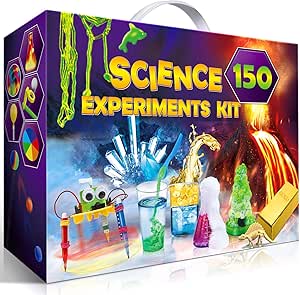 | Best for Broad Science Exploration | Brand: UNGLINGA | Experiment count: 150 | Recommended age: 8 years and up | VIEW LATEST PRICE | See Our Full Breakdown |
| Magic Growing Christmas Tree DIY Kit, 2 Pieces |  | Best Quick Christmas Science Display | Brand: AhkeaDirectly | Model: AH2PCS | Manufacturer part number: PMB-149 | VIEW LATEST PRICE | See Our Full Breakdown |
| National Geographic Science Advent Calendar for Kids Ages 8–12 |  | Best Christmas Countdown Gift | Brand: Blue Marble | Age range: 8 years and up | Calendar duration: 24 days | VIEW LATEST PRICE | See Our Full Breakdown |
| National Geographic Break Open 10 Premium Geodes Kit |  | Best for Hands-On Geology | Brand: Blue Marble | Age range: 8 years and up | Geodes included: 10 natural geodes | VIEW LATEST PRICE | See Our Full Breakdown |
| 24-Piece Growing Crystal Tree STEM Kit with Cards |  | Best for Christmas Group Activities | Brand: Seivhat | Set quantity: 24 sets | Included components: 24 paper trees, 24 bases, 24 crystal solution packets, and 24 instructional greeting cards | VIEW LATEST PRICE | See Our Full Breakdown |
| Tasty Labs Christmas Gummy Candy Making Kit |  | Best Edible Christmas Science Activity | Maximum yield: Up to 48 gummies | Flavors: Red cranberry and green apple | Shapes: Trees, Santas, and reindeer | VIEW LATEST PRICE | See Our Full Breakdown |
| Doctor Jupiter My First Science Experiments Kit for Kids Ages 4+ |  | Best for Preschool Beginners | Brand: Doctor Jupiter | Recommended age: 4 years and up | Experiments: Over 100 | VIEW LATEST PRICE | See Our Full Breakdown |
| UNGLINGA Science Kit for Kids with 40+ Experiments |  | Best Compact Experiment Kit | Brand: UNGLINGA | Experiments: 40+ | Recommended age: 8 years and up | VIEW LATEST PRICE | See Our Full Breakdown |
| National Geographic Magic Chemistry Set with 10 Tricks for Kids Ages 8–12 |  | Best for Christmas Science Demonstrations | Brand: Blue Marble | Age range: 8 years and up | Experiments: 10 | VIEW LATEST PRICE | See Our Full Breakdown |
| Blue Marble Santa’s Christmas Science Workshop Kit for Kids, Ages 8+ |  | Best Christmas-Themed Experiment Kit | Brand: Blue Marble | Recommended age: 8 years and up | Experiments: 5 holiday-themed science experiments | VIEW LATEST PRICE | See Our Full Breakdown |
| National Geographic Earth Science Kit with 100+ Activities for Kids Ages 8–12 | 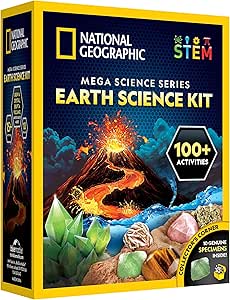 | Best for Year-Round Science Exploration | Brand: Blue Marble | Recommended age: 8 years and up | Activities: 100+ science experiments and activities | VIEW LATEST PRICE | See Our Full Breakdown |
| Blue Marble Science Surprise Christmas Ornaments, Set of 4 |  | Best for Small Science Gifts | Brand: Blue Marble | Set size: 4 ornaments | Experiments: Bouncy ball, instant snow, hydrophobic sand, and bouncing putty | VIEW LATEST PRICE | See Our Full Breakdown |
| kids Christmas science kit | Brand | Recommended age | Included components | Experiments |
|---|---|---|---|---|
| Creativity for Kids Grow ‘N Gl | — | 6+ | — | — |
| UNGLINGA 150-Experiment Scienc | UNGLINGA | 8 years and up | Science experiment tools and materials | — |
| Magic Growing Christmas Tree D | AhkeaDirectly | — | Tree, stand with water reservoir, packet of magic water, star topper | — |
| National Geographic Science Ad | Blue Marble | — | Advent calendar, science activities, rocks, and fossils | 13 |
| National Geographic Break Open | Blue Marble | — | Safety goggles, magnifying glass, display stand, and learning guide | — |
| 24-Piece Growing Crystal Tree | Seivhat | — | 24 paper trees, 24 bases, 24 crystal solution packets, and 24 instructional greeting cards | — |
| Tasty Labs Christmas Gummy Can | — | — | — | — |
| Doctor Jupiter My First Scienc | Doctor Jupiter | 4 years and up | — | Over 100 |
| UNGLINGA Science Kit for Kids | UNGLINGA | 8 years and up | — | 40+ |
| National Geographic Magic Chem | Blue Marble | — | Magic wand, gloves, full-color learning guide, and materials for 10 experiments | 10 |
| Blue Marble Santa’s Christmas | Blue Marble | 8 years and up | Materials for five experiments and instructions | 5 holiday-themed science experiments |
| National Geographic Earth Scie | Blue Marble | 8 years and up | — | More than 15 |
| Blue Marble Science Surprise C | Blue Marble | 8 years and up | — | Bouncy ball, instant snow, hydrophobic sand, and bouncing putty |
More Details on Our Top Picks
Creativity for Kids Grow ‘N Glow Terrarium Kit
For a Christmas gift that keeps going after the decorations come down, I’d choose the Grow ‘N Glow Terrarium Kit. Kids plant chia and wheatgrass, then decorate the terrarium with figurines, stones, stickers, and glow-in-the-dark sand. The two planting cycles give families another chance to repeat the activity, while seeds that can start growing in 3–4 days offer a visible payoff without a long wait. Compared with the Magic Growing Christmas Tree DIY Kit, this is a slower, care-based project rather than a one-day seasonal display; that makes it a better fit for children who enjoy checking on living things. The tradeoff is ongoing attention: plants need water and light, and the terrarium is plastic rather than glass. I’d skip it for a child who wants an instant result or is unlikely to help with plant care.
Pros:- Includes supplies for two planting cycles
- Combines planting with hands-on decorating
- Glow-in-the-dark accents add a nighttime display feature
- Chia and wheatgrass can begin growing in 3–4 days
Cons:- Plants need regular watering and suitable light
- The terrarium jar is plastic
- Growth depends on ongoing care rather than a one-time activity
Best for: Families seeking a screen-free Christmas gift for a child age 6 or older who enjoys decorating projects and tending plants over several days.
Not ideal for: Gift buyers looking for a quick, low-maintenance activity; the seeds need watering and light, and growth takes time.
- Recommended age:6+
- Planting cycles:2
- Seeds:Chia and wheatgrass
- Terrarium material:Plastic
- Included planting supplies:Potting mix and seeds
- Decorative items:Figurines, glow-in-the-dark sand, river stones, stickers
- Container:Terrarium jar with decorative lid
Our verdict“Choose this for a child who will enjoy decorating a terrarium and caring for plants after Christmas.”
UNGLINGA 150-Experiment Science Kit for Kids
If the goal is to give a curious child a wide range of projects rather than a single Christmas-themed activity, the UNGLINGA 150-Experiment Science Kit is the broadest exploration pick in this group. Its experiments span chemistry, physics, Earth science, and surface tension, with an illustrated, step-by-step manual to help children work through activities. Compared with the National Geographic Science Advent Calendar, which parcels out a mix of experiments and specimens across 24 days, this kit is better suited to choosing projects whenever there is time. That flexibility comes with a planning tradeoff: some experiments call for household items not included, so adults may need to check instructions and gather supplies before a session. It is also recommended for ages 8 and up, making it less suited to younger first-time experimenters than a starter kit designed for younger children.
Pros:- Offers 150 experiments across several science subjects
- Includes an illustrated step-by-step manual
- Provides kid-friendly science tools and materials
- Allows families to choose experiments at their own pace
Cons:- Some projects require household items that are not included
- The large activity selection may require adult help choosing and preparing projects
- Recommended for ages 8 and up, so it may not suit younger children
Best for: Families with a science-curious child age 8 or older who wants to choose from many different experiment topics throughout the year.
Not ideal for: Buyers who want every activity ready to start straight from the box or a Christmas countdown organized by day.
- Brand:UNGLINGA
- Experiment count:150
- Recommended age:8 years and up
- Topics:Chemistry, physics, Earth science, and surface tension
- Included components:Science experiment tools and materials
- Instructions:Illustrated step-by-step manual
- Material type:Plastic
- Dimensions:11.42 x 8.67 x 3.94 inches
Our verdict“Pick this for an older child who wants many different experiments and has an adult available to help prepare household supplies.”
Magic Growing Christmas Tree DIY Kit, 2 Pieces
Among these options, the Magic Growing Christmas Tree DIY Kit has the clearest seasonal payoff: shape the absorbent-paper tree, add the included liquid, and watch it grow over about 24 hours. That short timeline makes it easier to fit into a holiday afternoon than the Grow ‘N Glow Terrarium Kit, which asks children to care for real seeds over a longer period. The tree is both a simple science activity and a Christmas decoration, with a stand and star topper included. Its speed does not make it a hands-off project, though. The branches need shaping before growth, and the tree should stay in a stable indoor spot away from ventilation, heat, and direct sunlight. Frequent moving can disrupt the display, and most decorations need to be added early. I’d choose it for a quick seasonal activity, not for children hoping to study living plants.
Pros:- Designed to grow in about 24 hours
- Combines a simple activity with a Christmas decoration
- Includes a stand with a water reservoir and magic water
- Comes with a star topper
Cons:- Needs a stable indoor location away from ventilation, heating, and direct sunlight
- Branches must be separated into a tree shape before growth
- The tree should not be moved often, and most decorations need to be added early
Best for: Families wanting a short, Christmas-specific activity for a child who enjoys making a seasonal display and can leave it undisturbed.
Not ideal for: Children seeking a reusable experiment or a project involving real seeds; the paper tree is a one-time display and needs a stable location.
- Brand:AhkeaDirectly
- Model:AH2PCS
- Manufacturer part number:PMB-149
- Tree material:Absorbent paper
- Growth time:About 24 hours
- Growth liquid:Colorless, odorless, non-toxic
- Included components:Tree, stand with water reservoir, packet of magic water, star topper
- Recommended use:Christmas decoration and DIY activity
Our verdict“Choose this for a quick holiday craft-and-science display, rather than an ongoing growing project like the Grow ‘N Glow Terrarium.”
National Geographic Science Advent Calendar for Kids Ages 8–12
For a gift meant to unfold across December, I’d rank the National Geographic Science Advent Calendar ahead of the other kits here. Its 24-day format mixes 13 hands-on experiments with 11 gemstone and fossil specimens, giving children both activities and objects to explore or keep. The final-day pyrite excavation adds a satisfying hands-on finish. Compared with the UNGLINGA 150-Experiment Science Kit, this calendar offers far fewer experiments, but its daily structure makes the Christmas experience more deliberate and easier to pace. That structure is also its main limitation: it is designed for a countdown, not a large collection of activities to use whenever a child wants. Since some days focus on specimens instead of experiments, buyers expecting a fresh experiment behind every door should choose another kit. The included storage pouch helps keep the collection together afterward.
Pros:- 24-day format gives the gift a Christmas countdown structure
- Includes 13 hands-on science experiments
- Features 11 gemstone and fossil specimens
- Includes a pyrite excavation and a storage pouch
Cons:- Activities are spread across 24 days
- Not every calendar item is an experiment; some focus on specimens
- Less suited to year-round project variety than the UNGLINGA 150-Experiment kit
Best for: Families buying for a child age 8 or older who enjoys a daily Christmas countdown, hands-on activities, and collecting rocks or fossils.
Not ideal for: Children who want an experiment every day or a large set of projects to use at any time of year.
- Brand:Blue Marble
- Age range:8 years and up
- Calendar duration:24 days
- Experiments:13
- Gemstone and fossil specimens:11
- Included components:Advent calendar, science activities, rocks, and fossils
- Storage:Collection pouch
- Dimensions:11.69 in L x 3.07 in W
Our verdict“Pick this for an 8–12-year-old who will enjoy opening and exploring a mix of science activities and specimens throughout December.”
National Geographic Break Open 10 Premium Geodes Kit
For a child who would rather reveal a real specimen than follow a sequence of small experiments, the National Geographic Break Open 10 Premium Geodes Kit is my geology pick. It includes 10 natural geodes, plus safety goggles, a magnifying glass, a display stand, and a guide explaining how geodes form. The central activity is direct and memorable: children crack open the rocks, then inspect and display the crystals inside. Compared with the National Geographic Science Advent Calendar, this kit is more focused on geology and specimen discovery, but it lacks the calendar’s variety and daily holiday rhythm. The tradeoff is physical preparation: the geodes must be cracked open, so this is not a quiet, ready-to-do activity for every setting. Geodes also vary in size, from ping-pong-ball size to as large as a tennis ball, making the reveal less uniform from piece to piece.
Pros:- Includes 10 natural geodes with varied crystals
- Comes with safety goggles for the cracking activity
- Magnifying glass helps children examine crystal details
- Learning guide explains how geodes form, and a stand displays a specimen
Cons:- Geodes need to be cracked open to reveal their crystals
- Geode sizes vary from ping-pong-ball size to as large as a tennis ball
- Focused on geology rather than offering a variety of experiment types
Best for: Families with a child age 8 or older who is interested in rocks, crystals, and a supervised specimen-opening activity.
Not ideal for: Buyers seeking a tidy, multi-topic Christmas countdown or an activity that avoids cracking rocks open.
- Brand:Blue Marble
- Age range:8 years and up
- Geodes included:10 natural geodes
- Included components:Safety goggles, magnifying glass, display stand, and learning guide
- Educational objective:STEM
- Item dimensions:2.75 x 7.75 x 12 inches
- Item weight:2.1 pounds
- Model number:NGGEO10
Our verdict“Choose this for a child who wants a focused, hands-on geology activity and can open geodes with appropriate adult supervision.”
24-Piece Growing Crystal Tree STEM Kit with Cards
For a classroom, holiday gathering, or a family that wants several children to make something at once, this kit’s 24 individual tree sets are its clearest advantage. Each child gets a paper tree, base, solution packet, and illustrated card, making it easier to distribute materials than with a shared experiment kit such as the Doctor Jupiter My First Science Experiments Kit. The activity gives kids a simple introduction to crystal growth and fine-motor assembly, and the finished trees can serve as seasonal decorations. The tradeoff is patience: crystals take about six hours to grow, so this is a start-and-wait activity rather than a quick Christmas-morning project. Paper components may also be less durable than reusable lab tools, and the kit offers a narrower science experience than a broad experiment set.
Pros:- 24 separate sets make group activities and party favors straightforward.
- Illustrated cards help children follow the assembly steps.
- Crystal growth offers a visible introduction to a science process.
- Finished trees can be kept as seasonal decorations.
Cons:- Crystals take about six hours to grow, so the result is not immediate.
- Paper trees and bases may be less durable than reusable kit components.
- The activity centers on one type of project rather than multiple experiments.
Best for: Hosts, teachers, and families planning a Christmas activity where many children need their own take-home project.
Not ideal for: Children who want immediate results, or families looking for reusable equipment and a wide range of experiments.
- Brand:Seivhat
- Set quantity:24 sets
- Included components:24 paper trees, 24 bases, 24 crystal solution packets, and 24 instructional greeting cards
- Colors:Pink, blue, green, and red
- Material:Paper; crystal solution described as non-toxic and odorless
- Crystal growth time:About 6 hours
- Recommended use:Indoor
Our verdict“Choose this for a Christmas group activity with individual keepsakes, but pick a broader experiment kit if variety matters more.”
Tasty Labs Christmas Gummy Candy Making Kit
This is the most directly festive pick for children who would rather make a treat than keep a science craft. The kit combines gummy-making ingredients and tools with Christmas tree, Santa, and reindeer molds, then adds baggies and stickers for sharing. That gives the activity a natural finish: kids can make and package up to 48 gummies, while talking about the chemistry involved in candy making. Compared with the 24-Piece Growing Crystal Tree STEM Kit, it produces something to eat rather than a decoration, but the results are less lasting and the experience depends on whether the family likes cranberry and green apple. The three shapes keep the holiday theme clear, though they limit variety. This makes a better supervised kitchen project than a general-purpose science set, and ingredient sensitivities or dietary needs may affect who can take part.
Pros:- Includes ingredients and tools for making the gummies.
- Candy-making connects a familiar treat with STEM concepts.
- Makes up to 48 gummies for sharing.
- Baggies and stickers help children package finished candies.
Cons:- Only three Christmas-themed shapes are included.
- Flavor choices are limited to cranberry and green apple.
- The finished product is edible rather than a lasting keepsake.
Best for: Families seeking a hands-on holiday kitchen activity that children can share as edible treats.
Not ideal for: Households with dietary restrictions or children who dislike cranberry and green apple, and buyers seeking a reusable science kit.
- Maximum yield:Up to 48 gummies
- Flavors:Red cranberry and green apple
- Shapes:Trees, Santas, and reindeer
- Included packaging:10 plastic baggies and stickers
- Colors:Natural colors; no artificial colors
- Ingredient origin:Made and packed in the USA
Our verdict“Pick this for a festive, shareable kitchen project; choose the crystal tree kit if you want a decoration that lasts beyond the activity.”
Doctor Jupiter My First Science Experiments Kit for Kids Ages 4+
For younger children receiving a first science kit at Christmas, illustrated step-by-step instructions and an age recommendation of four and up make this the most approachable broad experiment set in this group. Its more than 100 activities promise more to revisit than the focused National Geographic Magic Chemistry Set, which centers on ten demonstration-style tricks. The included beakers, cups, tray, goggles, and household-style experiment materials give adults useful starting equipment, while activities such as Water Fireworks and Walking Water make the learning visible. The large activity count does not mean every experiment will be independent play: some need adult guidance, particularly for younger children. It also lacks the Christmas-specific theme of the gummy kit or crystal trees, so the holiday connection comes from gifting it rather than from the experiments themselves.
Pros:- Offers more than 100 experiments for repeat use.
- Illustrated, step-by-step instructions support children and caregivers.
- Includes a range of lab-style tools and experiment materials.
- Meets the ASTM F963-17 toy safety standard.
Cons:- Some experiments may require adult guidance for younger children.
- Its general science theme is less Christmas-specific than the gummy and crystal tree kits.
- The large activity count may require adult help to select and prepare experiments.
Best for: Families buying a first science set for a child aged four or older, with an adult available to help with activities.
Not ideal for: Shoppers who want a Christmas-themed project, or children expecting to complete every experiment without adult help.
- Brand:Doctor Jupiter
- Recommended age:4 years and up
- Experiments:Over 100
- Included tools:2 beakers, 1 conical flask, 1 spatula, 2 stirring sticks, 2 spray bottles, 2 cups, 1 funnel, 1 pair of safety goggles, and 1 tray
- Included materials:Rose and mango food essences, baking powder, chalk powder, corn starch, lemongrass and peppermint leaves, and blue, yellow, and red food colors
- Instructions:Instruction manual and bonus experiment booklet
- Safety standard:ASTM F963-17
- Model number:DJ Junior Science
Our verdict“Choose this as a first science gift for a young child when an adult can join in and long-term variety matters more than holiday theming.”
UNGLINGA Science Kit for Kids with 40+ Experiments
Among the broad science options here, this kit takes up the least space: its listed dimensions are 8 x 5.7 x 2.7 inches, making it easier to tuck into a gift bag or store between activities than the larger Doctor Jupiter set. More than 40 experiments, including bouncy balls and lava lamps, offer a varied introduction for children aged eight and up. The illustrated manual supports independent reading, though some experiments need common household items, so the box may not supply everything a child needs to begin. Compared with the National Geographic Magic Chemistry Set, UNGLINGA offers a broader activity count, while the National Geographic kit has a clearer performance angle for showing experiments to others. This one is less Christmas-specific and its compact size comes with a practical tradeoff: check the instructions and gather any extra materials before setting up.
Pros:- Compact listed dimensions make storage and gifting easier.
- Includes materials for more than 40 experiments.
- Activities include hands-on projects such as bouncy balls and lava lamps.
- Illustrated instructions provide child-friendly steps.
Cons:- Some experiments require common household items not included in the kit.
- The age recommendation of eight and up makes it less suited to younger children.
- It lacks a specific Christmas theme or a performance-focused format.
Best for: Families with children aged eight or older who want a compact, varied kit and do not mind supplying some household materials.
Not ideal for: Gift buyers seeking a fully self-contained Christmas activity or a ready-made magic-show experience.
- Brand:UNGLINGA
- Experiments:40+
- Recommended age:8 years and up
- Material:Plastic
- Dimensions:8 x 5.7 x 2.7 inches
- Weight:0.32 kg
- Included items:Science experiment materials
Our verdict“Choose this for an older child who wants varied experiments in a compact box and can work with a caregiver to gather extra supplies.”
National Geographic Magic Chemistry Set with 10 Tricks for Kids Ages 8–12
This kit is the strongest choice when the Christmas gift needs to turn into a small science show. Its ten chemistry experiments are framed as magic tricks, including making a coin float, changing liquid colors, and creating instant snow; the wand and gloves help give a child a performance-ready role. The illustrated guide also explains the science behind each effect, so the activity can move from surprise to discussion. Compared with the UNGLINGA Science Kit, this set has fewer experiments but a more focused presentation format; UNGLINGA suits children who want more activities to explore at home. The tradeoff is clear: ten tricks offer less long-term variety, and the listed age range starts at eight. This is not the broadest science kit, but it gives demonstrations a festive, share-with-family feel.
Pros:- Ten experiments are designed as demonstrations with a magic-trick format.
- The guide pairs instructions with explanations of the science.
- Includes a magic wand and gloves to support pretend performance.
- Experiments such as instant snow and color-changing liquids suit a holiday gathering.
Cons:- Ten experiments provide less activity variety than the UNGLINGA kit or Doctor Jupiter set.
- The age range starts at eight, so it is not aimed at preschool beginners.
- Its focused trick format may not suit children who prefer open-ended experimentation.
Best for: Children aged eight and up who enjoy performing demonstrations for family and want science explanations alongside the tricks.
Not ideal for: Younger children or families prioritizing a large collection of varied experiments over a presentation-focused set.
- Brand:Blue Marble
- Age range:8 years and up
- Experiments:10
- Educational objective:STEM
- Included components:Magic wand, gloves, full-color learning guide, and materials for 10 experiments
- Model number:NGSCIMAGIC
Our verdict“Pick this for an older child who wants to perform science tricks at Christmas, not for a family seeking the widest experiment collection.”
Blue Marble Santa’s Christmas Science Workshop Kit for Kids, Ages 8+
For a gift that feels tied to Christmas without stopping at a single decoration, Santa’s Christmas Science Workshop pairs five experiments with a booklet of more than 20 extra festive activities. Kids can make instant snow, grow crystal-covered trees, and explore hydrophobic sand, giving the kit more variety than the Science Surprise Christmas Ornaments, which focuses on four experiments packaged as ornaments. The added activities may extend the fun, though the product details do not say that materials for all of those bonus projects are included. Compared with the broader National Geographic Earth Science Kit, this is much more seasonal and less suited to year-round exploration. Its Christmas focus is a strength for a holiday gift, but a limitation for families seeking experiments that feel relevant throughout the year. The stated age range is 8 and up.
Pros:- Includes materials and instructions for five holiday-themed experiments.
- Combines instant snow, crystal-covered trees, and hydrophobic sand for varied activities.
- Bonus booklet adds more than 20 festive activities.
- Compact box is listed at 7.24 x 2.37 x 10 inches.
Cons:- The Christmas theme may limit its appeal after the holiday season.
- The listed materials cover five experiments; the data does not confirm supplies for all bonus activities.
- Recommended for ages 8 and up, so it is not suited to younger children.
Best for: Families shopping for an age-8-or-older child who would enjoy several hands-on experiments with a clear Christmas theme.
Not ideal for: Gift buyers seeking a year-round science set or activities for children younger than 8; its experiments and bonus booklet are holiday-focused.
- Brand:Blue Marble
- Recommended age:8 years and up
- Experiments:5 holiday-themed science experiments
- Bonus activities:More than 20
- Included components:Materials for five experiments and instructions
- Educational objectives:Concentration, exploratory skills, and STEM
- Material type:Cardboard
- Dimensions:7.24 x 2.37 x 10 inches
- Weight:0.34 kg
Our verdict“Choose this for an 8+ child who wants a distinctly festive science gift, but pick the National Geographic Earth Science Kit for broader year-round subjects.”
National Geographic Earth Science Kit with 100+ Activities for Kids Ages 8–12
Among these options, the National Geographic Earth Science Kit is the strongest choice when a Christmas gift should keep going well beyond the holiday. It includes more than 15 experiments, such as a volcano, crystal growing, and two geology dig kits, while its guide explains the science behind the activities. That wider subject range contrasts with Santa’s Christmas Science Workshop, which is more tightly matched to the season but centers on five holiday experiments. The Earth Science Kit is not Christmas-themed, so it offers less immediate festive flair; its advantage is a more enduring topic for children who like rocks, crystals, and eruptions. The listing also describes 100+ activities, although it distinguishes that total from the more than 15 experiments. Some activities call for group participation, making this a better shared gift than a strictly independent project set.
Pros:- Offers more than 15 experiments plus 100+ listed activities for extended exploration.
- Includes varied earth science projects such as crystal growing, a volcano, and two dig kits.
- Full-color guide provides instructions and explanations of the science.
- Designed for exploration with family, friends, or classmates.
Cons:- Lacks the seasonal theme and holiday projects of Santa’s Christmas Science Workshop.
- Some activities require participation with others, which may not suit a child working alone.
- The 100+ activity count is distinct from the stated total of more than 15 experiments, so buyers should not assume every activity is a separate experiment.
Best for: Families buying for an earth-science-minded child ages 8–12 who can share activities with a sibling, friend, or adult and wants projects beyond Christmas.
Not ideal for: Shoppers who want an explicitly Christmas-themed present or a kit designed only for solo use, since some activities involve group participation.
- Brand:Blue Marble
- Recommended age:8 years and up
- Activities:100+ science experiments and activities
- Experiments:More than 15
- Included activities:Crystal growing, volcano experiments, rock collection, and earth science activities
- Learning guide:Full-color guide with instructions and science explanations
- Dimensions:8.66 x 3.15 x 12 inches
- Weight:2.6 pounds
- Model number:NGMEGAEARTH
Our verdict“Choose this for a child who prefers geology and repeatable year-round exploration over a Christmas-specific science set.”
Blue Marble Science Surprise Christmas Ornaments, Set of 4
The Science Surprise Christmas Ornaments suit buyers who want several compact, giftable experiments with an obvious place in the holiday setup. The set contains four ornament-shaped packages, with activities for making a bouncy ball, instant snow, hydrophobic sand, and bouncing putty; instructions and a learning guide are included. That makes it a more contained choice than Santa’s Christmas Science Workshop, which adds five experiments and a booklet of more than 20 festive activities. The tradeoff is less listed activity variety, but the ornament format gives each experiment a clear role as a small seasonal gift or stocking addition. It is also more Christmas-forward than the National Geographic Earth Science Kit, which trades holiday presentation for broader subjects. No batteries are required, though the age guidance is 8 and up.
Pros:- Four distinct experiments cover bouncy ball, instant snow, hydrophobic sand, and bouncing putty.
- Ornament packaging gives the set a clear seasonal gift presentation.
- Instructions and a learning guide are included.
- No batteries are required.
Cons:- Includes fewer listed experiments than Santa’s Christmas Science Workshop.
- The 8+ age recommendation rules it out for younger children.
- The description does not list additional activities beyond the four experiments.
Best for: Gift givers seeking a compact, Christmas-presentable science set with four distinct projects for a child aged 8 or older.
Not ideal for: Families wanting an extensive experiment collection or activities for children under 8; this set contains four experiments and has an 8+ recommendation.
- Brand:Blue Marble
- Set size:4 ornaments
- Experiments:Bouncy ball, instant snow, hydrophobic sand, and bouncing putty
- Recommended age:8 years and up
- Educational objective:STEM
- Materials:Plastic and silicone
- Batteries:Not required
- Dimensions:8.66 x 3.35 x 8.11 inches
- Model number:CABSCIORN
Our verdict“Pick this for four seasonal science activities in ornament packaging; choose Santa’s Christmas Science Workshop for a larger holiday activity selection.”
How We Picked
I compared these kits by how well they suit a Christmas gift, how clear their age guidance is, and what kind of activity they offer: repeatable experiments, a one-time discovery, a creative project, or a holiday countdown. I also weighed the stated activity or piece counts against the kind of engagement they suggest; a larger number does not automatically mean a better fit if a child wants one polished project or needs close adult help.
The ranking favors options that combine a strong gift experience with useful activity variety and a clear audience. That puts the Science Advent Calendar ahead for its seasonal format, while broad experiment sets rank well for ongoing use but less strongly for Christmas-specific appeal. Focused kits sit lower as all-purpose choices, yet can be the better pick for a child with a clear interest in candy making, crystals, rocks, or decoration. I also treated age suitability and the likely need for adult supervision as meaningful tradeoffs rather than assuming every kit suits every child.
| kids Christmas science kit | Brand |
|---|---|
| Creativity for Kids Grow ‘N Gl | — |
| UNGLINGA 150-Experiment Scienc | UNGLINGA |
| Magic Growing Christmas Tree D | AhkeaDirectly |
| National Geographic Science Ad | Blue Marble |
| National Geographic Break Open | Blue Marble |
| 24-Piece Growing Crystal Tree | Seivhat |
| Tasty Labs Christmas Gummy Can | — |
| Doctor Jupiter My First Scienc | Doctor Jupiter |
| UNGLINGA Science Kit for Kids | UNGLINGA |
| National Geographic Magic Chem | Blue Marble |
| Blue Marble Santa’s Christmas | Blue Marble |
| National Geographic Earth Scie | Blue Marble |
| Blue Marble Science Surprise C | Blue Marble |
Factors to Consider When Choosing Kids Christmas Science Kits
Choosing among kids’ Christmas science kits is easier when you begin with how the child likes to play, not the biggest number printed on the box. These questions can help separate a festive activity from a gift that stays useful well beyond the holiday.
Match the Kit to the Child’s Preferred Kind of Activity
Some children want to follow steps and see a visible result; others would rather repeat experiments, make something to display, or learn through collecting. A crystal tree, terrarium, or ornament project can hold a child’s attention through making and decorating, even if it offers less variety than a large experiment set. A broad kit is a better fit for children who like sampling different activities and do not mind moving from one setup to another. A common buying mistake is treating a high activity count as proof that a kit will suit every interest. Think about whether the child would be happiest with a finished object, a surprising result, or many chances to experiment.
Read Age Guidance as a Clue to Independence
Age ranges help indicate the intended level of instructions and activity, but they do not tell you exactly how much adult involvement a child will need. Younger children may enjoy experimenting while relying on an adult to prepare materials, read directions, or manage cleanup. Older children may prefer kits that let them follow a sequence with more independence. Before buying, check the included instructions and any listed supply needs rather than assuming that an age label means a child can work alone. If siblings will share a kit, choose for the youngest participant’s ability to follow along, and let older children take on extra tasks. This makes the activity more cooperative and reduces frustration.
Choose Seasonal Novelty or Year-Round Use
A Christmas-specific design can make a present feel timely and create an activity to share during the holiday break. Its tradeoff is that the theme may be less appealing once the season passes. General science kits give up some seasonal character in exchange for activities that can be revisited at other times of year. Advent-style formats add a calendar structure, which can be fun for children who enjoy a daily reveal, but less suitable for a child who wants to open and use the whole gift at once. Ask whether the kit is meant to be part of a holiday routine or a reusable supply of activities. That distinction can matter more than the number of experiments.
Look Beyond the Activity Count
Counts can describe very different things: separate experiments, components, cards, or small pieces that support a single project. A higher number may offer more options, but it can also mean more sorting and more steps before the activity begins. A smaller, focused kit can be a better gift when the child is excited about one clear theme, such as crystals, rocks, or candy. Consider how much setup, storage, and cleanup your household can accommodate, especially if the kit will be used at a busy holiday gathering. When product details list required household items or adult assistance, include those in your decision. The most useful kit is the one the child can actually get started with and enjoy.
Decide Whether the Result Should Be Kept, Eaten, or Explored
Finished projects, edible activities, and discovery kits create different kinds of memories. A decoration or growing display can remain visible after the activity, while candy making centers on preparing and enjoying a treat. A geode or earth science activity is more about observation and learning than producing a holiday keepsake. This affects both the child’s interest and the practical demands on the household: edible projects may involve food preferences, while craft or growing projects can need space and time. Check product details for material needs and follow any relevant safety guidance, especially when children share supplies. Pick the kind of outcome that fits the child and the occasion rather than assuming every science kit needs to leave a displayable result.
Frequently Asked Questions
Which kit is the best choice if I want the gift to feel specifically Christmas-themed?
Start with the National Geographic Science Advent Calendar if you want the gift tied to a countdown, or the Blue Marble Santa’s Christmas Science Workshop for a more directly holiday-focused activity. The growing Christmas tree and Christmas ornament kits also suit children who prefer festive makes over a broad set of experiments. General kits may offer more activities beyond the season, but their presentation is less specifically tied to Christmas. Consider when the child will open it: a countdown format works best when there is time to use it across several days. For a single holiday gathering, a project-based kit may be easier to fit into the schedule.
What should I choose for a child who has never tried a science kit?
Choose a kit whose age guidance and activity style match the child, rather than starting with the largest set. Doctor Jupiter My First Science Experiments is explicitly aimed at younger children, making it a natural starting point for families shopping for ages four and up. For older beginners, a focused project can feel more approachable than a kit with many different activities to sort through. Plan to join in if the child needs help reading instructions or preparing materials. A first kit should make it easy to complete an activity and feel curious about what happened, not create pressure to use every component.
Are large experiment sets a better gift than a smaller themed kit?
Not by default: a large set suits a child who enjoys trying different activities and has room to keep materials organized, while a themed kit can be more engaging for a strong interest. UNGLINGA’s 150-experiment set and the National Geographic Earth Science Kit offer broad activity scope, whereas the gummy candy, geode, and crystal options each have a clearer focus. A smaller kit can be easier to start and more memorable if its subject already appeals to the child. Check whether the listed count means distinct activities or supporting components, and review any extra materials needed. Match the format to the child’s habits, not just the number on the package.
Can one science kit work for siblings of different ages?
It can, but age range alone does not guarantee that every child will participate comfortably. Look for a kit with activities that can be shared, then give each child a role suited to their reading and coordination skills. An adult may need to handle instructions, preparation, or steps that the younger sibling cannot manage independently. Broad experiment sets can provide choices, though they may also require more sorting and supervision. If the age gap is large, a simple project that produces a visible result can be easier to enjoy together than activities that depend on independent reading. Check the kit’s stated age guidance before buying for a group.
What details should I check before ordering a kit for holiday use?
Check the recommended age, the number and type of activities, and whether the kit calls for household supplies not included in the package. Consider how long the activity takes and whether the child can pause between steps; that matters for a holiday schedule or an advent-style gift. For projects that grow, set, or otherwise develop over time, confirm that the family has a suitable place to leave the result. If the kit makes food or uses small components, think about household preferences and adult supervision. These practical checks can prevent a promising gift from being difficult to start or awkward to use during a busy season.
Conclusion
For the best overall balance of Christmas appeal and activity, I’d choose the National Geographic Science Advent Calendar. The best value by breadth is the UNGLINGA 150-Experiment Science Kit, especially for a child who wants many activities and is less focused on seasonal packaging. For a premium-feeling themed gift, the National Geographic Earth Science Kit stands out for its broad subject focus and extensive activity scope; for beginners, I’d pick Doctor Jupiter My First Science Experiments. Choose the Tasty Labs Gummy Candy Kit for edible making, the National Geographic Geodes Kit for rock discovery, or a crystal-tree or ornament kit for a festive project to display. The right choice depends on whether your child wants a countdown, a wide-ranging experiment box, or one memorable holiday activity.