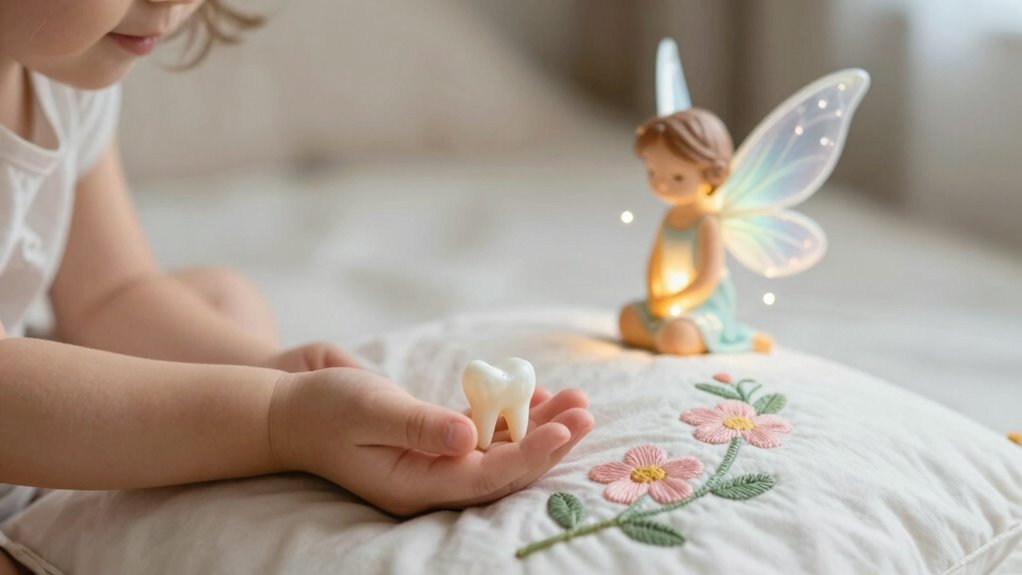

The tooth fairy tradition boosts your child’s emotional growth by creating excitement around milestones, helping them process loss positively, and teaching patience and hope. It introduces cultural diversity, showing that different cultures have unique symbols, which fosters respect and curiosity. This ritual also builds trust, encourages resilience, and strengthens emotional security. By nurturing a sense of wonder and celebration, you support their social and cultural understanding—if you continue exploring, you’ll uncover even more ways this tradition benefits their development.

Get baby and family essentials delivered free — and shop member deals
- Fast, free delivery on millions of items
- Access to Prime Big Deal Days deals on October 6–7
- Prime Video, Amazon Music and more included
Key Takeaways
- The tradition promotes emotional resilience by helping children process loss and change positively.
- It fosters excitement, security, and trust through supportive rituals and rewards.
- Cultural variations enhance understanding of diversity and deepen appreciation for different childhood milestones.
- Celebrating the tooth fairy teaches patience, hope, and milestone recognition.
- Exploring cultural practices around the tooth fairy encourages respect, empathy, and a broader worldview.

The tooth fairy tradition is more than just a magical rite; it plays a significant role in a child’s emotional and developmental growth. When you introduce this tradition, you’re not only creating a sense of wonder but also helping your child process a vital milestone—the loss of their baby teeth. This ritual fosters feelings of excitement and security, especially when they wake up to find a small gift or money under their pillow. As they participate in this shared experience, they learn that change can be positive, and they start to associate growth with celebration.
Cultural variations in the tooth fairy tradition add depth to your child’s understanding of the world. In some cultures, the tooth fairy might be replaced by a different figure, like a mouse or a spirit, each carrying its own symbolism. These differences can help your child appreciate diversity and develop an open-minded attitude toward other traditions. Engaging with these variations can also reinforce the idea that cultural practices are meaningful and can vary widely, fostering curiosity and respect. Recognizing that their experience with the tooth fairy is part of a broader cultural tapestry can boost their confidence in *steering* different social settings and understanding diverse beliefs.
Emotionally, the tooth fairy tradition can have a lasting impact on your child. It offers a gentle way to address feelings of loss and change. When they put their tooth under the pillow, they may feel a mix of anticipation, pride, and even a little apprehension. Supporting them through this process helps build emotional resilience, showing them that they can handle *shifting* with a positive outlook. The ritual also nurtures their sense of trust, as they rely on the fairy’s promise and experience the joy of receiving a reward. Over time, these feelings contribute to their overall emotional development, teaching them about patience, hope, and the importance of celebrating milestones. Additionally, understanding diverse cultural beliefs can foster a broader sense of empathy and respect for others’ traditions. Exploring different cultural practices related to childhood milestones can further deepen their appreciation for the world’s diversity. Recognizing that such traditions often carry deep-rooted symbolism can help children understand the significance behind these customs beyond the surface level. This awareness can also serve as an educational tool for teaching children about history and cultural context, enriching their learning experiences. Furthermore, this awareness can support their ability to navigate and respect various cultural contexts in their social interactions.
As an affiliate, we earn on qualifying purchases.
Frequently Asked Questions
How Does the Tooth Fairy Tradition Vary Across Different Cultures?
You’ll find that the tooth fairy tradition varies across cultures through different ritual variations and cultural myths. In some societies, children place their lost tooth in a special container, while others bury it or keep it as a keepsake. These differences reflect local beliefs and values surrounding childhood, death, and luck. The rituals help children understand change and passage, emphasizing cultural diversity in how they celebrate and honor growing up.
When Is the Appropriate Age for Children to Stop Believing in the Tooth Fairy?
You might consider stopping the belief when the myth begins to feel like a fragile sandcastle, easily washed away. Typically, kids around age 8 or 9 start questioning the myth reinforcement and recognize the cultural significance behind the tradition. Trust your child’s cues; when they show curiosity or skepticism, it’s a good sign they’re ready to move beyond fairy tales and embrace the magic of real life.
What Are Common Emotional Responses Children Have to Losing a Tooth?
When children lose a tooth, they often feel excitement, pride, or curiosity, but some may experience worry or fear. Recognize that these emotional responses are part of their developmental milestones, helping build emotional resilience. You can support them by explaining the process gently, reassuring them, and celebrating their growth. This encourages positive feelings about change and enhances their ability to handle future challenges confidently.
How Can Parents Make the Tooth Fairy Experience Educational?
You can make the tooth fairy experience educational by sharing fairy tale symbolism and myths behind the tradition. Explain that the tooth fairy represents magic and good luck, encouraging imagination. Use stories to emphasize honesty and responsibility about losing teeth. You might also incorporate simple science, like how teeth grow. This approach helps children learn life lessons while enjoying the magical aspect of the fairy tale, enriching their understanding and emotional development.
Are There Any Long-Term Psychological Effects Associated With the Tradition?
You might wonder if the tooth fairy myth has long-term psychological effects. While it can reinforce childhood wonder, it may also challenge emotional resilience once the truth emerges, possibly causing feelings of betrayal. However, if managed well, the tradition fosters imagination and trust. Overall, the impact varies, but with thoughtful reinforcement, it can remain a positive memory rather than a source of myth reinforcement or emotional distress.
Conclusion
Imagine the Tooth Fairy as a gentle gardener tending to a child’s growing confidence and imagination. Each lost tooth is like a tiny seed, and her visits nurture trust and excitement, helping your child blossom with a sense of wonder. As you watch this garden flourish, remember that these small moments cultivate a lifelong love for magic and belief. Embrace this enchanting journey, knowing you’re nurturing more than teeth — you’re nurturing a thriving garden of dreams.
Cold & flu season Picks
humidifiers
As an affiliate, we earn on qualifying purchases.