Before loose-tooth week, gather essential supplies like a soft toothbrush, fluoride toothpaste, and kid-friendly floss to promote good oral hygiene. Prepare a small container or special pillow for the tooth fairy, along with a note or small gift to make the milestone memorable. Make certain your home has good air quality and organize emergency supplies like gauze and a jar for the tooth. Staying organized and supportive helps create a stress-free experience—continue on to learn more tips to prepare!

Turn the school run and nap time into listening time
- Thousands of audiobooks, podcasts and originals
- Listen on your phone, tablet or Echo — also offline
- Cancel anytime
Key Takeaways
- Prepare a small container or pillow for the tooth fairy to leave the lost tooth.
- Stock up on soft toothbrushes, fluoride toothpaste, and kid-friendly floss to promote oral hygiene.
- Keep a clean cloth or gauze handy to manage minor bleeding if the tooth comes out unexpectedly.
- Organize a special note or small gift for the tooth fairy to enhance the milestone experience.
- Ensure good air quality and ventilation to create a comfortable, stress-free environment for the child.
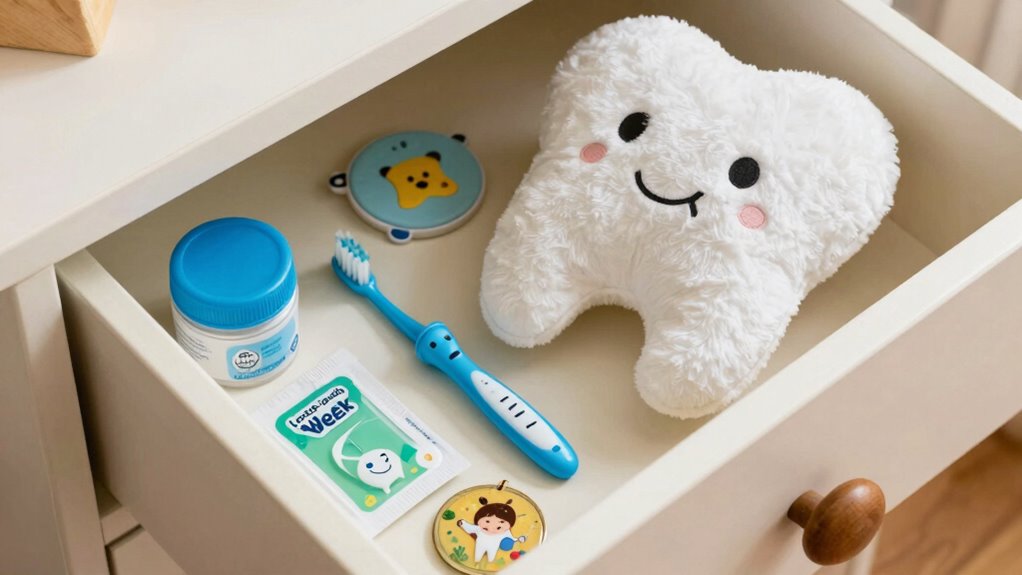
Are you prepared for the upcoming loose-tooth week? It’s a busy time filled with anticipation, excitement, and maybe a little bit of worry from your child. To make the experience smoother and more enjoyable, you should stock up on a few essentials ahead of time. Having everything ready will help you handle any surprises and keep your child comfortable. Start by gathering some basic dental health supplies, such as soft-bristled toothbrushes, fluoride toothpaste, and dental floss suited for kids. These items are vital to ensuring your child’s mouth stays healthy even as their teeth start to loosen and fall out. You’ll want to remind your child gently about the importance of good oral hygiene during this period, and having the right supplies on hand makes it easier to encourage regular brushing and flossing.
In addition to dental health supplies, it’s helpful to think about tooth fairy tips to make this milestone fun and memorable. Planning ahead means you can craft a little tradition that turns the loose tooth into an exciting event. For example, you might prepare a small, special pillow or a tooth fairy box for your child to place their lost tooth in overnight. Some parents also leave a tiny note or a small gift alongside the tooth to add a magical touch. Preparing these items in advance means you won’t be scrambling at the last minute, and your child will feel the magic of the tooth fairy even more. Knowing what to do ahead of time also allows you to set expectations and avoid any confusion or disappointment if the tooth falls out unexpectedly. Additionally, understanding the importance of air purification can create a more comfortable environment for your child, especially if they are sensitive to dust or allergens during this time. Proper air quality can also help reduce germs and promote overall health as your child’s immune system navigates this new stage. Creating a clean air environment further supports your child’s comfort and well-being during this exciting milestone. Furthermore, maintaining a clean and fresh environment supports good air hygiene, which can make the entire process less stressful for everyone involved. It’s also beneficial to keep an eye on air circulation to ensure your child’s space remains well-ventilated and free from stale air.
It’s equally important to have some emergency supplies, like a clean cloth or gauze in case of minor bleeding, and a small jar or container to store the tooth until it’s time for the fairy to visit. Having everything organized simplifies the process and reduces stress for both you and your child. You might also consider keeping a small notebook or chart to track when each tooth falls out, which can be a fun way to document this stage of childhood. Remember, the key is to stay relaxed and supportive. Children pick up on your attitude, so staying positive helps them feel secure and excited about losing teeth.
As an affiliate, we earn on qualifying purchases.
Frequently Asked Questions
When Should Parents Start Preparing for Loose-Tooth Week?
You should start preparing for loose-tooth week as soon as your child’s tooth begins to feel wobbly. Focus on maintaining good oral hygiene to ease discomfort and prevent infection. Be ready for tooth extraction if needed, and have soft foods and a gentle toothbrush on hand. Staying proactive helps your child feel comfortable and confident, making the experience less stressful for everyone involved.
Are There Specific Foods to Avoid During Loose-Tooth Week?
During loose-tooth week, avoid foods that make tooth sensitivity worse or cause chewing difficulties—think icy treats, sticky candies, and hard nuts. These foods can turn simple bites into epic battles, making your child miserable. Instead, opt for soft, gentle options like yogurt, mashed potatoes, or smoothies. Steering clear of crunchy or chewy foods helps prevent pain and discomfort, letting your kid enjoy this exciting milestone without unnecessary agony.
How Can Parents Encourage Their Child to Wiggle Their Loose Tooth?
You can encourage your child to wiggle their loose tooth by making it fun and stress-free. Offer tooth-friendly snacks like soft fruits or cheese to motivate gentle movement, and praise their efforts. Remind them to practice gentle dental care to keep their mouth healthy. Creating a positive, relaxed environment helps your child feel comfortable, making it easier for them to wiggle their loose tooth naturally and confidently.
What Signs Indicate a Loose Tooth Is Ready to Fall Out?
Like a knight preparing for battle, you’ll notice your child’s loose tooth wobbles easily and turns pale or slightly swollen. When it feels loose enough to wiggle with gentle pressure, it’s ready to fall out. Keep up good dental hygiene, and remind your child of Tooth Fairy tips to make the process smoother. These signs help you know when to gently encourage the tooth’s natural journey out, ensuring a seamless progression.
Should Parents Prepare for Potential Bleeding or Discomfort?
Yes, you should prepare for potential bleeding or discomfort. Having dental first aid supplies like gauze and ice packs on hand helps you manage bleeding and reduce swelling quickly. Comfort strategies, such as offering soft foods and gentle reassurance, ease your child’s anxiety. Being prepared guarantees you can handle any issues calmly, making loose-tooth week less stressful for both of you and helping your child feel safe and cared for.
Conclusion
So, as you prepare for loose-tooth week, remember to stock up on everything but the one thing you’ll probably need most—patience. Ironically, it’s the very tooth that’s about to leave your child’s mouth that’s causing the most stress. Embrace the chaos, cherish the giggles, and maybe keep a camera handy—you never know when that tiny wiggler will turn into your kid’s newest “treasure.” After all, losing a tooth isn’t just about growing up; it’s about holding onto those precious moments.
Fall Picks
fall essentials
As an affiliate, we earn on qualifying purchases.