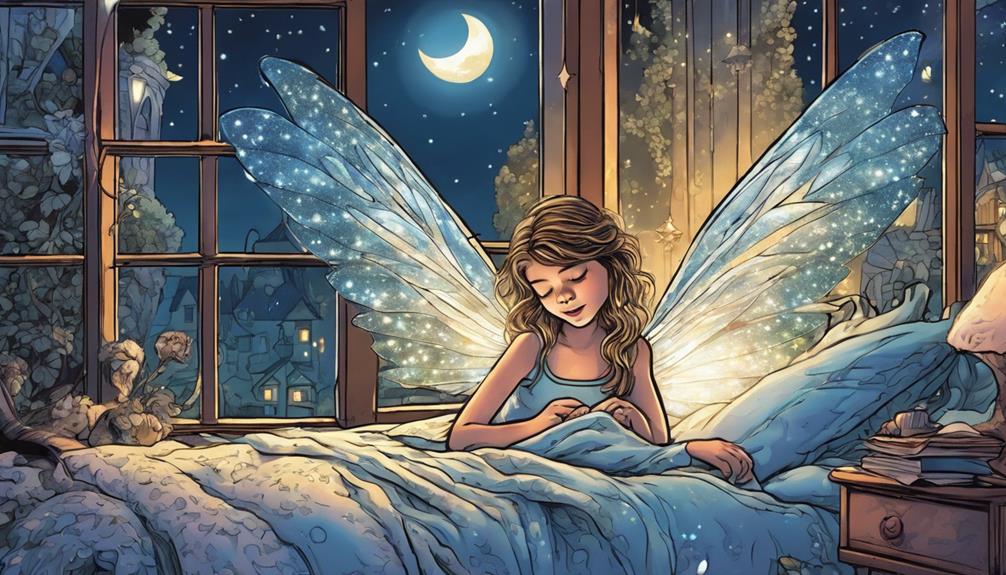
As the Tooth Fairy learns about Kwanzaa, you discover it’s a celebration rooted in African culture that emphasizes unity, history, and pride. You see that families gather around the kinara with seven candles, lighting one each night to honor important values called the Nguzo Saba. The traditions include storytelling, music, and handmade gifts, all aimed at strengthening community bonds and preserving heritage. Keep exploring to see how these meaningful customs come together during the holiday.
Key Takeaways
- The Tooth Fairy learns that Kwanzaa celebrates African heritage, emphasizing community, unity, and cultural pride through rituals and symbols.
- She discovers that Kwanzaa involves lighting seven candles on the kinara, each representing a principle called Nguzo Saba.
- The Tooth Fairy finds out that Kwanzaa focuses on storytelling, music, and sharing traditions to honor ancestors and history.
- She learns that Kwanzaa promotes reflection, cultural identity, and collective progress within communities.
- The Tooth Fairy realizes that Kwanzaa is about celebrating hope, belonging, and passing down cultural values rather than just giving gifts.
Have you ever wondered how different cultural traditions celebrate special occasions? As the Tooth Fairy, you’ve seen many ways children honor their traditions, but learning about Kwanzaa opens up a whole new world. Kwanzaa is a vibrant holiday rooted in African heritage, celebrated from December 26th to January 1st. Its cultural significance lies in emphasizing unity, self-determination, collective work, and purpose. When you hear about the holiday customs, you realize how deeply they reflect the values that bring families and communities together. It’s not just about giving gifts but about honoring history, culture, and shared identity.
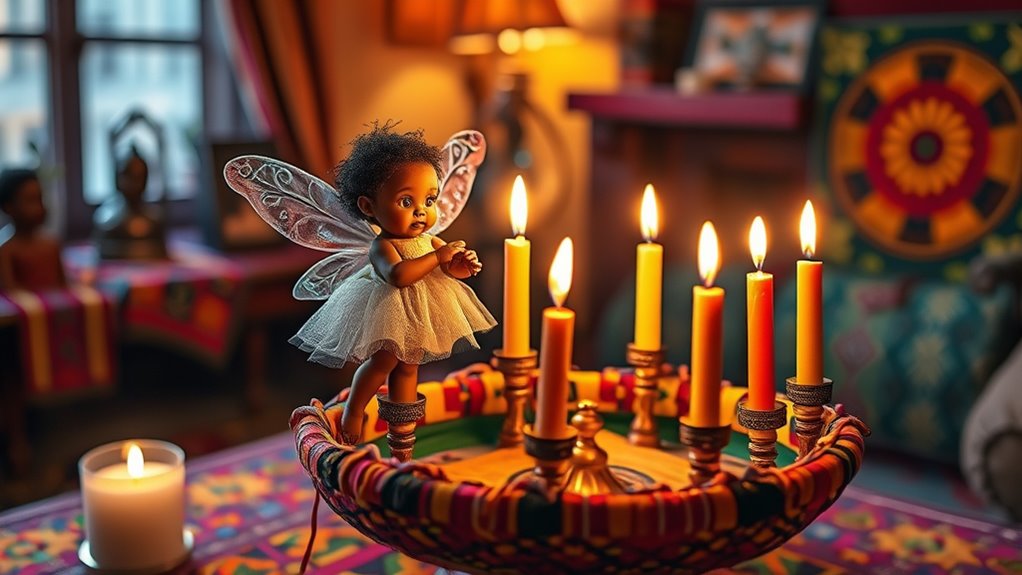
During Kwanzaa, families gather around a special table called the kinara, which holds seven candles—each representing a principle called the Nguzo Saba. These principles include unity, self-determination, and cooperative economics. You learn that lighting the candles each night symbolizes a different value, and the family discusses its importance. It’s a meaningful ritual that highlights the importance of community bonds and cultural pride. You notice how the colors of the holiday—red, black, and green—are prominently displayed in decorations, clothing, and artwork, symbolizing the struggles and hopes of the African diaspora.
During Kwanzaa, families light candles on the kinara, symbolizing unity, purpose, and cultural pride.
As the Tooth Fairy, you’re fascinated by the way these customs go beyond simple celebrations. The holiday encourages storytelling, music, dance, and traditional foods that strengthen cultural identity and pass down history from one generation to the next. You see families sharing stories of their ancestors, emphasizing the importance of remembering roots. During Kwanzaa, it’s common to exchange handmade gifts that reflect cultural heritage, further emphasizing the value placed on community and education. These traditions serve as a reminder that honoring your history can energize your future and uplift your community.
You also learn that Kwanzaa is about more than just rituals; it’s a time for reflection and recommitment to community goals. The holiday teaches children and adults alike to take pride in their identity and contribute to the well-being of others. As the Tooth Fairy, you find it inspiring how these customs foster a sense of belonging and purpose. The celebration’s focus on collective progress and cultural pride resonates deeply, reminding everyone that traditions are powerful tools for maintaining cultural significance. Additionally, understanding the importance of credit card statements and monitoring financial information can help families make informed choices about their resources, ensuring the sustainability of cultural practices. Observing how families uphold these customs, you realize that Kwanzaa isn’t just a holiday—it’s a meaningful expression of identity, history, and hope, woven into the fabric of community life.
Frequently Asked Questions
How Did the Tooth Fairy First Learn About Kwanzaa?
You might imagine the tooth fairy first learned about Kwanzaa through a cultural exchange event or a story shared by a family celebrating the festival. As she visits children from diverse backgrounds, she hears about Kwanzaa’s origins and traditions, which sparks her curiosity. This exchange helps her understand the significance of the festival’s origins, deepening her appreciation for different cultural celebrations and enriching her role in fostering cultural awareness among children.
What Symbols Are Most Important During Kwanzaa Celebrations?
You’ll find that the most important symbols during Kwanzaa are the kinara, representing unity, and the Mishumaa Saba, the seven candles that symbolize the Nguzo Saba principles. Cultural symbols like the unity cup and the mkeka mat also play key roles. During celebrations, festive decorations highlight these symbols, creating a vibrant, meaningful atmosphere that’s as lively and inspiring as a cultural parade, making every moment unforgettable.
Are Kwanzaa Traditions Followed Worldwide or Only in Certain Communities?
Kwanzaa traditions are primarily followed within African American communities in the United States, but there’s some cultural adoption worldwide. You might find smaller celebrations or awareness in diverse communities, though community differences influence how widely it’s embraced. While not universally observed, Kwanzaa’s principles resonate beyond its origins, encouraging appreciation and understanding of African heritage. So, in some places, people celebrate it openly, but in others, it remains a more localized tradition.
How Can Children Best Understand Kwanzaa’s Significance?
You can help children understand Kwanzaa’s significance through cultural storytelling and family involvement. Share stories that highlight its values, history, and meaning, making traditions come alive. Engage family members in discussions, celebrations, and activities that emphasize unity, heritage, and community. By actively participating and sharing meaningful narratives, children grasp Kwanzaa’s importance, fostering respect and appreciation for this rich cultural holiday.
What Are Common Misconceptions About Kwanzaa?
You might think Kwanzaa is just about gift-giving or that it’s a religious holiday, but that’s a common misconception. Many believe cultural stereotypes that simplify Kwanzaa’s meaning, missing its focus on community, heritage, and African values. It’s not just a holiday for Black Americans; it’s a celebration of culture and identity. Recognizing these holiday misconceptions helps you appreciate Kwanzaa’s true significance beyond stereotypes.
Conclusion
As you watch the Tooth Fairy embrace Kwanzaa traditions, you realize how different worlds can unite through understanding. While she gently collects lost teeth, she also gathers stories of heritage and hope. It’s a reminder that even in tiny moments, there’s room for respect and learning. Just like the sparkle of a tooth, the light of cultural traditions shines brightest when shared. Together, they show that kindness bridges every difference.