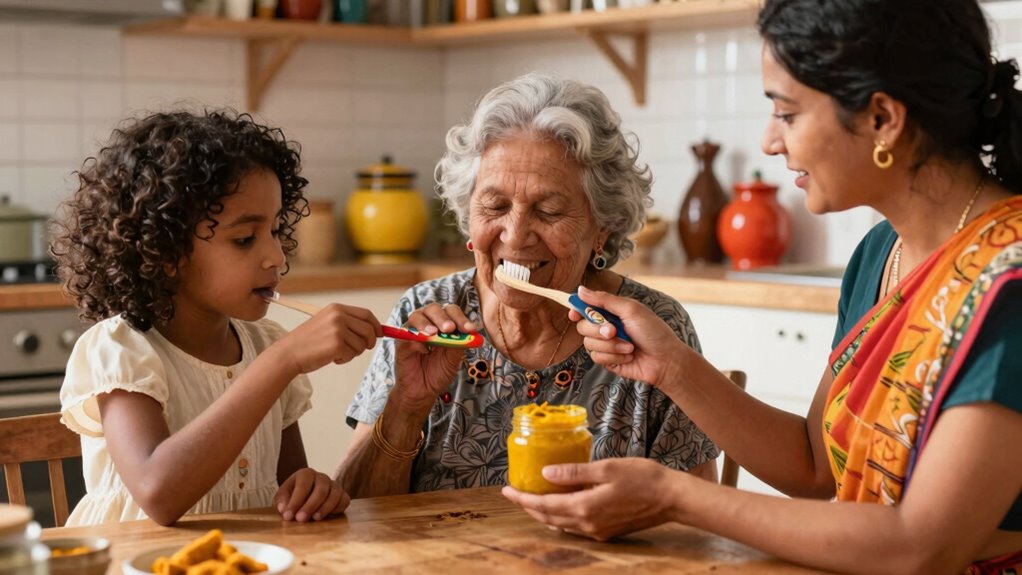

In multilingual homes, families blend cultural tooth traditions by incorporating herbal rinses, traditional tools, and specific brushing techniques from their heritage. They teach children names of herbs and tools in native languages and share stories about elders’ practices, enriching oral hygiene routines with cultural significance. This approach strengthens cultural identity while promoting effective oral health. Embracing both modern methods and traditional customs creates meaningful routines that celebrate diversity—if you want to explore how to integrate these practices smoothly, keep going.

Turn the school run and nap time into listening time
- Thousands of audiobooks, podcasts and originals
- Listen on your phone, tablet or Echo — also offline
- Cancel anytime
Key Takeaways
- Families teach dental tool names and herbal ingredients in native languages to preserve cultural knowledge.
- They incorporate traditional rinses and brushing techniques alongside modern oral care methods.
- Oral hygiene routines are used to share cultural stories and reinforce cultural identity.
- Multilingual households celebrate oral care as a cultural practice, blending languages and traditions.
- Intergenerational learning fosters the passing down of oral hygiene rituals and cultural significance.
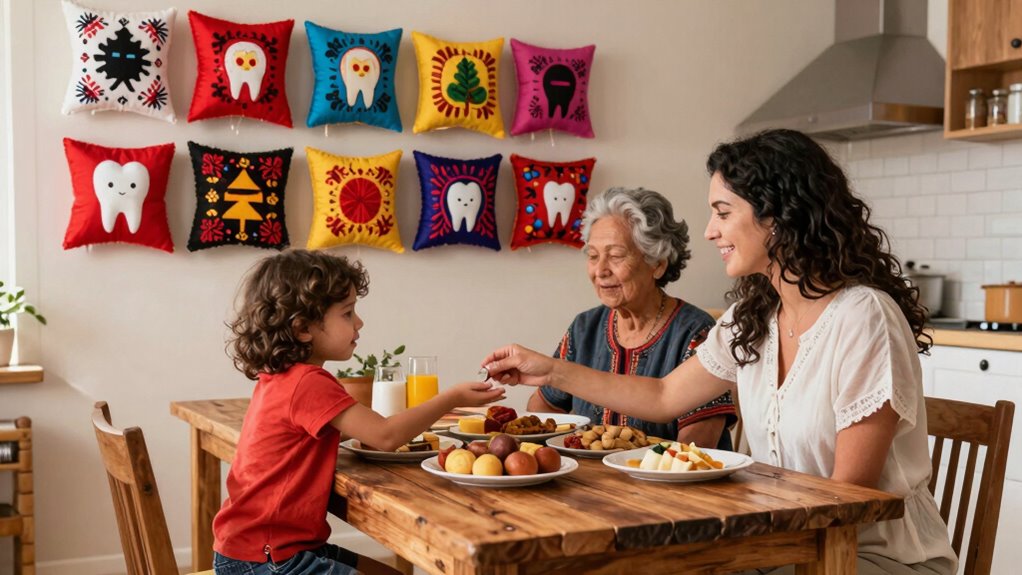
Many families find that blending cultural tooth traditions creates meaningful rituals that honor their diverse backgrounds. As someone steering a multilingual home, you quickly realize that oral hygiene isn’t just about keeping teeth clean; it’s about preserving a sense of identity and shared history. Different cultures have unique practices surrounding dental care, and integrating them can make daily routines more engaging and culturally rich. For example, some families incorporate traditional herbal rinses passed down through generations, while others emphasize the importance of specific brushing techniques rooted in their heritage. You may find yourself teaching your children both the modern methods recommended by dentists and the traditional methods that hold cultural significance.
When you blend these practices, you’re not only promoting good oral hygiene but also reinforcing cultural pride. You might explain to your kids why certain herbs are used for mouth rinses in their ancestry or teach them how elders in your community used natural ingredients to maintain oral health. This approach turns routine brushing into a meaningful activity, connecting your children with their roots. It also provides a chance to pass on stories and traditions, making oral hygiene more than just a chore—it’s a cultural experience. You may even create new routines that combine elements from different backgrounds, like using a modern toothbrush alongside herbal powders or chewing sticks, which are common in some cultures. Incorporating traditional dental tools and practices can deepen your children’s understanding and appreciation of their heritage.
In multilingual homes, language plays an essential role in preserving these traditions. You might teach your children the names of traditional dental tools or herbs in your native language, reinforcing both language skills and cultural knowledge. Sharing stories about how elders in your family cared for their teeth can spark conversations about cultural practices and oral hygiene standards across generations. Recognizing cultural health practices as meaningful elements of identity can encourage your family to embrace a holistic approach to wellness. This integration helps children understand that taking care of their teeth isn’t just about health; it’s also about respecting their cultural heritage. Over time, these blended traditions become a natural part of your family’s routine, making oral hygiene a celebration of diversity rather than just a daily obligation.
As an affiliate, we earn on qualifying purchases.
Frequently Asked Questions
How Do Children Learn Multiple Cultural Dental Care Practices Simultaneously?
You teach children multiple cultural dental care practices by sharing cultural rituals and oral storytelling, making learning engaging and meaningful. As they observe family members demonstrating different routines, they naturally pick up these traditions. Conversations, stories, and daily routines help children understand the significance behind each practice, allowing them to blend and respect diverse dental care customs effortlessly. This approach nurtures their appreciation for cultural diversity in oral health.
Are There Specific Challenges in Combining Traditional and Modern Dental Routines?
You’ll face the challenge of merging traditional cultural hygiene rituals with modern dental routines, which can feel like juggling flaming torches while riding a unicycle! Sometimes, your family’s Dental product preferences clash with modern recommendations, causing confusion. Balancing these can be tricky, but open conversations help. Embracing both worlds allows you to honor your heritage while ensuring your family’s dental health stays excellent, creating a harmonious routine everyone can follow.
How Do Families Address Language Barriers When Discussing Dental Health?
You address language barriers by using cultural narratives and oral storytelling to make dental health concepts more relatable and understandable. You might share stories from your culture that emphasize the importance of oral hygiene, using simple language or visual aids to bridge language gaps. This approach helps your family connect with dental advice, making it easier to discuss and adopt healthy routines despite language differences.
What Role Do Community Traditions Play in Shaping Dental Hygiene Habits?
Did you know that 65% of communities worldwide pass down oral hygiene practices through cultural influence? You see, community traditions play a significant role in shaping dental habits by transmitting values and routines across generations. These traditions reinforce the importance of oral health, making it a shared part of identity. When you embrace these cultural influences, you help preserve tradition transmission, ensuring healthy habits continue in your family and community.
How Do Families Handle Conflicting Dental Advice From Different Cultures?
You handle conflicting cultural advice by prioritizing what aligns best with your family’s values and oral health needs. You discuss different perspectives openly, encouraging your children to understand their cultural identity while maintaining good dental hygiene. You might blend traditional practices with modern dental advice, creating a unique routine that respects your cultural roots and promotes best oral health. This approach helps your family stay connected and healthy simultaneously.
Conclusion
By weaving together your family’s unique cultural tooth traditions, you create a rich tapestry of heritage that speaks to your identity. These shared rituals aren’t just memories—they’re bridges connecting generations across languages and lands. As you pass down these customs, remember: they’re the roots that keep your family grounded yet soaring. Embrace the beauty of this blending, for in honoring your past, you shape a future filled with love, tradition, and resilience.
Halloween Picks
halloween
As an affiliate, we earn on qualifying purchases.