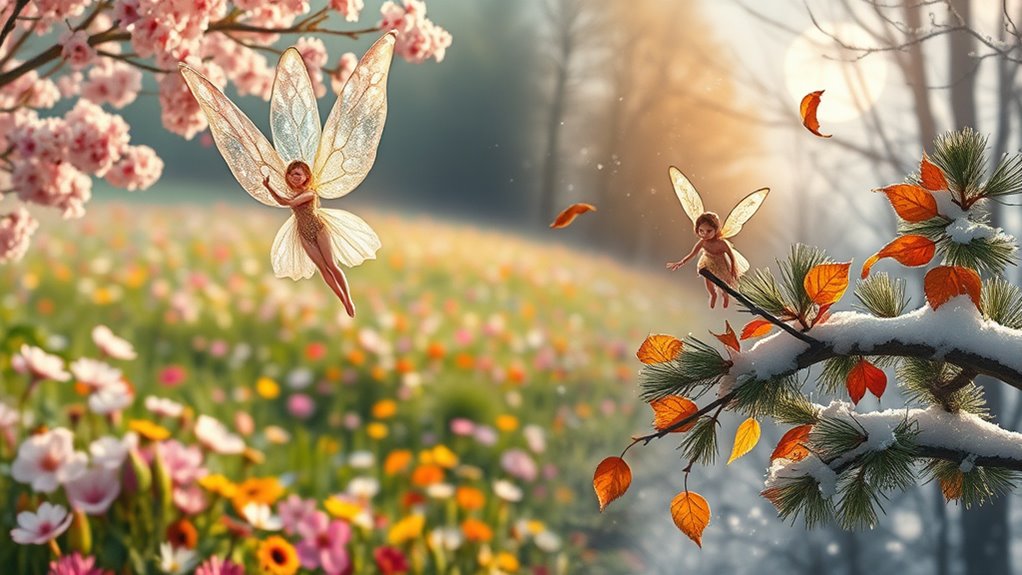

Throughout the year, your tooth fairy begins a magical journey through each season, embracing myth and fairy tale traditions. In spring, she awakens with blooming flowers and fluttering wings, celebrating renewal. Summer fills her with warmth, joy, and outdoor adventures. Autumn brings cozy whispers and colorful leaves, symbolizing change, while winter surrounds her with snow, emphasizing hope and resilience. Keep exploring to discover how these seasonal stories deepen the enchantment of her timeless quest.
Key Takeaways
- The Tooth Fairy’s journey symbolizes renewal in spring, awakening with blooming flowers and fairy tales celebrating rebirth.
- In summer, she embodies abundance and joy, dancing among sunflowers and participating in outdoor family festivities.
- During autumn, she reflects gratitude and transition, weaving through fiery leaves and preparing for winter’s hush.
- In winter, she becomes serene and mystical, leaving gifts in snowflakes and connecting to themes of hope and resilience.
- Throughout all seasons, her journey blends myth and fairy tale magic, emphasizing renewal, transition, and the enchantment of nature’s cycles.

As the year unfolds, the Tooth Fairy begins a magical journey through each of the four seasons, adapting her visits to the changing world around her. You might not realize it, but her story is woven with seasonal myths and fairy tale origins that have enchanted children for generations. During spring, she emerges amid blooming flowers and fresh green leaves, her presence inspired by ancient myths that celebrate renewal and rebirth. Many fairy tales depict magical beings awakening with the earth’s awakening, symbolizing hope and new beginnings. This season, the Tooth Fairy’s visits become more lively, as she flutters through blossoming orchards and gardens, leaving tiny treasures while listening to the melodies of chirping birds. Her delicate wings shimmer in the sunlight, echoing stories that trace back to fairy tale origins where fairies are guardians of nature’s cycles. Her interactions during spring often draw on the rich tradition of nature-based fairy tales that have been passed down through generations. In summer, her journey grows even more vibrant. The warmth and long daylight hours create a perfect backdrop for her nightly visits. You might imagine her dancing among sunflowers or hiding behind shimmering leaves, drawing inspiration from seasonal myths that celebrate abundance and joy. The fairy tale origins of her story often link her to the idea of bounty — a symbol of giving and receiving. As children enjoy outdoor adventures and family gatherings, she becomes a part of those warm memories, her visits infused with the magic of summer festivals and starlit nights. Her presence is subtle but constant, reminding everyone of the magic that exists in everyday moments. Autumn introduces a different kind of enchantment. As leaves turn fiery shades and fall from trees, the fairy’s visits take on a cozy, reflective tone. You might picture her slipping through swirling leaves or nestling into acorn caps, her role echoing seasonal myths that honor harvest and gratitude. The origins of her fairy tale persona often connect her to folklore that celebrates the changing seasons, emphasizing transition and preparation. During this time, she gently encourages children to treasure their memories and look forward to the quiet magic of winter. Her visits become a reminder that change is a natural part of life, and that the beauty of each season holds lessons worth cherishing. Finally, winter transforms her journey into a serene, almost mystical experience. With snow blanketing the world, her delicate wings glisten like frost, and her visits feel more intimate and hushed. You might envision her weaving through icy branches or leaving tiny gifts amid glistening snowflakes. The fairy tale origins of her story emphasize themes of hope and resilience, mirroring the quiet strength of winter’s stillness. As she moves through the frosty landscape, she embodies the timeless magic found in seasonal myths that speak to renewal and the promise of spring’s return. Her interactions during winter often draw on seasonal myths that highlight themes of hope and resilience, echoing the enduring nature of fairy tale magic. Through each season, the Tooth Fairy’s journey remains a enchanting blend of myth and fairy tale magic, enchanting children and adults alike.
Frequently Asked Questions
How Does the Tooth Fairy Choose Her Visiting Times?
You might wonder how the Tooth Fairy chooses her visiting times. She follows seasonal traditions and fairy folklore, visiting when children lose teeth, often during specific times like holidays or special seasons. She senses when a child is ready and sneaks in quietly, ensuring her visits align with the magic of each season. Her timing is guided by the joy and wonder of childhood, making each visit magical and memorable.
What Special Gifts Does the Tooth Fairy Leave?
You wake up to find the Tooth Fairy’s visit sprinkled with magical glitter and tiny treasures. She leaves behind shimmering coins, sweet notes, or delicate jewelry, each piece whispering of enchantment. These special gifts are her way of turning a small loss into a magical moment, filling your dreams with wonder. Her tiny treasures sparkle like stars, making every tooth lost feel like a part of a fairy-tale adventure.
How Does the Tooth Fairy Navigate During Storms?
During storms, you rely on your magical storm navigation skills to find the best route. You use wind resistance to glide smoothly despite strong gusts, adjusting your flight path as needed. Your tiny wings are built for agility, helping you avoid lightning and heavy rain. By staying calm and focused, you navigate through storms confidently, ensuring you deliver gifts safely and keep the magic alive for children waiting for their special surprises.
Does the Tooth Fairy Visit All Children Worldwide?
The Tooth Fairy, like a gentle whisper across the globe, doesn’t visit every child worldwide. While many cultures have their own traditions, the fairy’s visits vary widely, reflecting cultural differences and local beliefs. You might find her fluttering through specific regions, but she isn’t a universal visitor. Instead, each place has its own magical way of celebrating losing teeth, making every tradition uniquely special in its own enchanting way.
How Does She Keep Her Wings Clean and Shiny?
You might wonder how the Tooth Fairy keeps her wings clean and shiny. She practices regular wing maintenance, gently brushing and cleaning them with fairy sparkle dust, which keeps her wings pristine. This special fairy sparkle not only cleans but also adds a magical shimmer. By maintaining her wings often, she ensures she stays radiant and swift, ready for her next visit to sprinkle fairy magic on children’s dreams and treasures.
Conclusion
As you watch the Tooth Fairy’s journey through each season, you realize that her magic touches every part of the year. No matter the weather or time, she keeps her promise, showing that persistence pays off. Remember, when life gets tough, just keep the faith—because even in the darkest of times, the light of hope shines through. Sometimes, you just have to believe in the magic that keeps us going.