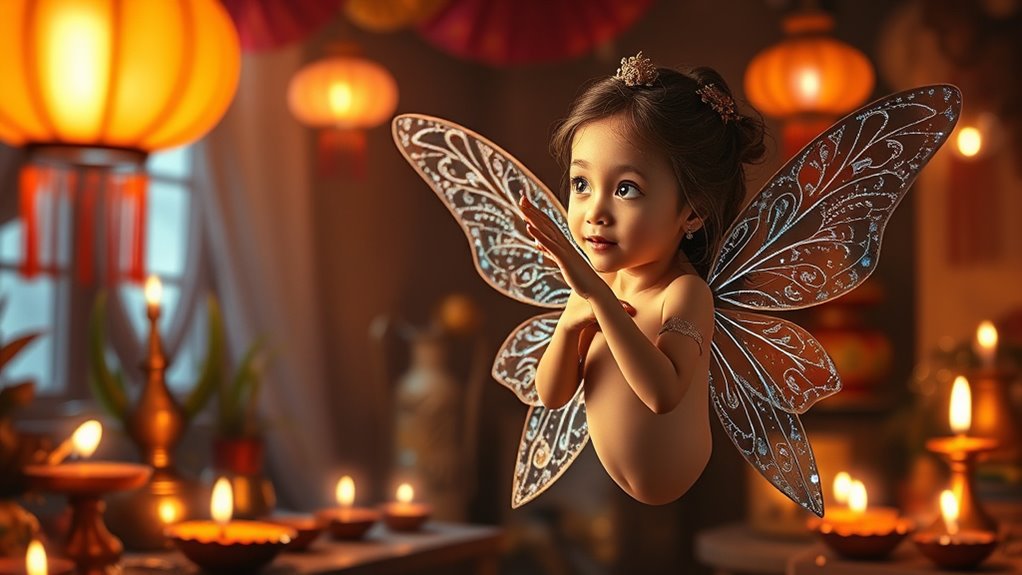

When the Tooth Fairy learns about Diwali lights, she discovers they symbolize hope, positivity, and the triumph of good over evil. Lighting lamps, or diyas, brightens homes and communities, pushing away darkness and ignorance. These lights represent renewal, sharing happiness, and welcoming prosperity. By understanding these symbols, she sees how Diwali brings people together through meaningful traditions. If you keep exploring, you’ll uncover even more about this vibrant festival’s beautiful customs and deeper significance.
Key Takeaways
- Diwali lights, called diyas, symbolize hope, knowledge, and the victory of good over evil.
- The Tooth Fairy observes that lighting lamps dispels darkness and ignorance during Diwali.
- Diwali lamps and decorations create a warm, festive atmosphere fostering community and shared joy.
- The festival’s lights represent welcoming positivity, renewal, and spiritual enlightenment.
- The Tooth Fairy learns that these lights carry deep cultural and symbolic meanings beyond their beauty.
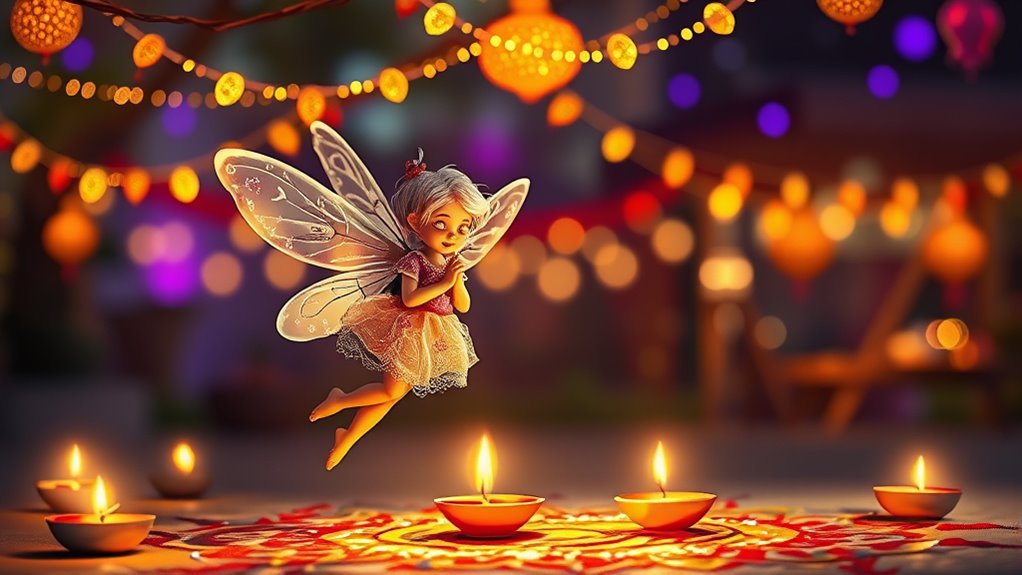
As Diwali lights illuminate homes with vibrant colors and sparkling decorations, children often find themselves caught between the magic of the festival and the wonder of the Tooth Fairy’s visit. You might already know that the Tooth Fairy is a magical visitor who leaves a small gift or money in exchange for a lost tooth. But during Diwali, she becomes curious about the rich cultural traditions and the festival’s deep symbolism. This curiosity sparks her desire to understand what makes Diwali so special to millions.
Diwali, also called the Festival of Lights, symbolizes the victory of good over evil and light over darkness. As you prepare for the festival, you notice how lamps, called diyas, are carefully placed around homes and streets. These diyas aren’t just decorative; they represent hope, knowledge, and the welcoming of prosperity. The Tooth Fairy, unfamiliar with these customs, learns that lighting lamps is an age-old tradition that signifies dispelling darkness and ignorance. She watches children and families decorate their homes with colorful rangoli, brightening the atmosphere and inviting positive energy. The festival’s symbolism—renewal, unity, and the triumph of righteousness—resonates even with the tiniest fairy.
Diwali celebrates victory of good over evil with lamps symbolizing hope, knowledge, and prosperity.
While you’re busy placing your tooth under your pillow, the Tooth Fairy observes how Diwali’s cultural traditions bring communities together. She notices families sharing sweets, exchanging gifts, and performing rituals that honor stories of gods like Rama and Lakshmi. These stories emphasize virtue, devotion, and the importance of kindness, values that the fairy quickly recognizes as universal. She learns that each tradition, whether lighting a diya or sharing a sweet, plays a role in reinforcing these themes of hope and harmony. Additionally, the use of sustainable building materials in modern celebrations highlights the festival’s connection to environmental consciousness.
The Fairy’s fascination grows as she sees how festival symbolism permeates every aspect of the celebration. She understands that the lights are more than mere decorations—they’re a reminder to chase away darkness and embrace positivity. She marvels at how children’s laughter and the glow of lamps create a sense of warmth and community. For her, these cultural traditions are like magical threads weaving everyone together through shared stories and hopes. As she prepares to leave a small gift, she carries a new appreciation for the deep meanings behind the vibrant lights and joyful customs, realizing that Diwali’s true magic lies in its powerful symbolism and the unity it fosters among people.
Frequently Asked Questions
How Does the Tooth Fairy Celebrate Diwali?
You celebrate Diwali by embracing cultural exchange and fairy traditions, making it special for the Tooth Fairy. You might leave tiny gifts or sweets along with the exchanged tooth, blending fairy magic with Diwali’s festive spirit. You learn about the festival’s lights and joy, adding your fairy touch to the celebrations. This way, you help spread happiness and cultural understanding, making Diwali memorable for everyone involved.
Are Diwali Lights Different From Fairy Lighting?
Diwali lights are like a vibrant tapestry, illuminating the night with warmth and hope. They’re different from fairy lighting, which tends to be softer and more whimsical. Diwali lights symbolize prosperity and the triumph of light over darkness, embodying festival traditions and cultural symbolism. You’ll notice the rich colors and intricate patterns that reflect the festival’s spirit, making them more than just decoration—they’re a celebration of cultural values and community joy.
What Is the History of Diwali Lights?
Diwali lights have a rich history rooted in cultural significance, symbolizing the victory of light over darkness and good over evil. Traditionally, lighting techniques involve using oil lamps, candles, and later, electric lights to illuminate homes and streets. These lights are believed to invite prosperity and happiness. Over time, the vibrant displays have evolved but remain a central part of Diwali celebrations, reflecting deep cultural values and festive spirit.
Do Other Fairy Tales Include Diwali Traditions?
Many fairy tales do include Diwali traditions, highlighting cultural celebrations worldwide. You’ll find stories where fairies and magical beings partake in festival traditions like lighting lamps, exchanging gifts, and enjoying sweets. These tales often emphasize themes of light overcoming darkness and good triumphing over evil, mirroring Diwali’s spirit. By weaving cultural celebrations into fairy tales, authors help you connect with diverse traditions, making the stories more meaningful and enriching your understanding of global festival traditions.
How Does the Tooth Fairy Learn About Human Festivals?
Imagine you’re exploring a vibrant tapestry, each thread representing a different tradition. You, as the tooth fairy, learn about human festivals through cultural exchange, observing how people celebrate. During festival observations, you ask questions, listen to stories, and see the decorations. This hands-on approach helps you understand the significance behind each celebration, making your fairy world richer and more connected to the diverse traditions around you.
Conclusion
As you watch Diwali lights sparkle, you realize how much joy they bring—over 1.2 billion people celebrate this festival worldwide. Just like the Tooth Fairy, sharing and caring brighten lives in unexpected ways. Learning about Diwali’s vibrant lights shows that small acts of kindness, like a tiny fairy’s visit or a colorful glow, can create lasting happiness. So, embrace the magic around you and spread kindness wherever you go.