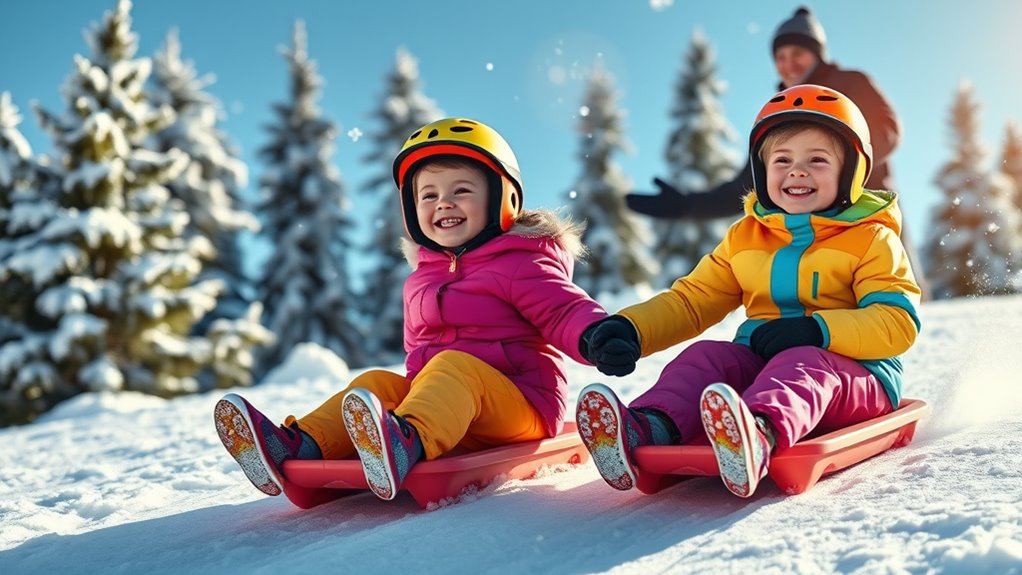

To encourage kids to try winter sports safely, guarantee they’re equipped with the right gear, including helmets, gloves, goggles, and properly fitting clothing. Teach them how to wear and adjust gear correctly, and always supervise their activities. Making safety fun and emphasizing its importance helps build confidence. Take breaks often and keep safety tips simple. Want to find out more ways to make winter sports safe and enjoyable for kids? Keep exploring!

Turn the school run and nap time into listening time
- Thousands of audiobooks, podcasts and originals
- Listen on your phone, tablet or Echo — also offline
- Cancel anytime
Key Takeaways
- Ensure kids wear properly fitted safety gear, including helmets, gloves, goggles, and pads, to prevent injuries.
- Dress children in moisture-wicking base layers, insulating mid-layers, and waterproof outerwear for warmth and dryness.
- Teach kids how to correctly wear and adjust their gear to build confidence and maximize safety during activities.
- Encourage regular breaks in warm areas to prevent overheating or chilling, maintaining comfort and safety.
- Foster a fun, supportive environment that emphasizes safety awareness to motivate kids to try winter sports confidently.
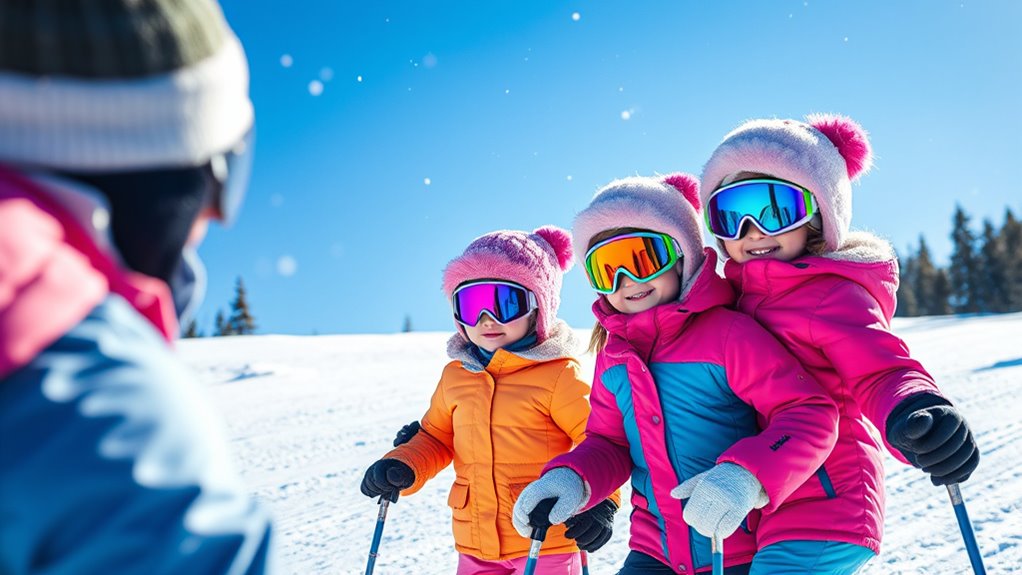
Winter sports offer kids exciting ways to stay active and enjoy the outdoors, but safety should always come first. Before hitting the slopes or ice rink, you need to guarantee your child is properly equipped. Appropriate gear isn’t just about comfort; it’s vital for preventing injuries and handling the cold. For skiing or snowboarding, make sure they wear a well-fitting helmet that covers the forehead and stays secure during activity. Gloves or mittens should be insulated to keep their hands warm and dry, reducing the risk of frostbite. Goggles are also essential to protect their eyes from snow glare, wind, and debris. For ice skating, make sure they wear protective pads on their knees, elbows, and wrists—falls are common, and padding can help minimize scrapes or fractures.
Warm clothing is equally important. Layering is key to regulating body temperature and preventing hypothermia. Start with a moisture-wicking base layer that pulls sweat away from their skin, keeping them dry and warm. Over that, add an insulating layer such as fleece or a thermal shirt to trap body heat. The outer layer should be waterproof and windproof, shielding them from snow, wind, and cold air. A good winter jacket and snow pants are essential for outdoor activities like sledding or snowshoeing. Don’t forget a warm hat that covers the ears and a neck gaiter or scarf to protect their face from chilly air. Warm socks made of wool or synthetic fibers keep feet dry and cozy inside waterproof boots. Ensuring proper gear fit and adjustment is crucial to maximize safety and comfort during winter sports.
Preparing your child with the right gear and clothing not only keeps them safe but also makes winter sports more enjoyable. When kids feel comfortable and protected, they’re more likely to focus on learning and having fun rather than worrying about the cold or discomfort. Always double-check equipment for signs of wear or damage before use. Fit is paramount; gear that’s too loose or too tight can cause discomfort or accidents. Teach your child how to properly wear and adjust their gear, so they gain confidence and understand safety measures. Encourage breaks in warm, sheltered spots to prevent overheating or getting chilled, especially if they’re new to winter sports.
As an affiliate, we earn on qualifying purchases.
Frequently Asked Questions
What Are the Best Winter Sports for Very Young Children?
For very young children, gentle winter activities like building snowmen and having snowball fights are perfect. These fun, safe options help kids enjoy winter while developing coordination and confidence. You can supervise closely, ensuring they stay warm and avoid rough play. Starting with these simple activities encourages a love for winter sports, making it easier for them to try more advanced sports later on. Keep it fun and safe!
How Can I Tell if My Child Is Ready for Winter Sports?
You can tell if your child is ready for winter sports by evaluating skill readiness and recognizing physical signs. Watch how confidently they can balance, follow instructions, and handle basic movements. If they show enthusiasm, have good coordination, and can stay comfortable in winter gear, they’re likely prepared. Always start with beginner lessons, supervise closely, and listen to their feedback to ensure they enjoy and stay safe during their first experiences.
What Are Common Winter Sports Injuries in Kids?
Common winter sports injuries in kids include sprains, fractures, and concussions from falls or collisions. To keep them safe, ensure helmet safety by fitting helmets properly and checking for damage before each use. Also, watch for frostbite prevention by dressing them in layered, moisture-wicking clothing, and limiting exposure to cold. Always supervise, encourage proper technique, and take regular breaks to reduce injury risks.
How Should I Dress My Child for Winter Sports?
You should dress your child for winter sports using layering techniques—start with moisture-wicking base layers, add insulating middle layers, and finish with a waterproof outer layer. Make sure their gear is waterproof to keep them dry and warm. Don’t forget a warm hat, gloves, and insulated boots. Check that clothing fits well and isn’t too tight, so your child stays comfortable and safe during their winter activities.
Are There Beginner-Friendly Winter Sports for Kids With Disabilities?
Like Icarus aiming for the sun, you can help your child soar with beginner-friendly winter sports designed for kids with disabilities. Look for inclusive activities such as adaptive skiing, snowboarding, or sledding, which utilize adaptive equipment to guarantee safety and enjoyment. These activities let your child develop confidence, explore winter fun, and build skills in a supportive environment, proving that everyone can reach new heights on the snowy slopes.
Conclusion
Encouraging your kids to try winter sports can boost their confidence and keep them active. Did you know that children who participate in outdoor activities like skiing or snowboarding are 30% more likely to develop strong muscles and better coordination? By ensuring they wear proper gear, stay supervised, and learn the basics, you make safety a top priority. With the right guidance, your kids can enjoy winter adventures while staying safe and healthy.
Cold & flu season Picks
humidifiers
As an affiliate, we earn on qualifying purchases.