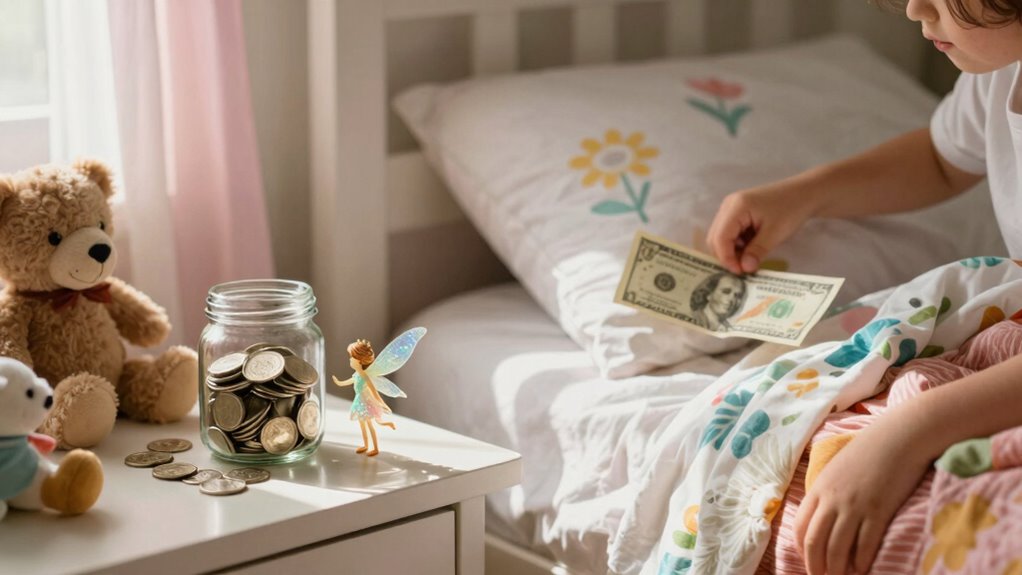

When you keep repeating tooth fairy rituals, you teach your child about the power of tradition, patience, and imagination. These routines help children develop a sense of security while fueling their curiosity about stories and beliefs. As they participate, they learn about cultural significance and feel connected to shared customs that span generations. If you keep up these simple acts, you’ll see how they foster a sense of wonder and understanding that lasts—if you’re curious, there’s more to discover.

Turn the school run and nap time into listening time
- Thousands of audiobooks, podcasts and originals
- Listen on your phone, tablet or Echo — also offline
- Cancel anytime
Key Takeaways
- Children learn the importance of routines, patience, and anticipation through repeated rituals.
- Rituals foster a sense of security and reinforce belief in magic and wonder.
- Participation connects kids to cultural traditions, promoting a sense of belonging and cultural identity.
- Repeating the rituals teaches about consistency, trust, and the value of small acts.
- Kids develop curiosity about myths, storytelling, and the natural world through these customs.

Many kids enthusiastically await the night when the tooth fairy visits, transforming a simple milestone into a magical experience. This anticipation isn’t just about losing a tooth; it’s about engaging with a world of mythical traditions that spark childhood imagination. When you participate in these rituals, you’re doing more than just exchanging teeth for coins—you’re weaving your child into a story that feels timeless and enchanting. The idea of a tiny fairy sneaking into bedrooms, quietly collecting teeth, and leaving surprises behind taps into a universal sense of wonder. This mythic element fuels a child’s imagination, making everyday moments feel extraordinary.
Repetition plays a key role here. When your child repeatedly puts a tooth under their pillow and checks avidly in the morning, they’re not just waiting for a reward—they’re practicing patience and anticipation. These rituals help children understand the concept of routine and build a sense of security, knowing that familiar traditions mark their growth. Each visit from the tooth fairy reinforces a belief in magic, encouraging children to view the world with curiosity and open-mindedness. They learn that stories and traditions aren’t just bedtime tales—they’re part of a shared cultural fabric that makes childhood special.
Engaging in these customs also teaches children about the value of small traditions. The act of preparing a pillow, leaving a note, or choosing a special spot for the tooth becomes a meaningful ritual rooted in mythic traditions. These behaviors help children develop a sense of continuity and belonging, as they see their participation as part of a larger story passed down through generations. As they grow, they may start to question the literal truth of the fairy, but the core lessons about imagination, wonder, and tradition stay with them. They learn that stories, whether based in reality or fantasy, serve as tools to understand the world and their place in it. Additionally, understanding the cultural significance of such rituals can foster an appreciation for biodiversity and conservation, as children recognize the importance of protecting the natural world behind these enchanting stories. Recognizing the cultural importance of traditions can also deepen their respect for different communities and their stories. Moreover, learning about cultural continuity helps children appreciate how traditions connect generations and sustain cultural identities. Emphasizing the importance of cultural heritage can further strengthen their sense of belonging and identity within their community. Furthermore, discussing the origins of such rituals can help children understand how cultural narratives evolve over time and influence current practices.
As an affiliate, we earn on qualifying purchases.
Frequently Asked Questions
How Do Parents Choose the Amount of Money to Give?
You choose the amount of money based on your child’s understanding of monetary expectations and your family’s gift-giving customs. You might consider what feels appropriate within your budget, or look at what other parents in your community give. It’s often about balancing generosity with setting realistic expectations, encouraging gratitude, and making the experience special. Ultimately, your choice reflects your values and helps teach your child about giving and receiving.
When Do Kids Typically Stop Believing in the Tooth Fairy?
Kids typically stop believing in the tooth fairy around ages 7 to 9, as their childhood imagination begins to fade and they start questioning Tooth fairy myths. You might notice them doubting or asking questions, signaling they’re nearing the end of their belief. This shift often marks a natural part of growing up, where their sense of wonder shifts to curiosity, helping them develop critical thinking skills while still cherishing childhood memories.
Are There Cultural Variations in Tooth Fairy Traditions?
You’ll find cultural diversity shines in tooth fairy traditions, proving that no two childhoods are alike. While some kids enthusiastically await a visit from the fairy, others embrace tradition variations like local legends or different mythical creatures. Ironically, these differences highlight how traditions evolve, blending cultural influences. So, as you celebrate your own or observe others’ customs, remember that the magic of childhood is truly universal, despite the cultural twists.
How Can Parents Make the Ritual More Meaningful?
To make the ritual more meaningful, you can incorporate symbolic gestures that celebrate your child’s growth, like writing a special note or crafting a small keepsake. Focus on building emotional connections by sharing stories or traditions that highlight the significance of growing up. These personal touches help your child see the ritual as more than just a game, fostering a sense of wonder and reassurance about their development.
What Are Common Misconceptions Kids Have About the Tooth Fairy?
You might be surprised to learn that kids often believe the tooth fairy is real and can read their minds, which is a common misconception. This myth clarification helps them understand it’s a fun story, not fact. The ritual sparks imagination development, encouraging creativity and wonder. By sharing these magical moments, you help your child develop a healthy sense of fantasy, while gradually understanding the difference between real and pretend.
Conclusion
As you see your child enthusiastically check under their pillow, it’s clear they’re learning more than just about the Tooth Fairy. Nearly 80% of kids report feeling excitement and wonder from these rituals, shaping their understanding of magic and trust. By repeating these traditions, you’re nurturing their imagination and belief in the extraordinary. So, keep those rituals alive—they’re doing more than you think, helping your child grow curious and confident in the wonder of childhood.
Fall Picks
fall essentials
As an affiliate, we earn on qualifying purchases.