When motivation from reward charts fades, shift your focus from external rewards to fostering your child’s internal motivation. Encourage conversations about their efforts, growth, and how their actions make them feel proud or help others. Praise perseverance and personal progress rather than just prizes. Use the chart to discuss challenges and milestones, reinforcing values like patience and empathy. If you want to learn more ways to keep your child engaged and motivated, keep exploring these strategies further.

Turn the school run and nap time into listening time
- Thousands of audiobooks, podcasts and originals
- Listen on your phone, tablet or Echo — also offline
- Cancel anytime
Key Takeaways
- Shift focus from external rewards to celebrating personal growth and effort.
- Use reflective conversations to connect behavior with internal values and pride.
- Incorporate intrinsic motivators like skill mastery and self-satisfaction.
- Adjust reward systems to individual needs, emphasizing fairness and consistency.
- Encourage internal motivation through meaningful praise and fostering a sense of responsibility.
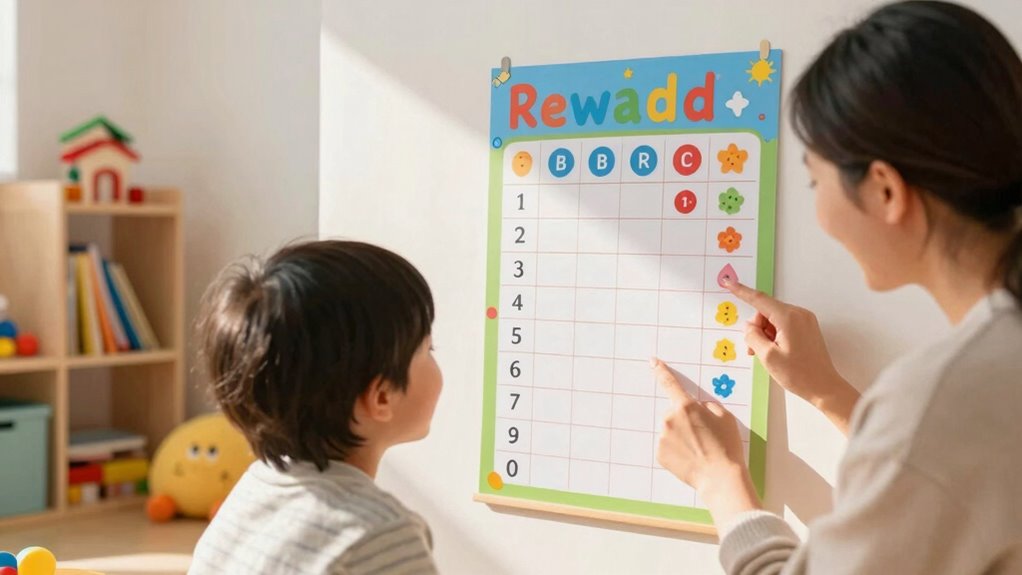
Reward charts can be effective tools for encouraging good behavior, but many parents and teachers struggle to keep them motivating and fair. Over time, the initial excitement fades, and children may start to lose interest or focus solely on the reward rather than the positive behavior itself. When motivation wanes, it’s tempting to increase the rewards or add more stickers, but this often shifts the focus from intrinsic motivation—the internal drive to do well—to external incentives. To sustain meaningful behavior management, you need to rethink how reward charts are used and foster a sense of personal accomplishment that goes beyond tangible rewards.
One of the key mistakes in traditional reward charts is relying too heavily on external rewards. While these can be helpful initially, they don’t build lasting motivation. To address this, you should aim to cultivate intrinsic motivation, where children find satisfaction in doing the right thing because it feels good internally, not just because they want a sticker or prize. You can do this by emphasizing the child’s sense of pride, personal growth, and the positive impact of their actions. For example, praising effort and perseverance helps children associate good behavior with feelings of competence and self-respect, which are powerful motivators on their own.
When motivation starts to fade, consider shifting your focus from external rewards to meaningful conversations about why good behavior matters. Highlight how their actions help others or make them feel proud. This approach reinforces their internal values and encourages a sense of responsibility. It also makes the behavior more personally relevant, increasing the likelihood that they’ll continue acting well even without immediate rewards. Supporting internal motivation can lead to more sustainable habits that aren’t solely dependent on external approval. Additionally, making the process of reflection a regular part of the routine can deepen their understanding of their own growth and efforts. Incorporating self-reflection as part of the process helps children develop insight into their behavior and fosters internal motivation.
In addition, make the reward chart a tool for reflection rather than just tracking. Use it to discuss progress and setbacks, helping children recognize their own growth. Celebrate milestones that aren’t just tied to completing tasks but also to developing skills like patience, empathy, or self-control. When children see their progress as part of their personal development, they’re more likely to stay motivated internally rather than just chasing external rewards. Incorporating positive reinforcement strategies that focus on internal satisfaction can make a significant difference in sustaining motivation over time.
Finally, remember that consistency and fairness are essential. Reward charts should be adaptable to individual needs and personalities. When children feel that their efforts are recognized and valued in a fair way, it fosters trust and genuine motivation. Over time, by focusing on behavior management that promotes intrinsic motivation, you help children develop habits rooted in internal satisfaction, making good behavior more sustainable than any sticker or prize could ever be. Building a supportive environment that emphasizes fairness and consistency can reinforce their internal motivation and trust in the process.
As an affiliate, we earn on qualifying purchases.
Frequently Asked Questions
How Do I Introduce Reward Charts to a Reluctant Child?
You can introduce reward charts to a reluctant child by celebrating milestones to make progress feel rewarding. Start by customizing incentives that truly motivate them, like favorite activities or small treats. Explain how the chart works and involve them in setting goals, so they feel ownership. Keep it fun and positive, emphasizing the joy of achieving small wins, which encourages continued effort and gradually builds enthusiasm for the process.
What Are Alternative Rewards if the Chart Loses Effectiveness?
Isn’t it time to explore other ways to keep your child’s behavior on track? When extrinsic motivation wanes, consider alternative rewards like extra playtime, special activities, or praise that reinforce positive behavior through behavioral reinforcement. These intrinsic rewards foster a sense of accomplishment and connection, making motivation more sustainable. Switch up your approach to maintain engagement and help your child feel valued beyond the chart’s initial influence.
How Long Should a Reward Chart Be Used Before Changing Strategies?
You should change strategies when you notice signs of motivational decline or reward fatigue, typically after 4 to 6 weeks. If your child’s enthusiasm wanes or compliance drops, it’s time to reevaluate. Switching things up keeps motivation high and prevents reward fatigue. Regularly observing their responses guarantees the reward system remains effective, and you can adapt it to sustain engagement and positive behavior over time.
Can Reward Charts Negatively Impact Intrinsic Motivation?
You can’t teach an old dog new tricks, and over-relying on reward charts can dull intrinsic motivation. When you focus too much on external rewards, your child might prioritize extrinsic rewards over intrinsic rewards, like personal growth or pride. This shift can negatively impact their motivation, making them less enthusiastic to learn for the joy itself. Balance rewards with intrinsic motivation, so genuine interest and effort stay front and center.
How Do I Handle Setbacks or Regressions in Progress?
When faced with motivational setbacks or regressions, you should stay patient and practice emotional resilience. Recognize that setbacks are normal and view them as opportunities to learn and grow. Reassess your goals, celebrate small wins, and adjust your strategies if needed. Keep a positive mindset, remind yourself of your progress, and stay committed. This approach helps you bounce back stronger and maintains your motivation over time.
Conclusion
Just like the wise saying that even Hercules needed to rest after his labors, remember that motivation ebbs and flows. Instead of relying solely on reward charts, focus on nurturing intrinsic motivation—your child’s inner drive. Celebrate small victories, offer genuine praise, and understand setbacks as part of the journey. This approach transforms effort into a lifelong habit, making success feel less like a quest for treasure and more like a voyage of self-discovery.
Fall Picks
fall essentials
As an affiliate, we earn on qualifying purchases.