To support independence in your child’s room, use accessible storage like labeled bins and low shelves so they can easily find and put away their belongings. Involve them in organizing and decision-making, and place frequently used items within their reach. Create a safe, manageable space with simple layouts and child-friendly furniture that promotes confidence. Implement routines that encourage self-management, and you’ll help your child develop independence and responsibility—if you look further, you’ll discover even more ways to empower their growth.

Get baby and family essentials delivered free — and shop member deals
- Fast, free delivery on millions of items
- Access to Prime Big Deal Days deals on October 6–7
- Prime Video, Amazon Music and more included
Key Takeaways
- Use accessible, labeled storage solutions to enable children to find and put away their belongings independently.
- Design low, child-friendly furniture and sleep areas to promote self-reliance in daily routines.
- Keep frequently used items within easy reach to encourage independent access and decision-making.
- Involve children in organizing their space to teach planning and responsibility.
- Create a safe, simplified layout that fosters confidence and supports autonomous exploration.
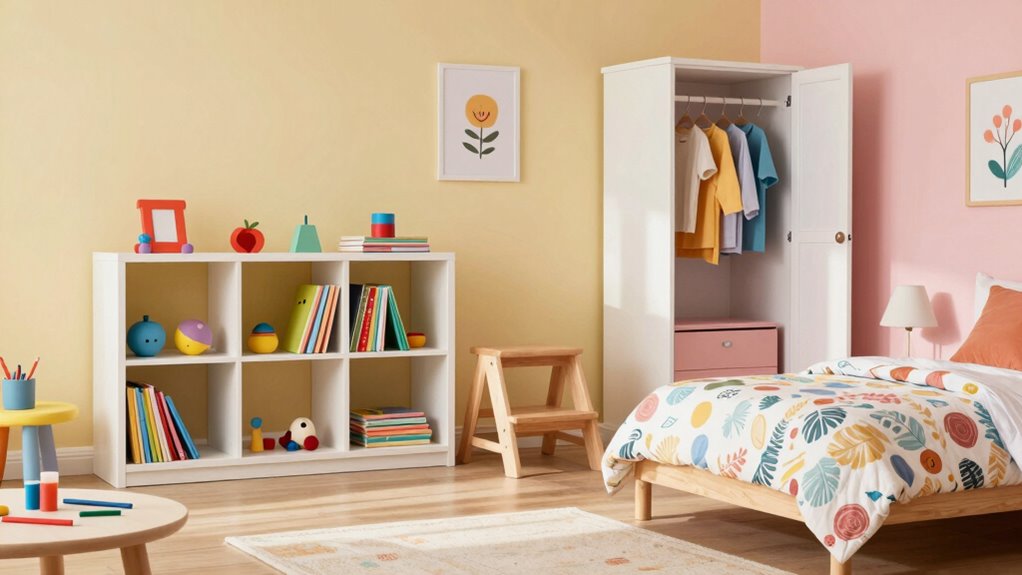
Creating a child’s room that encourages independence starts with thoughtful design choices and organization. When you set up the space to be accessible and manageable, you’re helping your child develop confidence in taking care of themselves and their belongings. One of the first things to focus on is toy organization. Instead of cluttered shelves or inaccessible boxes, opt for storage solutions that your child can reach easily. Use labeled bins or open baskets, so they can find and put away their toys without needing your help. This not only keeps the room tidy but also teaches responsibility and the importance of maintaining their space. When toys are stored within their reach, your child learns to make decisions about what to play with and how to tidy up afterward, fostering independence and good habits. Incorporating accessible storage options supports their ability to independently manage their belongings on a daily basis.
Another key aspect is creating a sleep environment that promotes autonomy. Your child should have a space where they can feel secure and in control, which means their bed and sleep area should be easy to access and arrange. Consider a low bed or a mattress on the floor, making it easy for them to get in and out without assistance. Incorporate a nightstand or a small shelf where they can keep their bedtime essentials—like a water cup, a favorite book, or a nightlight—so they can handle these routines independently. By giving them control over their sleep environment, you help build their confidence in managing their bedtime routine, leading to better sleep habits and a sense of ownership over their space. Additionally, using child-friendly furniture can further enhance their independence and comfort. Creating a safe and accessible environment is also essential to ensure your child’s confidence in exploring and managing their space without fear of injury. Providing them with age-appropriate storage options can also foster a sense of responsibility and ownership over their belongings. Incorporating visual cues or simple labels can also help your child quickly identify where things belong, further encouraging independence in organization.
Designing for independence also involves ensuring that your child’s room layout is simple and intuitive. Keep frequently used items, like clothes or school supplies, within easy reach so they can access what they need without asking for help. Encourage your child to participate in organizing their belongings, which teaches them planning skills and responsibility. When they can find and put away their things easily, it reduces reliance on you and makes them feel capable. Creating designated spots for everything helps establish routines and structure, which is essential for nurturing independence. This thoughtful arrangement reinforces the idea that their space is manageable and under their control.
Ultimately, your goal is to create a space that empowers your child to make choices, manage their belongings, and take care of their environment. Thoughtful toy organization, a manageable sleep environment, and an intuitive layout all work together to support their growth into confident, independent individuals. When you design their room with these principles in mind, you give them the tools they need to succeed on their own, while still feeling safe and supported in their personal space.
As an affiliate, we earn on qualifying purchases.
Frequently Asked Questions
How Can I Involve My Child in Decorating Their Room?
To involve your child in decorating their room, start by discussing their preferences and ideas openly. Encourage them to pick decor choices and colors they love, making the process fun and collaborative. Let them select furniture, wall art, or accessories, giving them a sense of ownership. By actively involving them in decor choices, you foster independence, creativity, and guarantee the space truly reflects their personality.
What Safety Features Are Essential in an Independent Child’s Room?
Guarantee safety by choosing childproof furniture with rounded edges and sturdy construction. Install safety locks on cabinets, drawers, and windows to prevent accidents and keep dangerous items out of reach. Regularly check that all safety features are secure and in good condition. You want your child to explore freely, but safely. These measures give your child independence while minimizing risks, fostering confidence as they learn and grow in their space.
How Do I Balance Independence With Supervision?
Balancing independence with supervision is like walking a tightrope—you want your teen to explore freely without falling into danger. You can achieve this through supervision strategies that foster trust, like setting clear rules and check-ins, while giving them space to grow. Encourage teen independence by gradually increasing responsibilities, but stay alert with open communication. This way, you’re guiding their journey without clipping their wings, ensuring safety and confidence soar together.
When Should I Start Teaching My Child to Organize Their Space?
You should start teaching your child to organize their space around age 3 or 4, when they can handle age-appropriate tasks. As they reach independence milestones, introduce simple routines like putting away toys and clothes. Encourage their effort with clear labels and accessible storage. Gradually, they’ll develop a sense of responsibility and independence, making organizing their space a natural part of their growth and confidence-building process.
How Can I Motivate My Child to Keep Their Room Tidy?
You can motivate your child to keep their room tidy by establishing reward systems that acknowledge their efforts. Offer praise or small incentives when they complete age-appropriate chores consistently. Make cleaning a routine, and set clear, achievable expectations. Celebrate their progress to boost motivation. Over time, this positive reinforcement helps them develop good habits and independence, making tidiness feel rewarding rather than a chore.
Conclusion
Remember, a child’s room should be a space that fosters independence, not dependence. By involving your child in choosing and organizing their space, you help build confidence and self-reliance. Keep the environment safe but empowering, allowing them to make choices and take responsibility. As the saying goes, “Give a man a fish, and you feed him for a day; teach a man to fish, and you feed him for a lifetime.” Your efforts now set the foundation for lifelong independence.
Cold & flu season Picks
humidifiers
As an affiliate, we earn on qualifying purchases.