To turn a play kitchen into a cooperation lesson, encourage kids to share roles like chef, waiter, or customer, and switch roles frequently. Prompts them to narrate their actions, fostering communication and self-expression. Introduce challenges that require teamwork, like preparing a meal together, and guide them in asking for help or resolving conflicts. Establish simple rules for fair play and highlight teamwork’s rewards. Keep the play fun and interactive—if you keep exploring, you’ll find even more ways to promote cooperation through play.

Get baby and family essentials delivered free — and shop member deals
- Fast, free delivery on millions of items
- Access to Prime Big Deal Days deals on October 6–7
- Prime Video, Amazon Music and more included
Key Takeaways
- Assign diverse roles (chef, waiter, customer) and encourage role-switching to promote shared responsibilities.
- Incorporate collaborative tasks like preparing meals or serving guests to foster teamwork.
- Prompt children to narrate actions and share ideas during play to enhance communication skills.
- Establish simple rules for fair play and cooperation, reinforcing respectful interactions.
- Use conflicts as teaching moments to discuss solutions, patience, and compromise during play.
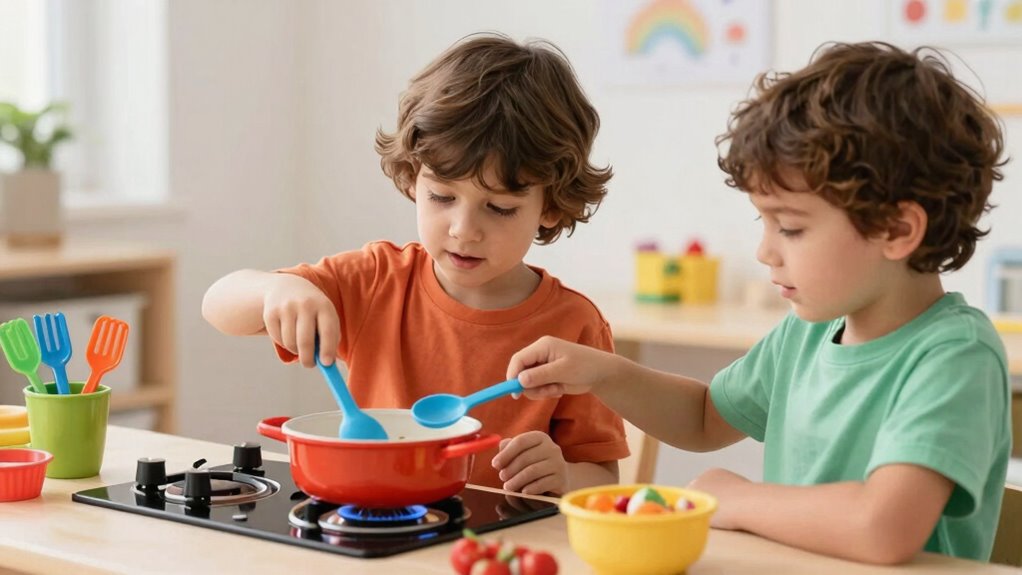
A play kitchen isn’t just for pretend cooking; it’s a perfect space to teach kids about cooperation. When kids engage in imaginative play within this setup, they naturally learn to share, communicate, and work together toward common goals. You can turn this simple play environment into a valuable lesson in social development by guiding their interactions and encouraging teamwork. Kids love to pretend they’re chefs, servers, or customers, which makes the play more engaging and meaningful. As they role-play, they develop essential social skills, like taking turns, listening, and collaborating. Your role is to facilitate these interactions without taking over, allowing children to navigate social situations on their own.
Start by setting up the play kitchen to promote cooperation. Guarantee there are enough utensils, pretend food, and cooking accessories for multiple children to share. When they see that everyone has a part to play, they naturally start to divide responsibilities. You can enhance this by assigning roles, such as “chef,” “waiter,” or “customer,” and encouraging children to switch roles regularly. This way, they experience different perspectives and learn to respect each other’s contributions. During play, prompt them to narrate what they’re doing, which boosts communication skills and helps them articulate their ideas clearly. This storytelling aspect reinforces social development as they practice expressing themselves and listening to peers.
Set up the play kitchen with enough supplies, assign roles, and encourage narration to boost cooperation and communication skills.
Incorporate specific challenges that require cooperation, like preparing a pretend meal together or serving imaginary guests. When children encounter obstacles—perhaps one forgets an ingredient or needs help opening a pretend jar—you can step in as a guide. Encourage them to ask for and give assistance, fostering a sense of teamwork. Celebrate their successes collectively, emphasizing the importance of working together. If conflicts arise, use them as teaching moments. Discuss what went wrong and brainstorm solutions, highlighting the value of compromise and patience. Promoting biodiversity in their play can also be integrated by encouraging them to think about different ingredients, environments, or animals, broadening their understanding of the natural world. Incorporating social skills into the play encourages children to develop empathy and respect for others, which are essential components of cooperation. Additionally, emphasizing the importance of shared goals can help children understand how working together leads to successful outcomes. Recognizing the role of mutual respect in teamwork further enhances their ability to cooperate effectively.
Furthermore, setting clear and simple rules for fair play can help children internalize cooperation principles from an early age. These rules create a structured environment where cooperation is expected and reinforced. Over time, children will internalize these principles, making cooperative behavior second nature. The key is to keep the play fun and interactive while subtly embedding lessons about social development. With your encouragement, the play kitchen becomes more than just a pretend space—it becomes a dynamic environment for learning important life skills through imaginative play and teamwork.
As an affiliate, we earn on qualifying purchases.
Frequently Asked Questions
What Age Group Benefits Most From This Activity?
You’ll find that preschoolers benefit most from this activity during a play date, as it encourages the development of social skills. Children aged 3 to 5 are at a perfect stage to learn cooperation through pretend cooking, sharing, and taking turns. By engaging in this activity, they practice patience, communication, and teamwork, making it an enjoyable and effective way to build essential social skills in a fun, interactive environment.
How Can I Modify the Game for Different Skill Levels?
To modify the game for different skill levels, you can incorporate team-building strategies that promote inclusive participation. Use skill differentiation by assigning roles that suit each child’s abilities, like beginner chefs handling simple tasks and advanced ones managing more complex ones. Adjust the complexity of activities, introducing challenges or simplifying tasks as needed. This encourages cooperation, helps develop skills at every level, and guarantees all children stay engaged and learn effectively.
Are There Safety Concerns With Small Play Kitchen Items?
Small play kitchen items can pose serious safety concerns, like tiny toy parts that could be swallowed or get lodged in a child’s throat. Play kitchen safety is essential, so always check for small item hazards before giving kids free rein. Regularly inspect toys for loose pieces and choose age-appropriate sets. Keep a watchful eye, because those tiny, tempting parts are like silent hazards waiting to cause trouble!
How Long Should the Cooperation Activity Last?
You should aim for the cooperation activity to last around 15 to 20 minutes. This timeframe allows you to incorporate effective team-building strategies and engagement techniques without losing the children’s interest. Keep activities dynamic, encouraging collaboration and communication. By setting a clear, fun goal, you help children develop cooperation skills while maintaining their focus. Adapt the duration based on the children’s age and attention span to make certain a positive, productive experience.
Can This Activity Be Adapted for Remote or Virtual Play?
Yes, you can adapt this activity for remote play like a chef baking up teamwork! Use virtual adaptations by setting up online collaboration tools, like shared digital kitchens or video calls. Kids can take turns “cooking” and communicating, fostering cooperation despite the distance. It’s like cooking up teamwork in the cloud, where online collaboration makes the experience fun, interactive, and just as engaging as in person.
Conclusion
By transforming a play kitchen into a cooperation lesson, you’re planting seeds of teamwork in a child’s mind, encouraging them to nurture collaboration like a gardener tending to their blooms. As they stir, serve, and share, they learn that working together creates a recipe for success. Remember, every shared task is a brushstroke on the vibrant canvas of friendship and cooperation, turning simple play into a masterpiece of lifelong skills.
Fall Picks
fall essentials
As an affiliate, we earn on qualifying purchases.