
TL;DR

Turn the school run and nap time into listening time
- Thousands of audiobooks, podcasts and originals
- Listen on your phone, tablet or Echo — also offline
- Cancel anytime
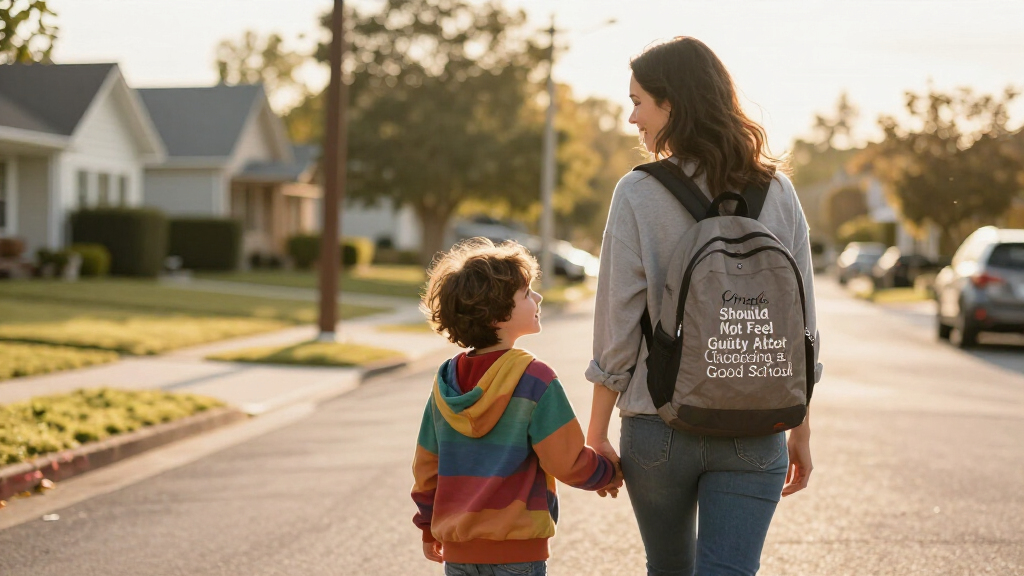
A growing trend in parenting advice emphasizes that parents should not feel guilty for choosing high-quality schools for their children. This opinion piece highlights the importance of informed decision-making and challenges societal pressures.
An increasing number of parenting experts and educators are emphasizing that parents should not feel guilty about selecting high-quality schools for their children. This perspective challenges societal pressures and assumptions that such choices are selfish or exclusive, asserting that informed decisions are essential for children’s success and well-being.
The opinion piece, published recently, argues that societal narratives often unfairly judge parents who prioritize good schools, framing their choices as selfish or elitist. Experts suggest that parents, faced with a variety of options, have a right and responsibility to seek the best educational environment for their children. The piece highlights that research consistently links access to quality education with better academic outcomes, social development, and future opportunities.
It also notes that feelings of guilt among parents often stem from societal expectations, economic constraints, or misunderstandings about what constitutes a ‘good’ education. The authors emphasize that choosing a good school is a personal decision that depends on many factors, including the child’s needs, family circumstances, and local options. They argue that dismissing or criticizing parents for such choices can undermine their confidence and distract from broader issues like educational inequality.
While the opinion advocates for a shift in societal attitudes, it also recognizes that access to quality schools remains uneven, and some parents face systemic barriers. Nonetheless, it encourages parents to focus on what is best for their children without undue guilt or fear of judgment.
Why Parental School Choices Are a Personal Right
This opinion underscores the importance of empowering parents to make educational choices based on their child’s needs and family circumstances, rather than societal expectations. Challenging the stigma around selecting high-quality schools can help reduce parental guilt, foster confidence in decision-making, and promote a more supportive environment for diverse educational paths. Recognizing that access to good schools is often uneven also highlights broader issues of educational inequality that need addressing, but does not diminish parents’ rights to choose the best options available for their children.best school backpacks for students
As an affiliate, we earn on qualifying purchases.
As an affiliate, we earn on qualifying purchases.
Growing Public Discourse on Parental School Selection
Interest in the topic of parental choice and education quality has surged recently, driven by debates over school rankings, charter schools, and educational equity. While the trend toward emphasizing parental agency is longstanding, recent coverage and social media discussions reflect increased scrutiny and societal judgment of parents who prioritize certain schools. The current discourse is amplified by ongoing concerns about educational inequality and the impact of socioeconomic status on school access. However, there is no formal policy change or official statement prompting this opinion; it appears to be part of a broader cultural conversation about parenting and education.Unclear Scope of Societal Attitudes and Systemic Barriers
While the opinion advocates for reduced guilt among parents, it remains unclear how widespread societal attitudes are changing and whether this perspective will influence policy or public perception significantly. Additionally, access to quality schools remains uneven, and systemic barriers continue to limit choices for some families, which complicates the broader application of this advice.Potential for Shifting Cultural Narratives and Policy Discussions
Future developments may include increased public awareness campaigns promoting parental confidence and reducing stigma, as well as policy efforts aimed at expanding access to high-quality education. Monitoring social media and educational discourse will be key to understanding if this opinion gains traction and influences societal attitudes. Educators and policymakers might also consider addressing systemic inequalities that limit parental choices to ensure all children have access to quality education without guilt or stigma.Key Questions
Why do some parents feel guilty about choosing good schools?
Parents often experience guilt due to societal expectations, perceptions of elitism, or fear of judgment from others who may see their choices as exclusive or self-serving. These feelings can be amplified by cultural narratives that stigmatize prioritizing certain schools over others.
Does choosing a good school guarantee a child’s success?
While access to quality education is strongly linked to better academic and social outcomes, it is not a guarantee of success. Many factors influence a child’s development, but a good school can provide a strong foundation and opportunities for growth.
What systemic barriers might prevent some families from accessing good schools?
Barriers include socioeconomic disparities, geographic limitations, limited school choice options, and policies that favor certain districts or groups. These systemic issues can restrict access regardless of parental intent or effort.
How can society support parents in making educational choices?
Society can foster a culture that respects diverse choices, reduce stigma associated with different school selections, and address systemic inequalities to ensure equitable access to quality education for all families.
Will this opinion influence educational policy?
Currently, it is uncertain whether this perspective will lead to policy changes. However, increased awareness and discussion could contribute to broader debates about parental rights and educational equity.
Source: rss
Fall Picks
fall essentials
As an affiliate, we earn on qualifying purchases.