
If you forget to manage light timing properly, your child’s sleep can backfire, no matter how well you follow other routines. Bright, blue-enriched lights in the evening delay melatonin production, making it harder for your child to fall asleep. Dimming lights too late or using bright nightlights can disrupt their internal clock. To avoid this, pay attention to light cues and create a calming, dim environment before bedtime. Keep exploring for more tips on perfecting your child’s sleep routine.

Turn the school run and nap time into listening time
- Thousands of audiobooks, podcasts and originals
- Listen on your phone, tablet or Echo — also offline
- Cancel anytime
Key Takeaways
- Using bright or blue-enriched lights in the evening can delay melatonin production, disrupting sleep onset.
- Failing to dim or turn off lights gradually before bed may hinder the body’s natural winding-down process.
- Ignoring the importance of consistent light timing can weaken circadian rhythm cues, leading to sleep difficulties.
- Relying on artificial lighting that mimics daytime in the evening can confuse the brain’s sleep signals.
- Not managing outdoor light exposure during the day may impair the effectiveness of evening light routines.
dimable night lights for children
As an affiliate, we earn on qualifying purchases.
As an affiliate, we earn on qualifying purchases.
Why Light Timing Is Key to Your Child’s Sleep Quality
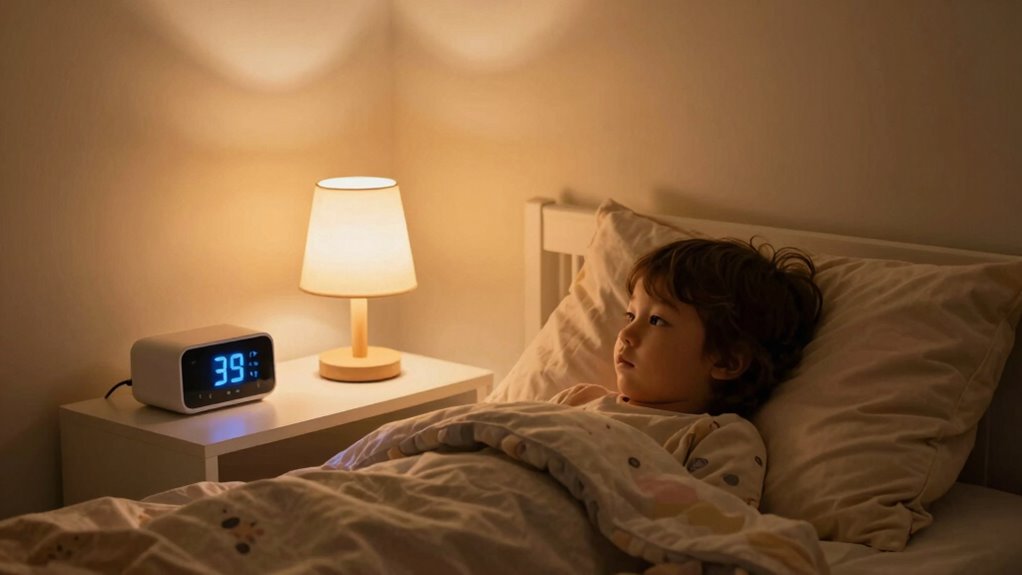
The timing of light exposure plays a crucial role in your child’s sleep quality because it helps regulate their internal body clock. A well-designed sleep environment supports this process, ensuring darkness during bedtime promotes melatonin production. Incorporate calm bedtime rituals that limit bright light exposure as part of their routine. Bright lights too close to bedtime can delay sleep onset, making it harder for your child to fall asleep naturally. Instead, dim the lights as bedtime approaches to signal that sleep time is near. Consistent light timing reinforces their circadian rhythm, helping them feel sleepy when it’s time to rest. Additionally, using appropriate lighting can further optimize their sleep environment and support healthy sleep patterns. Proper light management influences light timing and can prevent disruptions to their sleep cycle, promoting more restful nights. Understanding how light exposure impacts their biological clock can help you create a more effective bedtime routine. Paying attention to the light-dark cycle can also enhance your child’s overall sleep quality and stability. Recognizing the importance of chronobiology can deepen your understanding of their sleep needs and improve routine adjustments.
How Blue Light Disrupts Your Child’s Circadian Rhythm
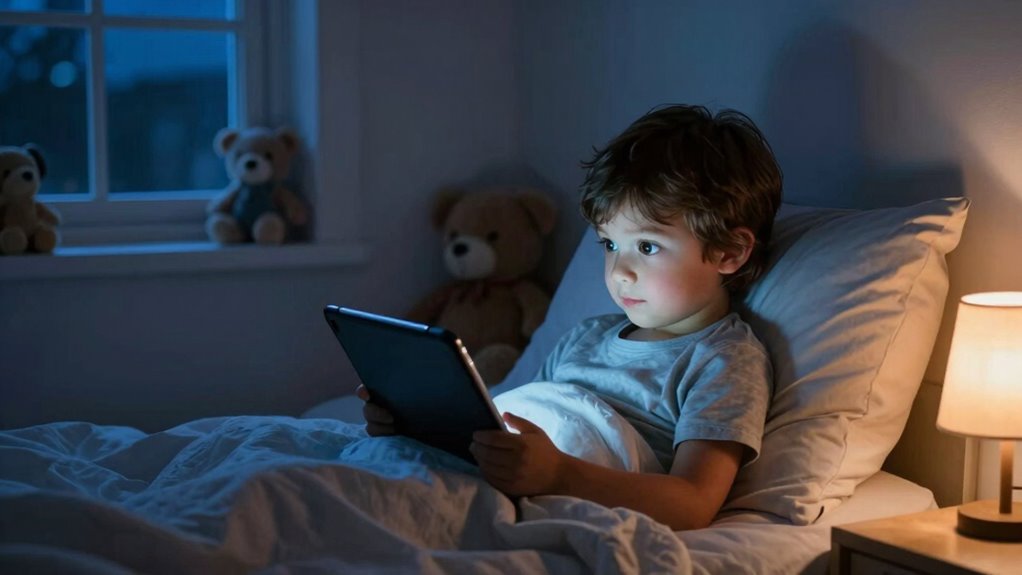
Blue light from screens can block your child’s melatonin production, making it harder for them to feel sleepy. This interference disrupts their natural sleep-wake cycle, leading to restless nights. Additionally, understanding the importance of ecosystem health emphasizes how interconnected environmental factors can influence your child’s development and well-being. Recognizing the role of pollination processes can help you appreciate the broader impact of healthy ecosystems on overall health. Maintaining a balanced environment supports not only ecological stability but also the physical and emotional health of children, underscoring the importance of sustainable practices.
Blue Light Suppresses Melatonin
Have you ever wondered why exposure to screens before bedtime makes it harder for your child to fall asleep? Blue light from screens suppresses melatonin, the hormone that signals sleep. This disruption can throw off their circadian cues, making it harder for their body to recognize when it’s time to rest. To minimize this impact:
- Limit screen time at least an hour before bed.
- Use dim, warm-colored lights instead of bright, blue-toned ones.
- Consider light therapy devices that mimic natural light during the day, helping reinforce healthy circadian rhythms. Additionally, understanding natural lighting patterns can help you design more effective strategies for better sleep. Incorporating exposure to natural light during the day can further support your child’s circadian rhythm and overall sleep quality. Recognizing how light exposure influences sleep patterns is essential for creating an environment conducive to restful sleep.
Disrupts Sleep-Wake Cycle
Since blue light signals your child’s brain that it’s daytime, exposure to it late in the evening can throw off their natural sleep-wake cycle. This disrupts their circadian rhythm, making it harder to fall asleep and wake up refreshed. Your child’s sleep environment plays a vital role—bright screens or LED lights in their room can interfere with this cycle. Even relaxing bedtime rituals, like reading on a tablet or watching TV, may backfire if blue light isn’t minimized. To support healthy sleep, aim for dim lighting and avoid screens at least an hour before bedtime. Establishing a calming, low-light sleep environment helps reset their internal clock and promotes consistent, restorative sleep. Ignoring this detail can leave your child sleep-deprived and restless, as light exposure significantly influences their biological clock. Incorporating light-based routines that avoid blue light exposure can further improve their sleep quality. Additionally, understanding how light signals impact the circadian rhythm can help you make more informed decisions about your child’s bedtime environment. Being mindful of the type and timing of light exposure can help prevent disruptions in sleep patterns, and incorporating proper lighting practices can enhance overall sleep health.
When Is the Best Time to Dim Lights Before Bed?

Timing is key when it comes to dimming lights before bed. The best time to start lowering the brightness is about 30 to 60 minutes before your planned sleep time. This gradual shift helps create a calming sleep environment and signals your body that bedtime is approaching. To optimize your bedtime rituals, consider these points:
- Dimming lights too early may cause you to feel restless or lose track of time.
- Waiting too long to dim lights can delay melatonin production.
- Consistency in timing reinforces your sleep-wake cycle and improves sleep quality.
- Incorporating light management strategies like dimming gradually can enhance your overall sleep health.
- Being mindful of your environment and reducing distractions can further support your transition to sleep.
- Understanding the role of circadian rhythms can help you fine-tune your light exposure for better sleep.
- Recognizing how light exposure influences your biological clock can help you optimize your sleep routine. Additionally, understanding the impact of biological rhythms can enhance the effectiveness of your light adjustment practices.
Common Mistakes Parents Make With Light and Sleep

Many parents underestimate how their lighting choices can interfere with their child’s sleep. Overexposure to light, especially from light pollution or insufficient nighttime darkness, can disrupt your child’s circadian rhythm. Bright lights before bed or exposure to screens can delay sleep onset and reduce sleep quality. Even small mistakes matter — like leaving nightlights on too bright or letting outside light seep in. These errors hinder your child’s ability to produce melatonin naturally, making it harder for them to fall asleep. Additionally, failure to manage outdoor lighting can significantly impact your child’s sleep environment.
How to Set a Consistent Light Schedule for Better Sleep

Creating a consistent light schedule is essential for helping your child develop healthy sleep habits. To do this, establish a regular routine that aligns light exposure with their natural sleep-wake cycle. Incorporate light therapy during the day to boost alertness and promote melatonin production at night. Make certain your child’s sleep environment is dark and free of bright screens before bedtime.
Key tips include:
- Limit exposure to bright lights and screens at least an hour before sleep.
- Use dim, warm lighting during evening routines to signal winding down.
- Aim for consistent wake-up and bedtime to reinforce the sleep rhythm.
Using Natural Light to Keep Your Child’s Sleep on Track

Natural light plays a vital role in maintaining your child’s sleep schedule, especially when integrated into their daily routine. Exposure to natural sunlight helps regulate their circadian rhythm, signaling when it’s time to wake and when to wind down. To do this effectively, encourage outdoor activities in the morning, allowing sunlight to reset their internal clock. Be mindful of light pollution, which can disrupt natural cues, especially in urban areas. Avoid relying on indoor lighting that mimics daylight late in the evening, as it can delay melatonin production and interfere with sleep. Instead, dim indoor lights as bedtime approaches and maximize natural light exposure during the day. This balance helps keep your child’s sleep on track without confusing their biological signals.
Practical Tips for Creating Effective Light-Based Bedtime Routines
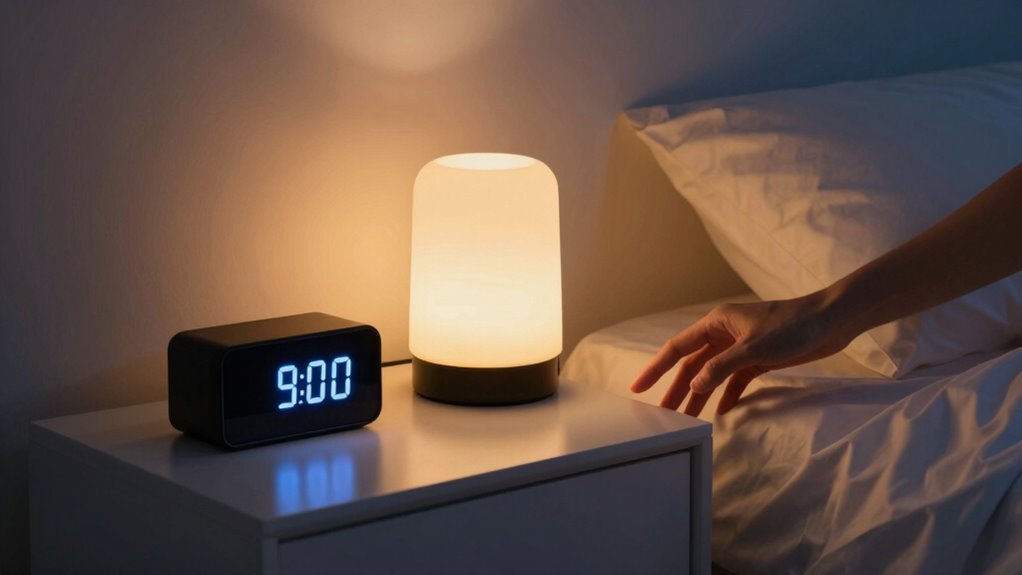
To create an effective light-based bedtime routine, you should stick to consistent light timing each evening to help regulate your child’s internal clock. Using warm, dim lights in the hour before bed signals to their body that it’s time to wind down. These small adjustments can make a big difference in improving sleep quality and establishing a calming bedtime environment.
Consistent Light Timing
Maintaining a consistent light schedule is essential for signaling your body when it’s time to wind down and prepare for sleep. Your sleep environment plays a vital role, and lighting technology can help create a calming atmosphere. To optimize this, keep your lighting routines steady each night.
Here are three tips:
- Set a fixed time to dim or turn off lights, aligning with your bedtime.
- Use lighting technology that mimics natural evening light to support your circadian rhythm.
- Avoid bright, blue-enriched lights close to bedtime, as they can delay sleep signals.
Consistency reinforces your body’s internal clock, making it easier to fall asleep naturally. Pay attention to your sleep environment, and adjust lighting timing to improve your sleep quality.
Use of Warm Lights
Incorporating warm lights into your evening routine can considerably enhance your ability to unwind and prepare for restful sleep. Focus on choosing lights with a low color temperature, around 2700K, to create a calming atmosphere. Keep the light intensity low to avoid overstimulation that can interfere with melatonin production. Use dim lamps or amber bulbs to foster relaxation.
| Aspect | Recommendation |
|---|---|
| Color Temperature | Aim for 2700K or lower for cozy, warm lighting |
| Light Intensity | Keep it dim to promote relaxation and melatonin release |
| Lighting Type | Use lamps with warm bulbs or adjustable dimmers |
| Placement | Position lights away from sleep space for minimal disruption |
Adjusting Light Exposure During Travel or Schedule Changes
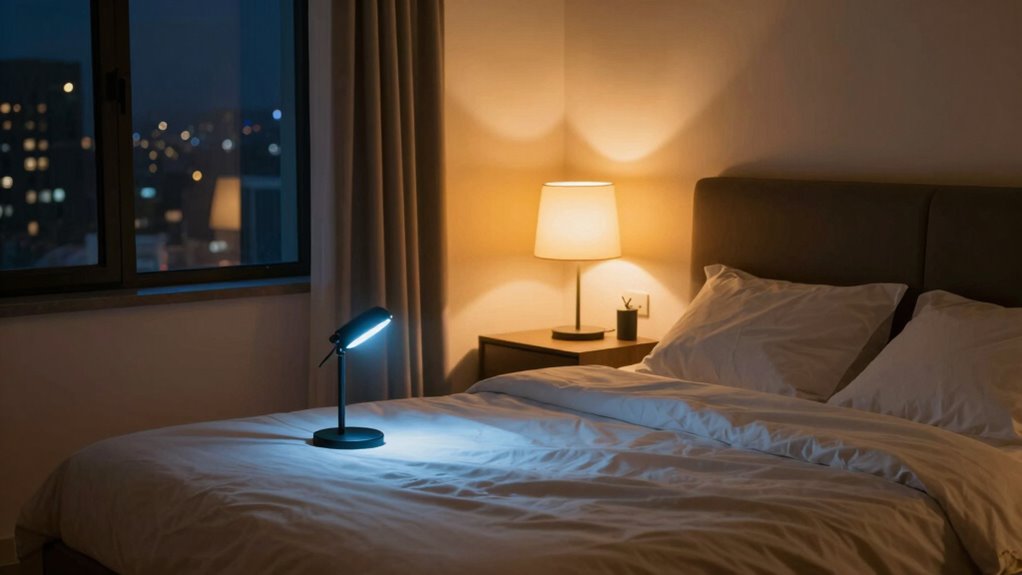
When you travel across time zones or experience sudden schedule shifts, adjusting your light exposure can help realign your internal clock and reduce jet lag. Light therapy is especially effective if you expose yourself to bright light at strategic times, depending on your destination. To optimize your sleep environment during these changes:
- Use bright light in the morning if you need to advance your sleep schedule.
- Limit exposure to blue light from screens in the evening to promote melatonin production.
- Consider portable light therapy devices to maintain consistent light exposure, even on the go.
Troubleshooting Light-Related Sleep Problems in Kids

Light exposure plays a crucial role in your child’s sleep patterns, and disruptions can lead to difficulties falling asleep or staying asleep. If your child struggles despite a consistent bedtime routine, consider their light environment. Too much bright light, especially from screens during nighttime reading, can delay melatonin production. Conversely, insufficient natural light during outdoor play can impact circadian rhythms. To troubleshoot, evaluate their light exposure:
| Issue | Solution | Tip |
|---|---|---|
| Excess bright light at night | Use dim, warm lighting during evening routines | Limit nighttime reading to lamps with warm bulbs |
| Lack of outdoor daylight | Increase outdoor play during the day | Aim for at least 30 minutes daily |
| Screen time close to bedtime | Reduce screen use 1 hour before sleep | Encourage quiet, non-electronic activities |
Adjusting these factors helps regulate sleep and improves overall rest.
Frequently Asked Questions
Can Too Much Natural Light During the Day Affect Bedtime?
Yes, too much natural light during the day can affect your bedtime. When you get excessive outdoor sunlight, your body produces less melatonin, making it harder to fall asleep. Even in your sleep environment, if indoor lighting remains bright late into the evening, it can disrupt your sleep cycle. To improve your sleep, aim for a consistent dark sleep environment and moderate exposure to natural light during the day.
Are There Specific Light Wavelengths That Are Better or Worse for Sleep?
Certain light wavelengths, like blue light, can negatively impact your sleep quality because they suppress melatonin production. On the other hand, red or amber wavelengths are better for sleep, as they have minimal effect on your circadian rhythm. To improve your sleep, avoid screens emitting blue light before bed and opt for dim, warmer lighting in the evening. This helps your body wind down naturally.
How Does Screen Time Before Bed Influence Light-Based Routines?
Ironically, your screen time before bed can sabotage your sleep, despite the glowing promise of relaxation. Blue light from screens increases alertness, disrupting your circadian rhythm. Screen exposure in the evening suppresses melatonin production, making it harder to fall asleep. So, while you might think scrolling helps you unwind, it actually backfires, keeping you awake longer and tossing you into a restless night.
What Age-Specific Light Routines Are Best for Infants Versus Older Children?
For infants, stick to dim, warm lighting to support their sleep and avoid blue light exposure, which can disrupt their circadian rhythms. As your child grows into a toddler, you can gradually introduce softer, low-intensity routines, like reading under gentle light. Adjust the lighting based on age-specific sleep needs, ensuring that both infant sleep and toddler routines promote healthy sleep patterns without overstimulation or disruption.
Can Light Therapy Be Used to Improve Sleep in Children With Sleep Disorders?
Yes, light therapy can help improve sleep in children with sleep disorders by supporting melatonin regulation and circadian synchronization. You should use bright light exposure in the morning to reinforce their internal clock, helping them fall asleep easier at night. However, it’s important to consult a healthcare professional to guarantee the therapy is appropriate and safe for your child’s specific needs, avoiding overexposure or improper timing.
Conclusion
Remember, timing your child’s light exposure is as essential as keeping a steady hourglass. Miss this detail, and your efforts might turn into a modern-day Pandora’s box of restless nights. By setting a consistent schedule, avoiding blue light near bedtime, and embracing natural light, you’ll help your little one sleep soundly—no more sleepless nights worthy of a Shakespearean tragedy. So, be diligent with light, and watch your child’s dreams flourish like a well-tuned lute.
Cold & flu season Picks
humidifiers
As an affiliate, we earn on qualifying purchases.