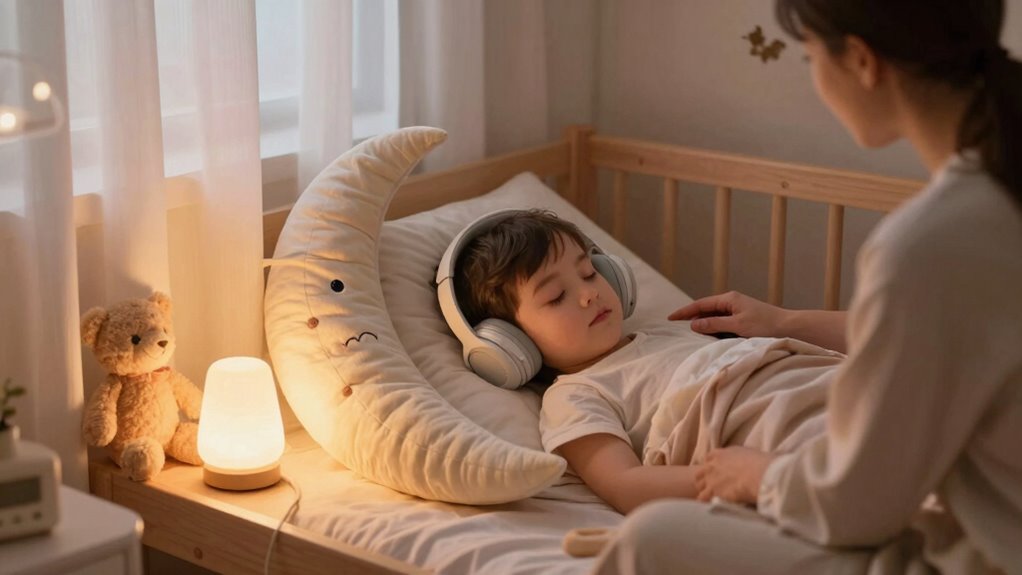

As a parent, it’s important to choose safe, age-appropriate audio devices with volume limiters and timers to protect your child’s hearing and encourage independent bedtime routines. Place devices away from the bed and keep cords out of reach. Set clear rules about listening time and supervise initial use. Teaching responsible habits early helps guarantee your child develops healthy listening practices that promote relaxation and consistency at bedtime. If you want to learn more, keep exploring these helpful tips.

Turn the school run and nap time into listening time
- Thousands of audiobooks, podcasts and originals
- Listen on your phone, tablet or Echo — also offline
- Cancel anytime
Key Takeaways
- Choose age-appropriate, safe devices with volume limiters and automatic shut-off features to protect your child’s hearing.
- Position devices away from the bed and keep cords out of reach to prevent accidents.
- Set clear rules for listening duration and volume to promote safe habits and support healthy sleep routines.
- Supervise initial use and periodically check that devices are used safely and responsibly.
- Educate children early about sound safety to foster lifelong responsible listening habits.
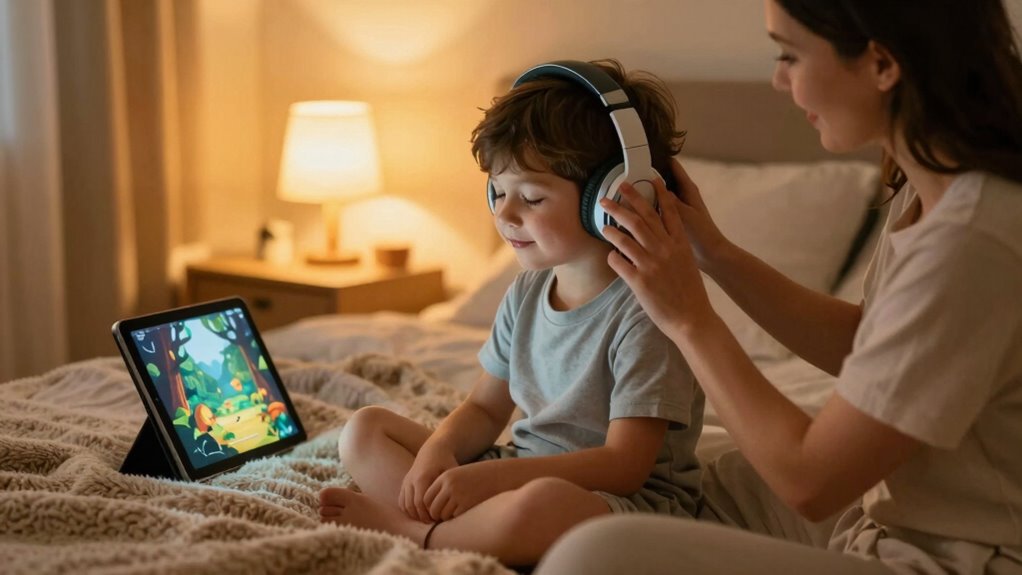
When it comes to helping your child develop healthy bedtime routines, independent listening before sleep has become a popular strategy. Many parents find that allowing kids to listen to calming music, stories, or white noise helps them wind down and shift smoothly into sleep. This approach can foster a sense of independence and establish consistency in nightly routines, which is essential for healthy sleep habits. However, as you introduce audio devices into your child’s bedtime, it’s important to be mindful of audio device safety to prevent potential issues like hearing damage or disrupted sleep patterns.
First, choose age-appropriate audio devices that are specifically designed for children or are safe for prolonged use. Many devices come with volume limiters, which are key in preventing your child from listening at dangerously high levels that could harm their hearing. Setting these volume limits before bedtime ensures your child can listen comfortably without risking damage to their ears. Also, consider devices with automatic shut-off features or timers. These can turn off the audio after a set period, helping to avoid continuous exposure and encouraging your child to fall asleep without needing to turn off the device manually.
Choose age-appropriate devices with volume limiters and timers for safe, comfortable, and automated bedtime listening.
Positioning the audio device correctly is another important aspect of audio device safety. Place it at a safe distance from your child’s bed—ideally on a nightstand or shelf—so the sound isn’t too close or overwhelming. Keeping the device on a stable surface reduces the risk of it falling or being mishandled. Additionally, ensure the cords are out of reach to prevent accidental pulling or choking hazards. Wireless, rechargeable devices are often a safer choice, reducing cord clutter and minimizing hazards. Understanding audio device safety and how to implement it can significantly improve your child’s bedtime experience. Being aware of sound levels and how they impact hearing health is crucial when selecting and using these devices. Furthermore, understanding the importance of safe listening practices can help you teach your child responsible habits that protect their hearing over time. Incorporating educating children about safe listening from an early age can promote lifelong habits of responsible device use.
You also want to make certain you’re involved in setting rules around independent listening. Establish a routine where your child understands that listening is a special part of their bedtime, but it shouldn’t replace other calming activities like reading or cuddling. Consistent limits on listening time and volume help make sure that the practice remains safe and beneficial.
Finally, always supervise the initial use of any new audio device and periodically check in to confirm it’s being used safely. Teaching your child about audio device safety—such as not increasing the volume and not sharing headphones—can foster responsible habits that last a lifetime. When used thoughtfully, independent listening can be a positive addition to your child’s bedtime routine, promoting relaxation and independence while safeguarding their health.
children's audio devices with volume limiter
As an affiliate, we earn on qualifying purchases.
As an affiliate, we earn on qualifying purchases.
Frequently Asked Questions
How Do I Choose Appropriate Audio Content for My Child?
You should choose appropriate audio content by exploring diverse music genres and ensuring content is age-appropriate. Look for calming, gentle sounds that match your child’s preferences and avoid overly stimulating or loud material. Consider content diversity to keep your child engaged and expose them to different sounds and styles. Always preview the audio first, and select options that promote relaxation and a peaceful sleep environment.
What Age Is Suitable for Independent Listening Before Sleep?
You can start allowing independent listening before sleep around age 3 or 4, depending on your child’s development. Incorporate listening into bedtime routines gradually, establishing consistent listening schedules that signal winding down. At this age, children are generally capable of staying focused on calm audio content without supervision. Make certain the audio content is appropriate, soothing, and part of a predictable routine to help your child shift smoothly to sleep independently.
Can Independent Listening Replace Bedtime Stories?
Yes, independent listening can replace bedtime stories, but it should be part of your bedtime routines. You can introduce calming audio devices, like playlists or audiobooks, to help your child wind down. Just guarantee audio device safety by keeping volume levels low and supervising usage to prevent potential harm. This approach promotes independence and relaxation, making bedtime smoother while maintaining a comforting routine.
How Do I Ensure the Volume Is Safe for My Child’s Ears?
To guarantee volume safety for your child’s ears, set the listening device’s volume to a safe level, typically below 60% of its maximum. Use parental controls or volume limiters if available. Encourage frequent breaks to prevent ear fatigue and protect ear health. Always supervise your child’s listening habits, and choose devices with ear protection features to minimize the risk of hearing damage. Regularly check in to maintain ear safety.
What Signs Indicate My Child Is Ready for Independent Listening?
You’ll know your child is ready for independent listening when they comfortably follow bedtime routines and can stay attentive during their listening time. Look for signs like minimal fussing, consistent bedtime behavior, and their ability to settle down with headphones or a device. Make certain the listening environment remains calm and controlled, fostering independence. When they manage this smoothly, it’s a good indication they’re prepared for independent listening as part of their bedtime routine.
Conclusion
In the end, fostering independent listening before sleep can be a game-changer for your child’s bedtime routine. It helps them develop confidence and self-soothing skills while creating a calming environment. Just remember, setting boundaries now can save you from sleepless nights later. Think of it as planting a seed—patience and consistency will help your child grow into a confident, independent sleeper. Trust the process, and you’ll see the results bloom over time.
Cold & flu season Picks
humidifiers
As an affiliate, we earn on qualifying purchases.