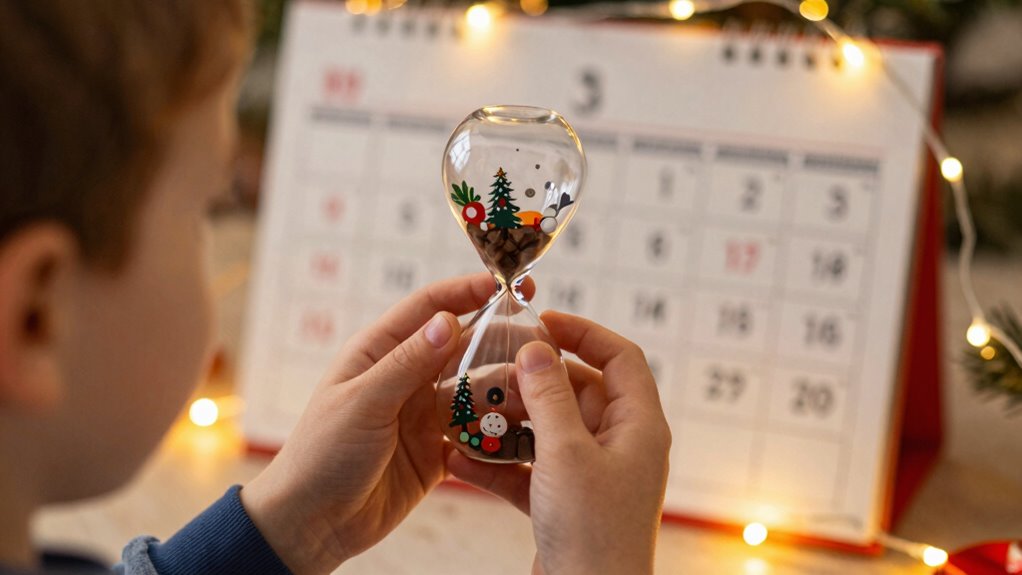

To teach patience during a countdown season, help your child understand how long they need to wait and break it into smaller, manageable parts with schedules or activities. Encourage emotional regulation by using calming techniques like deep breathing and model patience yourself. Celebrate even small victories and reinforce that patience is a skill built over time. Focusing on resilience and a positive mindset makes waiting less frustrating—stick with it, and you’ll discover more ways to foster patience effectively.

Turn the school run and nap time into listening time
- Thousands of audiobooks, podcasts and originals
- Listen on your phone, tablet or Echo — also offline
- Cancel anytime
Key Takeaways
- Break down long waits into smaller, manageable segments to make time feel less daunting.
- Use engaging activities and schedules to shift focus from countdowns to enjoyable tasks.
- Teach and model emotional regulation techniques like deep breathing and mindfulness to manage impatience.
- Celebrate small progress in patience, reinforcing effort and fostering a growth mindset.
- Emphasize resilience and positive thinking to develop a confident, calm approach during exciting seasons.

Teaching patience can be challenging, but it’s an essential skill that benefits both children and adults. During a season full of countdown excitement, like the days leading up to a holiday or big event, it’s natural for everyone’s nerves to run high. Your goal is to help others, especially children, understand that waiting doesn’t have to be frustrating. To do this, you need to focus on teaching effective time management and emotional regulation. When you help someone see how to manage their time wisely, they learn that patience isn’t about just waiting; it’s about using that time constructively. For example, if your child learns to break down a long wait into smaller, manageable parts, they feel more in control and less anxious.
In this busy season, it’s vital to set realistic expectations. When you teach children to understand how long they need to wait and what they can do during that time, you’re strengthening their sense of time management. Show them how to create a schedule or activity list that makes the wait feel shorter. This helps them shift focus from the countdown to productive and enjoyable tasks, reducing feelings of impatience. When they see they have control over their time, they develop patience naturally. Incorporating time management strategies can further empower children to handle delays with patience and confidence. Recognizing that patience is a skill that can be cultivated over time encourages a growth mindset in children. Being aware of the importance of emotional regulation can also help children better navigate their feelings during these waiting periods.
At the same time, emotional regulation plays a key role. When you teach children to recognize and manage their emotions, they’re better equipped to handle the frustration of waiting. Encourage deep breathing, mindfulness, or simple grounding exercises when they start feeling impatient. You might say, “Take a deep breath and think about something happy,” which helps calm their emotions. Over time, they learn that impatience is a feeling that can be managed rather than acted upon impulsively. Recognizing the importance of mindfulness in managing emotions can significantly improve their ability to stay calm. When you model emotional regulation yourself—staying calm and patient—you reinforce the message by example. Additionally, teaching children about emotional resilience can help them bounce back from setbacks or delays with a positive attitude.
During this countdown season, it’s also helpful to acknowledge feelings and celebrate small victories. If a child manages to wait patiently for a few minutes, praise their effort. Recognize that patience is a skill built over time, not something they’ll master overnight. By combining strategies of effective time management and emotional regulation, you’re giving them tools to handle the inevitable delays and excitement with grace. Ultimately, teaching patience in this season isn’t just about waiting; it’s about cultivating resilience, self-control, and a positive attitude that lasts beyond the countdown. Developing these skills aligns with fostering a positive mindset that can help children navigate many life situations with confidence.
children's patience building toys
As an affiliate, we earn on qualifying purchases.
As an affiliate, we earn on qualifying purchases.
Frequently Asked Questions
How Can I Model Patience Effectively During Busy Holiday Seasons?
You can model patience during busy holiday seasons by practicing mindful breathing when things get hectic, showing your calmness amid chaos. Demonstrate delayed gratification by waiting patiently for holiday surprises or special moments instead of rushing through them. Your composed attitude teaches others to stay present and manage their impulses, helping everyone embrace the season’s joy without frustration. Leading by example makes patience a natural part of holiday celebrations.
What Are Quick Activities to Practice Patience With Young Children?
You can turn patience practice into a gentle adventure by trying quick activities like mindful breathing exercises, where children focus on slow, deep breaths to settle their minds. Sensory activities, like feeling different textured objects or listening to calming sounds, help them learn to pause and enjoy the moment. These simple, joyful practices foster patience, making waiting feel less overwhelming and more like a calming, shared experience.
How Do I Handle Impatient Behavior in a Festive Environment?
When handling impatient behavior during festive events, stay calm and model patience through holiday traditions and festive mindfulness. Gently remind your child that everyone’s excited, and taking deep breaths or counting to ten helps everyone enjoy the celebration. Engage them in calming activities like listening to holiday music or sharing gratitude. Your composed attitude encourages them to practice patience, making the season joyful and meaningful for everyone involved.
Are There Specific Books or Stories to Teach Patience During Holidays?
You can use holiday stories and patience books as symbols of waiting and kindness. Books like “The Little Fir Tree” or “The Gift of the Magi” teach patience through heartfelt lessons. These stories act as mirrors, helping children see the value in waiting and sharing. Incorporate them into your celebrations, discussing their messages to nurture patience amidst holiday excitement. Stories become bridges, guiding kids to embrace patience with joy and understanding.
How Can Patience Improve Family Relationships During Holiday Preparations?
Patience can strengthen your family relationships during holiday preparations by fostering understanding and reducing stress. As you embrace holiday traditions and practice gratitude, you create a calm environment where everyone feels valued. Your patience encourages open communication, making it easier to navigate busy schedules and expectations. This approach helps your family enjoy the season, deepens bonds, and transforms holiday chaos into meaningful moments of connection and appreciation.
Conclusion
So, as you teach patience during this whirlwind season of countdown excitement, remember that the biggest lesson might be learning to wait for the joy that’s already on its way. Ironically, in a time when everything feels urgent and fleeting, the true gift lies in embracing the slow, steady moments. After all, patience isn’t just about waiting — it’s about appreciating life’s patience-testing surprises, even when you’re enthusiastic for them to arrive.
Evergreen bestsellers Picks
bestsellers
As an affiliate, we earn on qualifying purchases.