
To teach kids safe independence at parks and playgrounds, set clear boundaries and rules while explaining safety expectations. Stay actively engaged by observing and encouraging cautious play without hovering. Conduct regular risk assessments to identify hazards and guarantee equipment is safe. Teach children to recognize unsafe situations, speak up, and trust their instincts. By combining supervision, communication, and empowering skills, you’ll help your children explore confidently and safely. Keep exploring these strategies to support their growing independence.
Key Takeaways
- Establish clear boundaries and safety rules before play begins to guide safe exploration.
- Actively supervise and stay alert without micromanaging, ready to intervene if needed.
- Conduct regular risk assessments of equipment and surroundings to ensure safety.
- Teach children to recognize unsafe situations and encourage open communication about their comfort.
- Trust your instincts and remove children from hazards or unsafe environments promptly.

Taking kids to parks and playgrounds is a great way to foster their independence, but it’s natural to feel concerned about their safety. To help them explore and enjoy these spaces confidently, you need to develop effective supervision strategies. This means balancing giving your child room to grow with staying attentive enough to intervene if necessary. Start by establishing clear boundaries. Let your child know which areas are off-limits and set expectations for behavior. Consistent rules help them understand safety boundaries and build trust in your guidance.
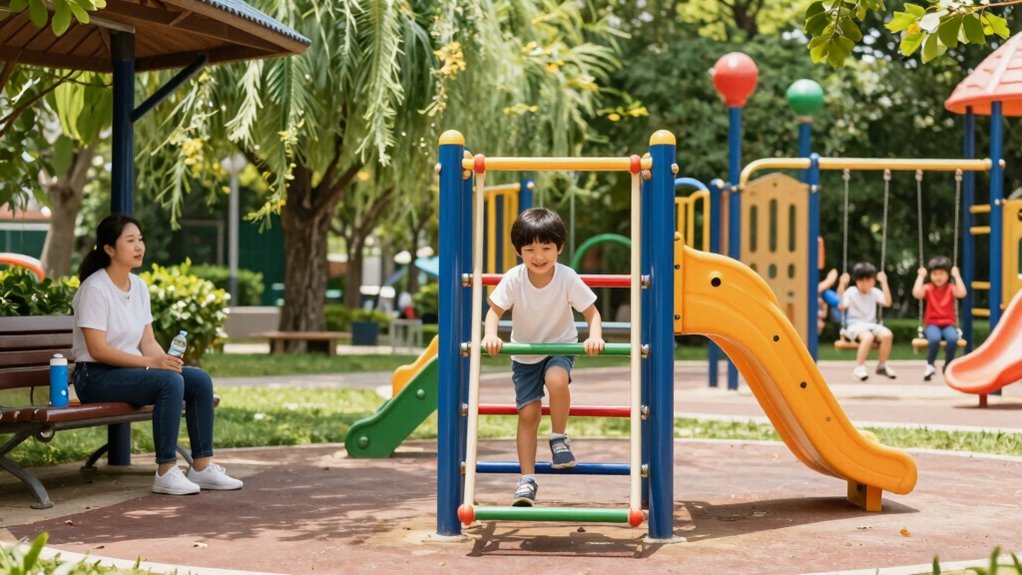
Next, practice active supervision. This involves staying engaged and observant without hovering. Instead of just watching from a distance, walk around the playground, scan for potential hazards, and be ready to step in if something unsafe happens. Use your voice to communicate, reminding your child of safety rules or encouraging cautious play. Remember, supervision isn’t about constant control but about being present and aware of what’s happening around them. Incorporating playground safety guidelines can further enhance your oversight and help you identify potential hazards more effectively. Being familiar with safety standards also enables you to recognize whether playground equipment meets safety requirements.
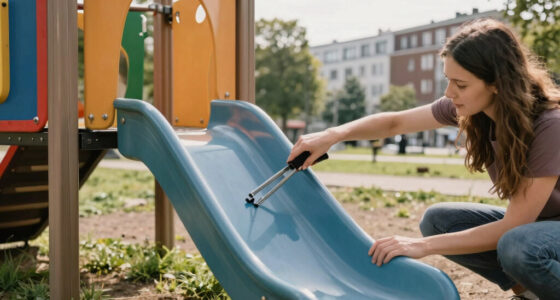
A vital part of keeping your child safe is conducting a risk assessment before and during playtime. Check the equipment for any damage, such as broken swings or loose bolts, and ensure the surface underneath is soft enough to cushion falls. Observe how other children are playing—are they climbing too high or playing roughly? If you notice risky behavior or unsafe equipment, intervene immediately. Risk assessment isn’t a one-time task; it’s ongoing. As your child grows and gains new skills, reassess the environment to match their developing abilities. Being aware of playground safety standards can help you stay informed about safety improvements and regulations. Additionally, understanding biodiversity in the environment can help you identify natural hazards like poisonous plants or insects that could pose a risk. Recognizing the importance of environmental awareness can further protect your child from hidden dangers in outdoor spaces.
Teach your child about personal safety as part of your supervision strategy. Explain how to recognize unsafe situations and encourage them to speak up if they feel uncomfortable or see someone else in danger. Role-playing scenarios can help them practice what to do if they get separated or face an unsafe situation. Equipping your child with awareness and confidence complements your supervision efforts, creating a safer environment. Remember, fostering open communication builds trust and helps your child feel empowered to make safe choices.
Finally, trust your instincts. If something doesn’t seem right, don’t hesitate to remove your child from the situation or playground altogether. Combining vigilant supervision, careful risk assessment, and open communication empowers your child to explore independently while minimizing hazards. With these strategies, you help your child develop confidence and independence, knowing you’re actively supporting their safety every step of the way.

Fusion Climb Centaur Kids' Climbing Harness, Adjustable harness for Children for Professional Mountaineering, rock climbing, Rappelling safety harness, work safety Belt, Fire Resucing, Caving climbing
- Made in USA: Crafted in Chino Hills, California
- Enhanced Safety: Provides support for various activities
- Adjustable Fit: Features adjustable straps and padding
As an affiliate, we earn on qualifying purchases.
As an affiliate, we earn on qualifying purchases.
Frequently Asked Questions
When Is a Child Ready for Unsupervised Park Visits?
A child is ready for unsupervised park visits when they demonstrate responsible independent exploration and understand park boundaries. You should see they can follow rules, stay within designated areas, and react calmly to unexpected situations. When they consistently show these skills and your trust, it’s safe to gradually allow them to explore independently. Always start with short visits and stay nearby, building their confidence while maintaining safety.
How Do I Handle Stranger Interactions at Parks?
When it comes to stranger interactions at parks, remember that open communication is key—you’re the first line of defense. Teach your child about stranger danger without instilling fear and emphasize playground etiquette, like respecting others’ space. If a stranger approaches, encourage them to come to you immediately. Remind them that it’s okay to say no and that your watchful eye keeps everyone safe—it’s better to be safe than sorry.
What Safety Gear Is Essential for Playgrounds?
You should guarantee your child wears crucial safety equipment like a helmet, knee pads, and elbow pads to protect against falls. Protective gear is essential, especially on slides, swings, or climbing structures. Make certain the safety equipment fits well and is in good condition. Always supervise your kid while they play, and encourage safe play habits to minimize injuries. Proper safety gear helps your child enjoy the playground while staying protected.
How Can I Teach Kids to Recognize Unsafe Situations?
You can teach kids to recognize unsafe situations by guiding them through risk assessment and setting clear safety boundaries. Encourage them to evaluate the potential dangers of climbing too high or running near water. Use simple language to explain why certain actions are risky, and remind them to stay within designated safe zones. Reinforcing these concepts helps kids develop awareness and confidence to make safe choices independently.
What Are Signs of Overconfidence in Young Children?
Like a shining star too close to the sun, overconfidence in young children signals they might ignore risk assessment. You’ll notice signs such as ignoring safety rules, taking dangerous risks, or dismissing adult guidance. While confidence building is important, watch for these signs of overconfidence, which can lead to accidents. Encourage your child to stay humble, assess risks carefully, and balance independence with caution to keep them safe and confident.
Conclusion
By teaching your kids to be independent at parks and playgrounds, you’re helping them build confidence and essential safety skills. Remember, nearly 60% of playground injuries happen when children aren’t properly supervised, so staying attentive is key. Encourage your child to explore within safe boundaries, communicate openly, and trust their instincts. With your guidance, they’ll learn how to enjoy outdoor adventures safely, gaining independence while minimizing risks. Your proactive approach creates confident, responsible little explorers.