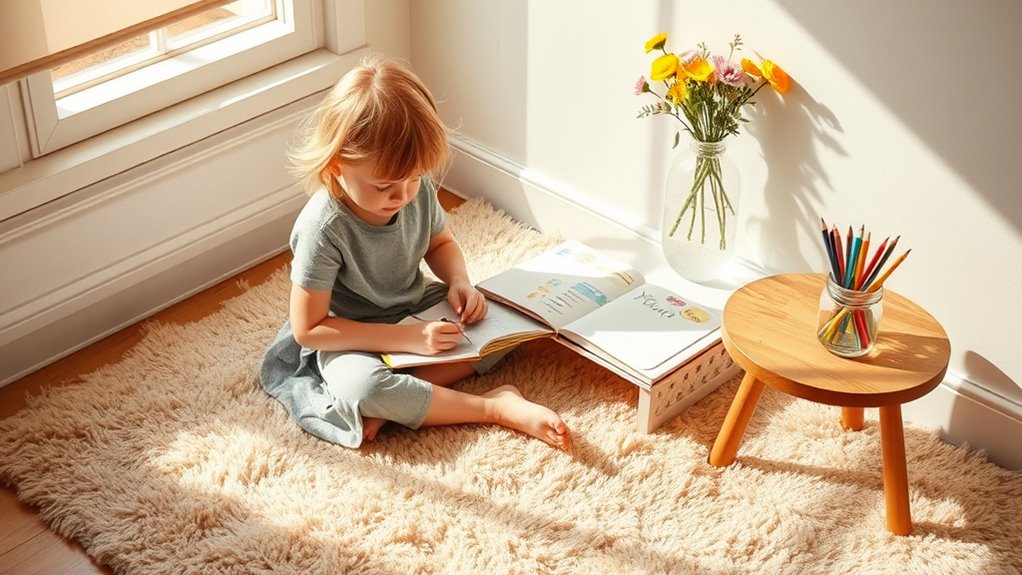

Encouraging kids to try journaling for gratitude boosts their emotional well-being, confidence, and positive habits. Make it fun by creating a cozy space, offering colorful journals, and using creative prompts like “What made you smile today?” To keep them motivated, praise their efforts and focus on consistency rather than perfection. When you support their efforts with enthusiasm, they’ll develop a lifelong habit that nurtures resilience and happiness. Keep exploring ways to make it enjoyable and meaningful.
Key Takeaways
- Use positive reinforcement to praise efforts and thoughtful gratitude entries, making journaling feel rewarding.
- Create a cozy, distraction-free space and allow children to personalize their journals for ownership.
- Incorporate fun, imaginative prompts like “What made you smile today?” to engage children’s interest.
- Establish a consistent routine, emphasizing regularity over perfection to build the habit naturally.
- Encourage creativity by combining writing with drawing or storytelling to make gratitude journaling enjoyable.

Encouraging kids to try journaling for gratitude can help them develop a positive mindset and strengthen their emotional well-being. When you introduce journaling as a daily practice, it’s important to use positive reinforcement to motivate them. Praising their efforts, no matter how small, helps build confidence and encourages consistency. For instance, if they write about something they’re thankful for, acknowledge their thoughtfulness with genuine praise. This reinforcement makes the activity feel rewarding rather than a chore, fostering a sense of pride and ownership in their journaling journey.
To keep kids engaged, creative prompts can be incredibly effective. Instead of just asking them to list things they’re grateful for, offer fun and imaginative prompts that spark their interest. Questions like, “What made you smile today?” or “Describe a time when someone helped you” invite children to explore their feelings in a playful way. Using creative prompts also helps children see gratitude as a meaningful and enjoyable experience, rather than a task to check off a list. You can suggest they draw pictures alongside their writing or write stories about their gratitude experiences, making the process more dynamic and personalized.
Creating a cozy, distraction-free environment supports their focus and enjoyment. Let them choose a special journal or decorate their pages with stickers and drawings. This personal touch makes journaling feel like their own space for reflection, helping them associate it with positive feelings. Incorporating visual aids such as colorful stickers or illustrations can make the activity even more appealing and accessible for young children. Encourage regular practice, but keep it flexible. Some kids might want to journal daily, while others prefer a few times a week. The key is consistency rather than perfection—praising their commitment reinforces that this is a valuable habit.
Frequently Asked Questions
How Can I Motivate Reluctant Children to Start Journaling?
You can motivate reluctant children to start journaling by using reward systems that celebrate their efforts and progress. Incorporate storytelling techniques to make journaling fun—perhaps they can write about their favorite adventures or create characters. Offer praise and small rewards, like stickers or extra playtime, to reinforce their habit. Keep sessions short, engaging, and personalized, helping them see journaling as an enjoyable way to express themselves.
What Age Is Best for Children to Begin Gratitude Journaling?
At around age 7, children are most ready to begin gratitude journaling, as their developing minds can grasp the concept and benefit from early encouragement. Age considerations matter because, at this stage, kids develop language skills and emotional awareness, which are essential for meaningful reflection. Starting early nurtures nurturing, gratitude, and emotional growth, making journaling a joyful, valuable habit that benefits their overall development.
How Do I Handle Privacy Concerns With Kids’ Journals?
You should set clear privacy boundaries and confidentiality measures for your child’s journal. Let them know their feelings are private and that you respect their space. Establish rules about not reading their journal without permission, which helps build trust. Encourage them to express themselves openly, knowing their privacy is protected. This approach fosters a safe environment where your kid feels comfortable sharing their thoughts and practicing gratitude.
Can Journaling Replace Other Gratitude Practices?
Gratitude journaling can complement other gratitude practices but shouldn’t replace them entirely. You might find that combining journaling with activities like gratitude walks, sharing thanks during family meals, or mindful reflection enhances your child’s appreciation. These alternative practices reinforce positive thinking, making gratitude more tangible. So, while journaling is valuable, integrating various gratitude exercises creates a richer, more effective approach to fostering thankfulness in kids.
What Are Creative Ways to Make Journaling Fun for Kids?
You can make journaling fun for kids by turning it into an adventure—it’s like opening a treasure chest of creativity! Use artistic prompts like drawing their favorite things or creating themed journals such as “My Happy Moments” or “Gratitude Galaxy.” Encourage colorful pens, stickers, and doodles to keep it lively. When kids have fun, they’ll enthusiastically look forward to their journaling time, making gratitude a joyful daily habit.
Conclusion
By encouraging your kids to journal gratitude, you’re planting seeds of positivity that grow into a flourishing garden of happiness. Each entry is like a bright flower, blooming with appreciation and joy. As they nurture this habit, their hearts become a sturdy tree, rooted in thankfulness and resilience. With your support, they’ll learn to see the sunshine even on cloudy days, turning gratitude into a guiding light that shines brightly through life’s seasons.