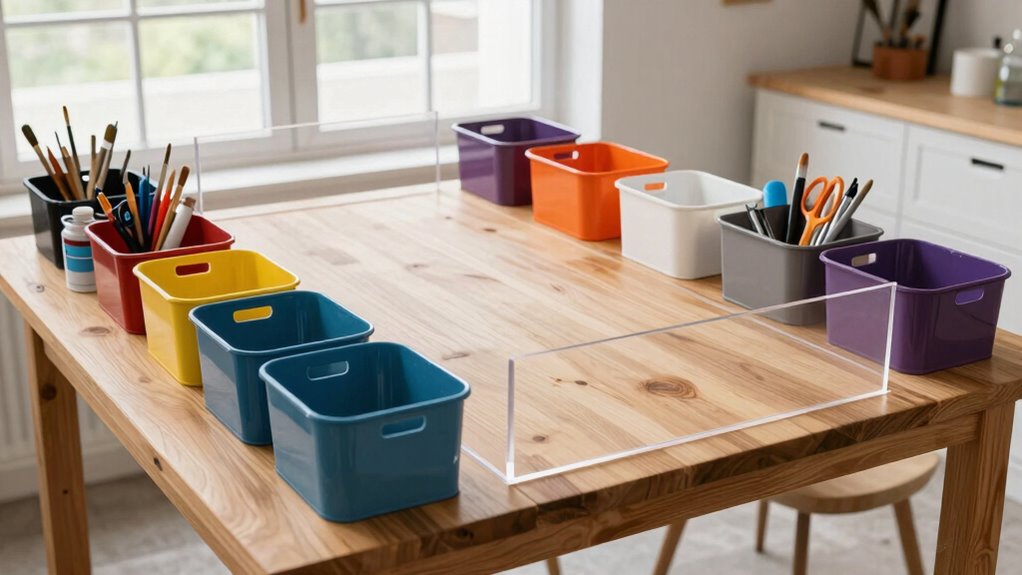

To set effective boundaries around art supplies and craft tables, designate specific zones for different activities using storage solutions like bins, shelves, and labeled areas. Incorporate visual cues such as colorful labels or pictures to reinforce boundaries and make cleanup easier. Store hazardous items out of children’s reach, use childproof locks, and set clear safety rules. Engaging children in establishing these boundaries helps them take responsibility. Keep these strategies in mind to create a safe, organized, and inspiring space. If you continue, you’ll discover even more helpful tips.
Key Takeaways
- Designate specific zones for different art activities and supplies to maintain organization and clarity.
- Use labeled bins, shelves, or drawers to clearly define storage boundaries for easy access.
- Incorporate visual cues like pictures or color-coded labels to reinforce boundaries and aid recognition.
- Establish safety rules and store hazardous materials out of children’s reach with locks or high shelves.
- Involve children in setting up boundaries to foster ownership, responsibility, and consistent maintenance.
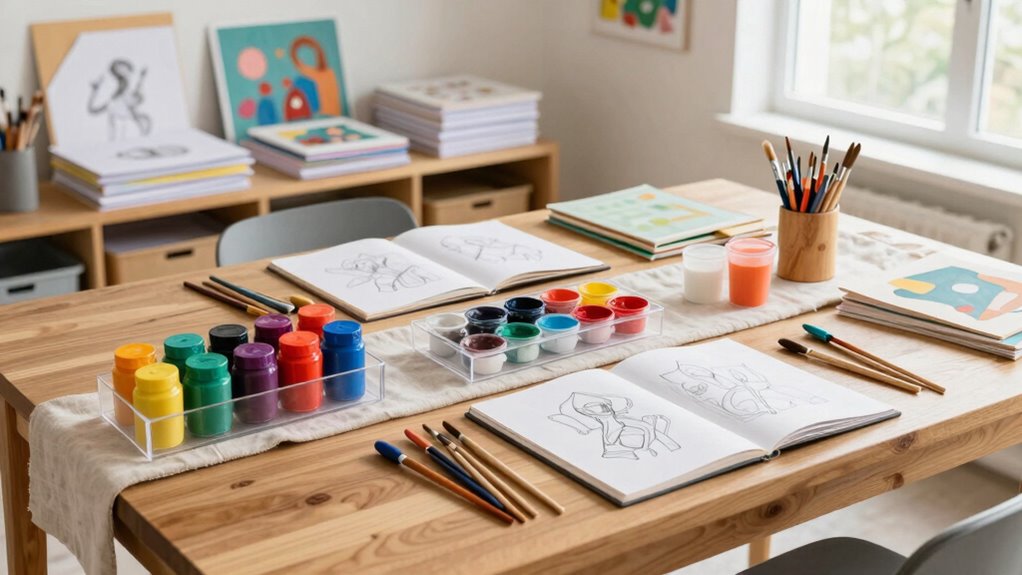
Creating clear boundaries around art supplies and craft tables is essential to keeping your space organized and preventing chaos. When you establish defined areas, you help everyone understand where materials belong and reduce the likelihood of clutter. This approach supports creative space organization by making it easier to find supplies when needed and ensuring the area stays tidy. It also encourages children to develop good habits around respecting boundaries and handling materials responsibly. By setting these limits early, you promote a sense of order and control that benefits both the adults and kids using the space.
Setting clear boundaries around art supplies fosters organization, responsibility, and a tidy, safe creative space for children and adults.
To implement effective boundaries, start by designating specific zones for different activities or materials. For example, keep paints and brushes in one container or section, while paper and markers stay in another. Use storage solutions like bins, shelves, or drawers to clearly separate these zones. Labeling these areas with simple words or pictures helps children identify where things go, reinforcing organizational habits. This kind of creative space organization not only keeps your workspace neat but also fosters independence as kids learn to put things back where they belong. Consistent routines and visual cues can further reinforce these boundaries, making it easier for children to follow rules independently.
Child safety measures should be at the forefront of setting boundaries. Ensure that hazardous materials, like sharp scissors, small choking hazards, or toxic paints, are stored out of children’s reach. Use childproof locks or high shelves to keep dangerous items secure. Establish rules about handling supplies, such as never touching certain tools without supervision. Clear boundaries around the use of equipment prevent accidents and teach kids respect for safety guidelines. Keep the craft area well-ventilated and free of clutter that could cause trips or falls, further safeguarding everyone. Educating children about safety is a vital part of boundary setting and helps build responsible habits from a young age.
Involving children in creating these boundaries can foster a sense of ownership and responsibility. When they help set up the organizational system, they’re more likely to follow it. Make safety rules clear and consistent, and reinforce them with gentle reminders. Consistency is key in maintaining boundaries; regularly tidy up and reorganize if needed to keep the space functional and safe. Incorporate visual cues, like colorful labels or pictures, to remind children of boundaries and safety measures, especially for younger kids who might not read yet. Encouraging their participation not only makes the process more engaging but also helps instill lifelong organizational skills.
Ultimately, creating clear boundaries around art supplies and craft tables isn’t just about keeping things tidy—it’s about fostering a safe, organized environment where creativity can flourish without chaos. Proper boundaries help you manage the space efficiently, teach children responsibility, and ensure safety. When everyone understands the limits and respects them, your craft area becomes a productive, enjoyable space for all. Implementing space management techniques can make a significant difference in maintaining a functional and inspiring creative environment.
art supply storage bins for kids
As an affiliate, we earn on qualifying purchases.
As an affiliate, we earn on qualifying purchases.
Frequently Asked Questions
How Can I Enforce Boundaries Without Upsetting My Child?
You can enforce boundaries without upsetting your child by practicing parental communication and being consistent. Explain your reasons clearly, listening to their feelings and concerns. Use gentle reminders and positive reinforcement to reinforce boundaries, showing understanding rather than frustration. Maintaining boundary consistency helps your child feel secure and knows what to expect. This approach fosters trust, making it easier for them to accept limits without feeling upset or misunderstood.
What Are Some Creative Boundary Ideas for Shared Craft Spaces?
You can create creative boundary ideas by establishing designated zones for different activities, like a painting corner or a sewing station. Use creative storage solutions such as colorful bins or hanging organizers to keep supplies tidy and clearly separated. Label each zone with fun signs or artwork, making boundaries visually appealing. This approach helps your child understand where things belong, encouraging independence while maintaining an organized, shared craft space.
How Do I Handle Boundary Disagreements With Other Parents?
Think of it like a peaceful peace treaty—handle boundary disagreements with calm communication strategies. You should share responsibilities by openly discussing your concerns and listening to others’ perspectives. Stay respectful, avoid blame, and find common ground. When conflicts arise, focus on solutions rather than faults. By maintaining clear, honest dialogue, you foster cooperation, ensuring everyone feels heard and boundaries respected, just like a well-balanced team.
What Supplies Should Be Restricted to Maintain Boundaries?
You should restrict supplies that can create mess or safety concerns, like paint, sharp tools, or small items. Use supply organization and storage solutions to keep these items out of reach or designated to specific areas. Clear labels and designated containers help maintain boundaries, ensuring kids access only appropriate supplies. By setting clear rules and organizing supplies effectively, you prevent overuse and keep the space safe and enjoyable for everyone.
How Can I Encourage Kids to Respect Each Other’s Art Supplies?
Imagine a garden where each flower blooms with respect—this is how you encourage kids to respect each other’s art supplies. Teach sharing etiquette through positive reinforcement, praising respectful behavior and gentle handling. Model respectful behavior yourself, creating an atmosphere of kindness. Remind kids that respecting supplies fosters a cooperative environment, turning a simple act into a shared experience. With patience, they’ll learn to value each other’s creativity as if it were their own.
Conclusion
Remember, setting boundaries around your art supplies isn’t just about organization—it’s about creating a safe haven for your creativity to flourish. Think of your craft table as a garden, where clear borders protect your blooms from invasive weeds. When you define those boundaries, you nurture a space where your imagination can grow wild and free, yet still stay rooted in harmony. Guard your sanctuary, and let your artistry blossom without restraint.