Dentists want you to know that managing your child’s oral habits before camp can prevent long-term dental issues like misalignment, bite problems, or damage from habits like thumb-sucking and teeth grinding. Early intervention and positive reinforcement help break persistent habits and protect their smiles. It’s also important to schedule a dental checkup beforehand, so you can get personalized advice or custom mouthguards if needed. Keep going to learn more about keeping your child’s oral health in top shape during camp.

Get baby and family essentials delivered free — and shop member deals
- Fast, free delivery on millions of items
- Access to Prime Big Deal Days deals on October 6–7
- Prime Video, Amazon Music and more included
Key Takeaways
- Schedule a dental checkup before camp to assess and address any oral habits or concerns.
- Educate your child on the impact of habits like thumb-sucking and grinding on dental health.
- Consider preventive measures such as mouthguards for bruxism or behavioral strategies for habit cessation.
- Reinforce good oral hygiene practices, including brushing, flossing, and hydration, during camp.
- Be aware that persistent oral habits beyond age 4-5 may require gentle intervention and positive reinforcement.
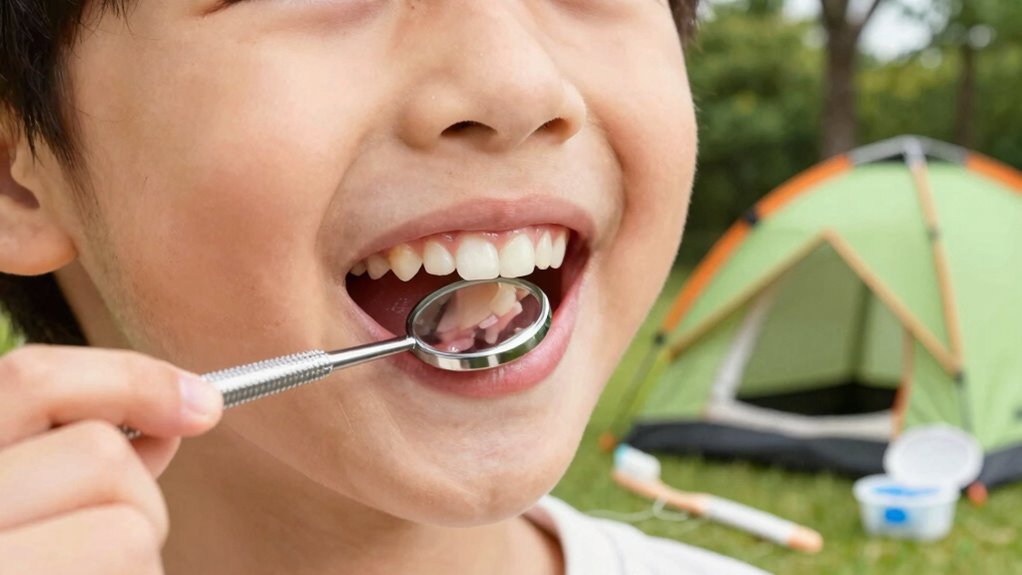
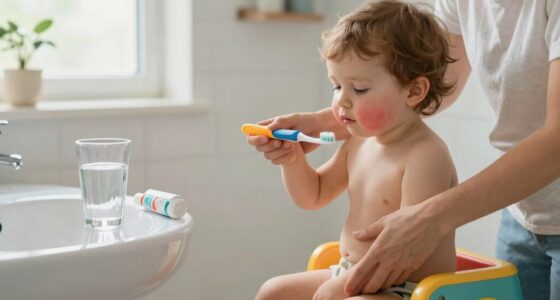
Many children develop oral habits, such as thumb-sucking or pacifier use, which can impact their dental health. As you prepare your child for camp, it’s essential to understand how these habits might affect their teeth and what you can do to help. Dentists often emphasize the importance of bruxism awareness—being alert to teeth grinding, especially during sleep. Bruxism can cause wear and tear on your child’s teeth, jaw pain, and even headaches. Recognizing early signs, like flattened or chipped teeth, helps prevent long-term damage. If your child grinds their teeth, consult your dentist about possible solutions, such as mouthguards or behavioral strategies to reduce stress-related grinding.
Awareness of bruxism helps prevent teeth wear, jaw pain, and long-term dental damage.
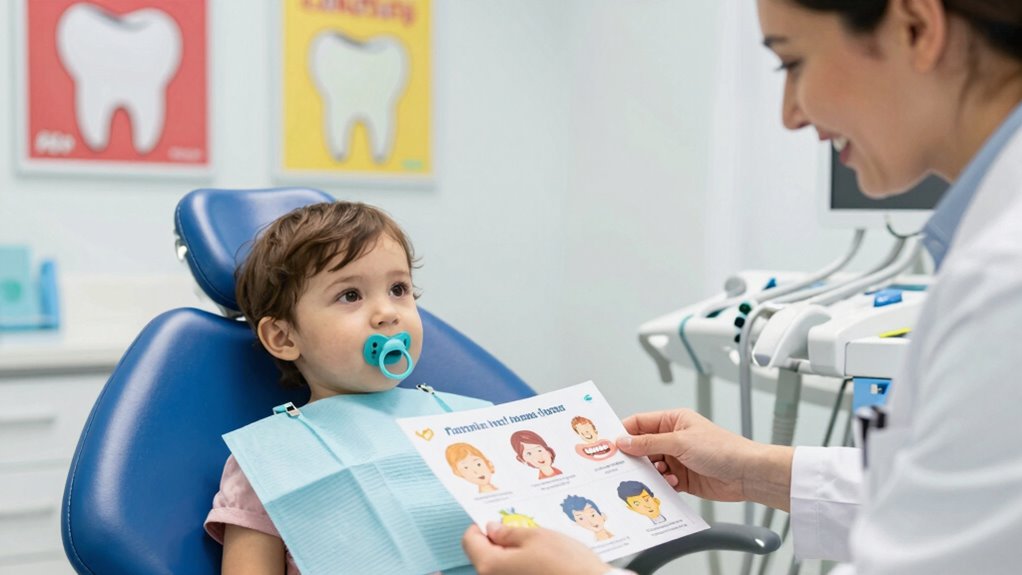
Thumb-sucking prevention is another concern dentists want parents to keep in mind. While most children naturally stop thumb-sucking on their own, persistent habits beyond age 4 or 5 can influence dental development. Prolonged thumb-sucking pushes the front teeth forward, leading to misalignment and bite problems. Before camp, talk with your child about gently breaking the habit if it’s ongoing. Positive reinforcement works well—praise them for not sucking their thumb, or introduce rewards to encourage progress. Some parents find that offering alternative comfort objects or employing gentle reminders can make the transition easier. Understanding the impact of oral habits on dental health can help you better support your child’s oral wellbeing during this period.
It’s also crucial to consider how oral habits relate to overall oral health while your child is at camp. Encourage them to avoid habits like biting nails, chewing on pens, or teeth grinding, which can all cause damage. Reminding your child to maintain good oral hygiene—brushing twice daily, flossing, and staying hydrated—can help protect their teeth from potential damage caused by habits. Additionally, understanding oral habits and their effects can help you better support your child’s dental health during this period. Recognizing that habitual behaviors can sometimes be rooted in emotional or environmental factors may help you address the underlying causes more effectively. It’s helpful to discuss with your child’s dentist whether any preventive measures are appropriate to further safeguard their teeth.
Many kids develop habits naturally, but persistent or damaging ones require attention. Educate your child about the importance of healthy oral habits, and reassure them that breaking these behaviors is achievable with patience. Before camp, schedule a dental checkup so your dentist can assess your child’s oral health and provide personalized advice. They might recommend custom mouthguards for bruxism or specific strategies for thumb-sucking prevention.
children's mouthguard for teeth grinding
As an affiliate, we earn on qualifying purchases.
As an affiliate, we earn on qualifying purchases.
Frequently Asked Questions
How Can I Prevent My Child From Developing New Oral Habits at Camp?
To prevent your child from developing new oral habits at camp, actively monitor their behavior and provide positive reinforcement when they resist old habits or choose healthier alternatives. Encourage habit replacement techniques, like chewing sugar-free gum instead of thumb-sucking, and praise their efforts. Keep open communication, remind them of the importance of oral health, and stay involved with updates from camp staff to support their progress and prevent new habits from forming.
Are There Specific Oral Habits That Are More Harmful During Camp Activities?
Did you know that thumb sucking and nail biting are linked to dental issues like misaligned teeth and bite problems? During camp activities, these habits can become more harmful as they might increase due to stress or boredom. Thumb sucking, in particular, can cause prolonged pressure on the palate, affecting speech and jaw development. Encourage your child to find alternative, healthier ways to cope with camp stress.
What Signs Indicate My Child’s Oral Habits Are Affecting Dental Health?
If your child’s tongue thrust or lip biting are affecting their dental health, you’ll notice signs like misaligned teeth, persistent mouth sores, or a change in speech patterns. You might also see increased wear on their teeth or discomfort when biting. These habits can lead to dental issues, so stay alert for these indicators. Early intervention by a dentist can help correct the habits and prevent long-term damage.
Should I Provide My Child With Orthodontic Appliances for Camp?
Think of orthodontic options as the toolbox for your child’s smile, ready to fine-tune their dental harmony. If your child’s oral habits threaten their dental health during camp, providing appliances can be a proactive step. Appliance considerations include comfort, ease of use, and how they’ll impact camp activities. Consult your dentist to select the right orthodontic options, ensuring your child’s smile stays bright and healthy while they enjoy their summer adventures.
How Can I Encourage My Child to Break Oral Habits While Away?
To encourage your child to break oral habits while away, focus on behavior modification and positive reinforcement. Praise and reward your child when they go without thumb-sucking or nail-biting, making it a fun and encouraging experience. Use gentle reminders and set achievable goals, celebrating small victories. Consistent support and reinforcement will help your child develop healthier habits, even when you’re not around.
Conclusion
As you prepare your child for camp, remember that shaping healthy oral habits now can be their shield, much like a knight’s armor in a tale of courage. By addressing habits early, you’re setting the stage for a future where smiles shine brighter than the stars. Trust that your proactive steps today forge a foundation of confidence and health tomorrow. Just as stories of heroes inspire, your actions can empower your child to face any challenge with a radiant, resilient smile.
Cold & flu season Picks
humidifiers
As an affiliate, we earn on qualifying purchases.