
In winter, water flossers often feel more convenient and gentler, especially if you experience joint discomfort or sensitive gums from the cold. They make it easier to reach tight spaces without the fuss of manual dexterity required for traditional floss. If you want a comfortable, effective way to keep your mouth healthy during colder months, water flossers might be the better choice. Keep exploring to discover how each method can best suit your winter oral care routine.
Key Takeaways
- Water flossers are easier to use and gentler on sore or sensitive gums during cold, dry winter months.
- Traditional floss offers precise removal of plaque and debris, beneficial for tight spaces, regardless of season.
- Water flossers reduce the effort required, making consistent oral hygiene more achievable in winter when joint discomfort can increase.
- Both methods support oral health, but water flossers are often preferred for convenience and comfort during winter.
- Personal preference and specific dental needs should guide choosing between water flossers and traditional floss in colder months.
When it comes to maintaining your oral health, choosing the right flossing method can make a significant difference. Both water flossers and traditional floss have their unique advantages, especially during winter months when oral health can sometimes be overlooked. Understanding how each option supports your oral hygiene benefits and user convenience can help you make an informed decision that suits your lifestyle.
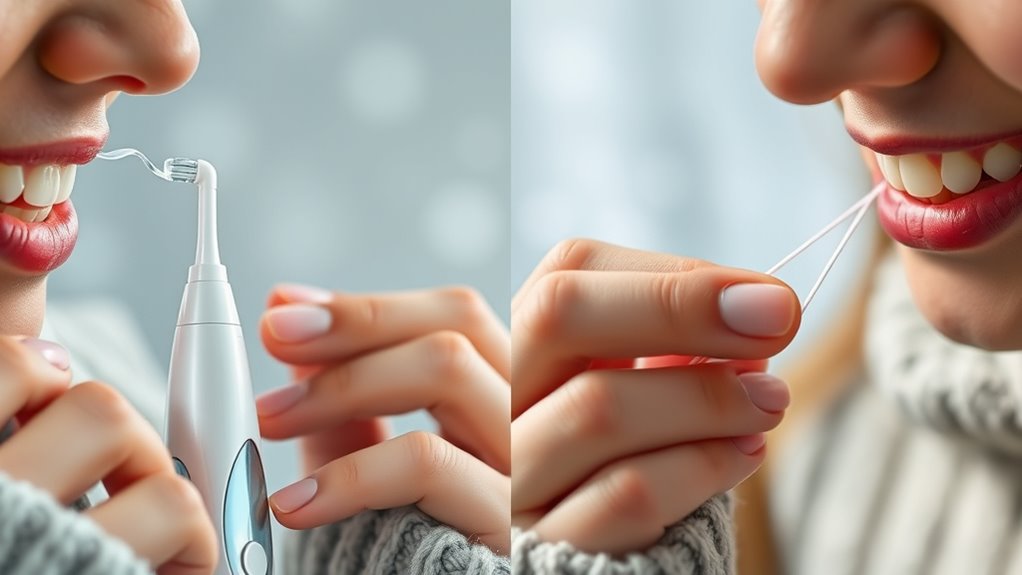
Traditional flossing is widely recognized for its effectiveness in removing plaque and debris from between your teeth. It allows for direct contact with the tooth surfaces, which can be particularly beneficial for dislodging stubborn particles and preventing cavities. Many people find flossing by hand to be straightforward, quick, and accessible, especially if you’re used to it. However, it requires a certain level of dexterity and patience, which might be challenging for those with limited hand strength or arthritis—common concerns during winter when cold weather can exacerbate joint discomfort. The user convenience of traditional floss depends on your personal habits; some find it easy to incorporate into their daily routine, while others may struggle with consistency, especially when feeling rushed or tired during busy winter mornings.
Traditional flossing effectively removes plaque but may be challenging during winter due to joint discomfort and dexterity issues.
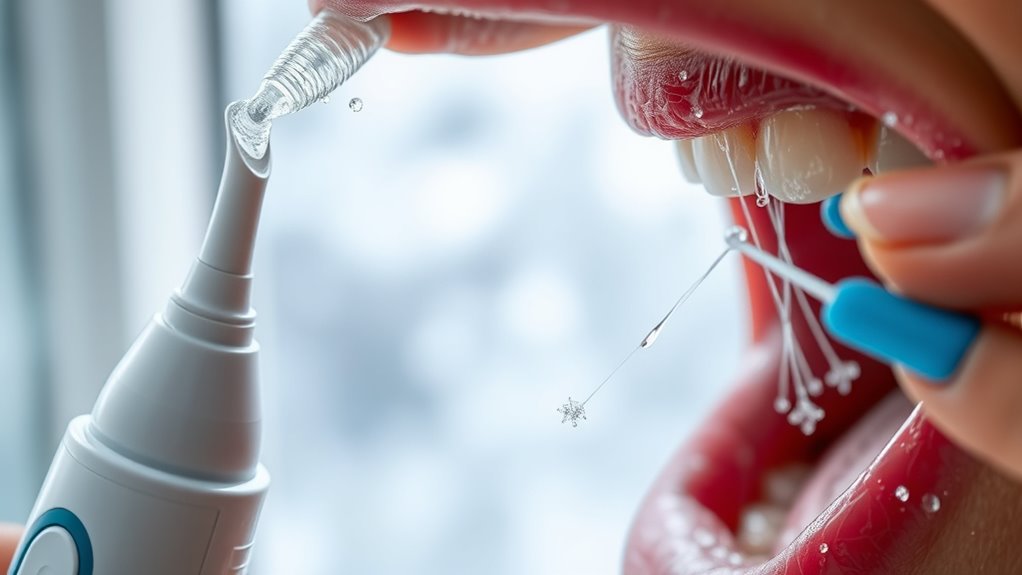
Water flossers, on the other hand, offer a different set of oral hygiene benefits. They use a pulsating stream of water to clean between teeth and along the gumline, effectively reducing plaque and improving gum health. Many users find water flossers particularly helpful if they wear braces, implants, or have sensitive gums. During winter, when your mouth may feel dry or sore from cold air, water flossers can be gentler and more soothing. The user convenience of water flossers is often higher, especially for those who dislike traditional flossing or have difficulty maneuvering floss around tight spaces. Simply filling the device and aiming the stream makes it easier to reach difficult areas without the fuss of wrapping floss and breaking it apart. It also encourages consistency, as many find it a more pleasant and less time-consuming process.
Ultimately, both methods support your oral hygiene benefits but cater to different needs and preferences. Traditional floss may appeal to those looking for simplicity and immediate tactile feedback, while water flossers are excellent for convenience and comfort, especially as you navigate the challenges winter can bring. By considering your personal comfort, dental needs, and lifestyle, you can choose the option that best helps you maintain healthy teeth and gums through the colder months.
Frequently Asked Questions
Are Water Flossers Effective for Braces and Orthodontic Appliances?
Yes, water flossers are effective for braces and orthodontic appliances. They provide thorough orthodontic cleaning by removing food particles and plaque around brackets and wires easily. You can maintain your braces better with regular water flosser use, which helps prevent cavities and gum issues. Water flossers are gentle yet powerful, making braces maintenance more comfortable and efficient, especially during winter when oral sensitivity may increase.
Can Water Flossers Replace Daily Brushing Routines?
You can’t rely solely on water flossers as an alternative brushing method because they don’t remove plaque as effectively as brushing your teeth. While electric toothbrush benefits include thorough cleaning and ease of use, daily brushing remains essential for oral health. Water flossers are great complements, but you still need to brush regularly to make sure your teeth stay clean and healthy. Don’t skip your manual brushing routine; it’s crucial for overall oral hygiene.
Do Water Flossers Cause Any Gum Sensitivity or Irritation?
Water flossers can sometimes cause gum sensitivity or irritation if you use too much pressure or have sensitive gums. However, most users find that adjusting the water pressure and using gentle, targeted strokes helps minimize gum irritation and sensitivity concerns. If you notice persistent discomfort, it’s best to reduce the pressure and consult your dentist to ensure proper technique and avoid any damage to your gums.
How Should Water Flossers Be Stored During Winter to Prevent Freezing?
Think of your water flosser as a delicate plant that needs shelter during winter’s chill. To prevent freezing, store it in a warm, indoor spot away from drafts, ideally between 50-70°F. Avoid leaving it in the garage or basement where temperatures can dip below freezing. By doing so, you safeguard your device’s components and ensure it works smoothly when you need it most.
Are There Specific Water Flosser Settings for Sensitive Teeth?
Yes, many water flossers come with settings customization for sensitive teeth. You should look for sensitivity modes that lower the water pressure to gently clean without causing discomfort. These modes are ideal if your gums are sore or your teeth are particularly sensitive. Adjust the settings to find a comfortable level, ensuring effective cleaning while avoiding irritation. Always follow your device’s instructions for ideal use and protection of your oral health.
Conclusion
Ultimately, choosing between water flossers and traditional floss comes down to your personal quest for a healthy smile. Like Odysseus steering treacherous waters, you must weigh convenience against tradition, innovation against familiarity. Both tools can lead you to oral victory, but only you can chart the course. Embrace what suits you best, knowing that, like the hero’s journey, your dental care is a voyage—full of discovery, perseverance, and the promise of brighter days ahead.