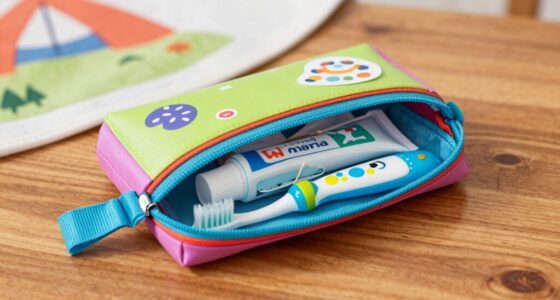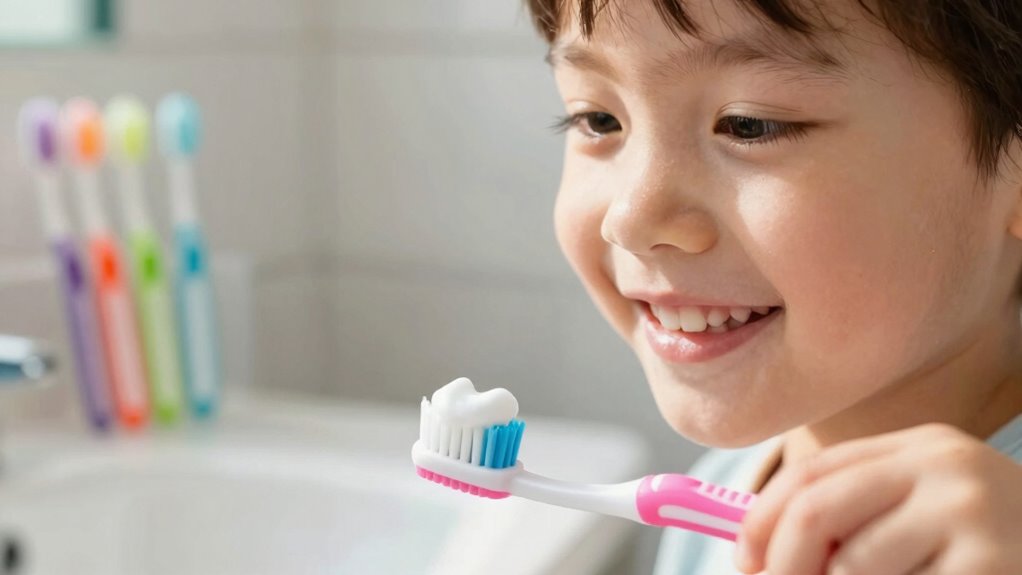

For infants, use a tiny smear about the size of a grain of rice to protect their teeth without risking fluoride ingestion. As your child grows, increase to a pea-sized amount around age three, and let older children handle a standard, pea-sized dab. Consistently teach proper brushing techniques to make certain effective cleaning. If you keep these guidelines in mind, you’ll be well on your way to supporting your child’s healthy smile—more tips follow to help you along the way.

Turn the school run and nap time into listening time
- Thousands of audiobooks, podcasts and originals
- Listen on your phone, tablet or Echo — also offline
- Cancel anytime
Key Takeaways
- Use a rice-sized smear of toothpaste for infants and toddlers to prevent fluoride ingestion and protect dental health.
- Increase to a pea-sized amount by age three to ensure effective fluoride benefits while minimizing swallowing.
- Children aged 6-7 should handle a standard pea-sized amount, focusing on thorough, two-minute brushing routines.
- Adults should use a standard line of toothpaste without excess, emphasizing proper technique over quantity.
- Consistently tailor toothpaste amount and brushing techniques to age for optimal long-term dental health.
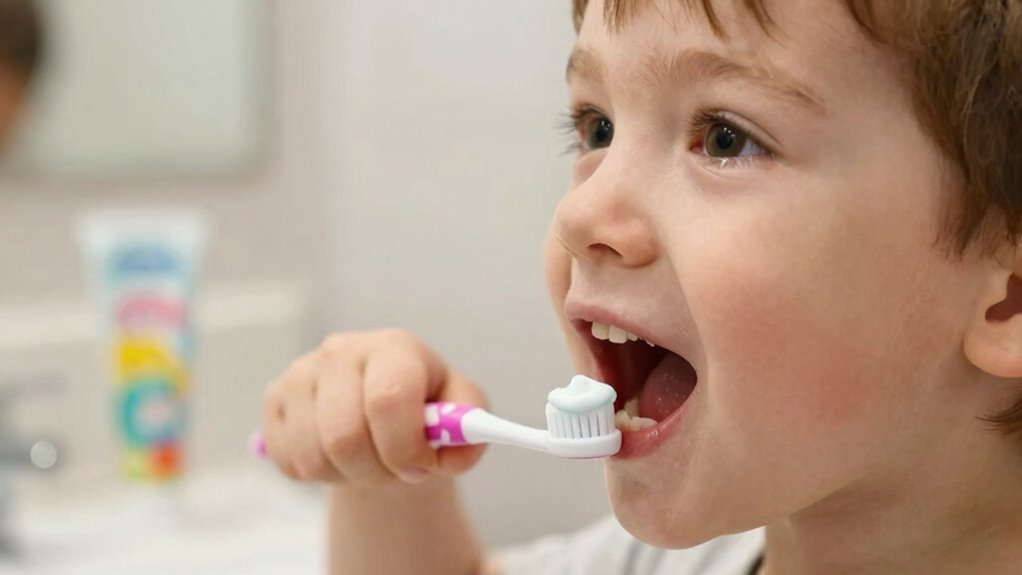
Knowing the right amount of toothpaste to use is vital for maintaining good oral hygiene at every age. When you’re teaching your children or caring for your own dental health, understanding how much toothpaste is appropriate can make a significant difference. Using too much toothpaste, especially for young kids, can lead to unnecessary swallowing of fluoride, which isn’t ideal for their developing teeth. Conversely, using too little might not provide enough fluoride to protect against cavities. Striking the right balance is key, and it depends largely on age and development.
Using the right toothpaste amount by age is key to healthy, cavity-free teeth and safe fluoride intake.
For infants and toddlers, just a tiny smear of toothpaste—about the size of a grain of rice—is enough. This small amount helps protect their dental health without risking too much ingestion of fluoride. At this stage, brushing techniques are also vital; gentle, circular motions ensure you clean effectively without causing discomfort. As children grow, their ability to spit out toothpaste improves, so you can gradually increase the amount to a pea-sized dab by the age of three. This amount is sufficient to provide the benefits of fluoride while minimizing ingestion. During this phase, focus on teaching proper brushing techniques, such as holding the brush at a 45-degree angle to the gums and using gentle, circular strokes to remove plaque effectively.
Once children reach age six or seven, they can generally handle a standard, pea-sized amount of toothpaste independently. It’s a good time to reinforce good brushing techniques, like thorough brushing for at least two minutes and making sure to clean all surfaces of the teeth. As they grow older and better understand their oral hygiene routines, you can encourage them to use the full, recommended amount and to spit out excess toothpaste after brushing. For adults, a standard line of toothpaste on the brush is usually enough—more than that doesn’t improve cleaning and can be wasteful or cause unnecessary foaming. Additionally, oral health education and consistent routines play a crucial role in establishing lifelong habits. Incorporating sustainable practices into daily routines can also contribute to overall health, including oral health, by supporting environmental well-being.
Throughout all stages, the focus should be on effective brushing techniques combined with the right amount of toothpaste. Proper technique involves gentle but thorough cleaning, ensuring plaque removal without damaging gums or tooth enamel. Remember, using the correct amount of toothpaste tailored to age helps maximize benefits and minimizes risks, supporting your loved ones’ dental health long-term. Staying consistent with these practices will foster habits that promote healthy teeth and gums at every age. Additionally, understanding the importance of biodiversity in our environment can indirectly support healthier lifestyles, including oral health, by promoting sustainable practices that protect natural resources.
infant toothpaste with rice-sized smear
As an affiliate, we earn on qualifying purchases.
As an affiliate, we earn on qualifying purchases.
Frequently Asked Questions
When Should I Switch Toothpaste Brands for My Child?
You should consider a brand shift when your child’s needs change or if they develop sensitivity. Keep an eye on their response to the current toothpaste, and if you notice irritation or dislike, it’s time to explore new options. When selecting a new toothpaste, focus on age-appropriate formulas and fluoride content. Regularly reviewing your child’s toothpaste selection guarantees they get the best protection and comfort, making oral hygiene a positive experience.
How Often Should My Child Brush Their Teeth Daily?
Think of your child’s dental routine as a daily dance—twice a day, they need to brush to keep cavities at bay. You should encourage them to brush in the morning and before bed, making it a consistent part of their oral hygiene tips. This rhythm guarantees their teeth stay strong and healthy, turning good dental habits into a lifelong routine. Keep it fun and regular for the best results!
Are There Specific Ingredients to Avoid in Kids’ Toothpaste?
You should avoid kids’ toothpaste with excessive fluoride, especially if you’re concerned about fluoride concerns, as swallowing too much can be harmful. Also, steer clear of artificial sweeteners, sodium lauryl sulfate, and certain artificial dyes. Instead, select toothpaste with natural ingredients, which are gentler and safer for your child’s developing teeth. Always read labels carefully to verify the toothpaste aligns with your health priorities and fluoride concerns.
Can My Child Swallow Toothpaste Safely?
Yes, your child can swallow toothpaste safely in small amounts, especially if it’s fluoride-free or specifically designed for young kids. Choose a flavor they like to encourage brushing, and guarantee packaging safety by selecting child-proof caps and non-toxic ingredients. Always supervise brushing to prevent excess swallowing, and use only a pea-sized amount. This way, you promote good oral hygiene without worry about safety or flavor preferences.
What Should I Do if My Child Swallows Excessive Toothpaste?
If your child swallows excessive toothpaste, act quickly. Toothpaste ingestion can be dangerous, so monitor for symptoms like nausea, vomiting, or abdominal pain. Call your doctor or poison control immediately to guarantee child safety. While small amounts are usually harmless, larger quantities demand prompt medical advice. Stay calm, keep the toothpaste out of reach, and always supervise brushing to prevent future incidents. Your quick response can make all the difference.
Conclusion
Remember, getting the right amount of toothpaste for each age isn’t just about dental hygiene—it’s about setting a healthy habit from the start. When you carefully measure out that perfect pea-sized amount, you’re not only protecting your child’s smile but also teaching them mindful routines. Funny enough, that tiny dab can make a big difference, proving that sometimes, the smallest efforts lead to the brightest smiles and the healthiest habits for years to come.
Fall Picks
fall essentials
As an affiliate, we earn on qualifying purchases.