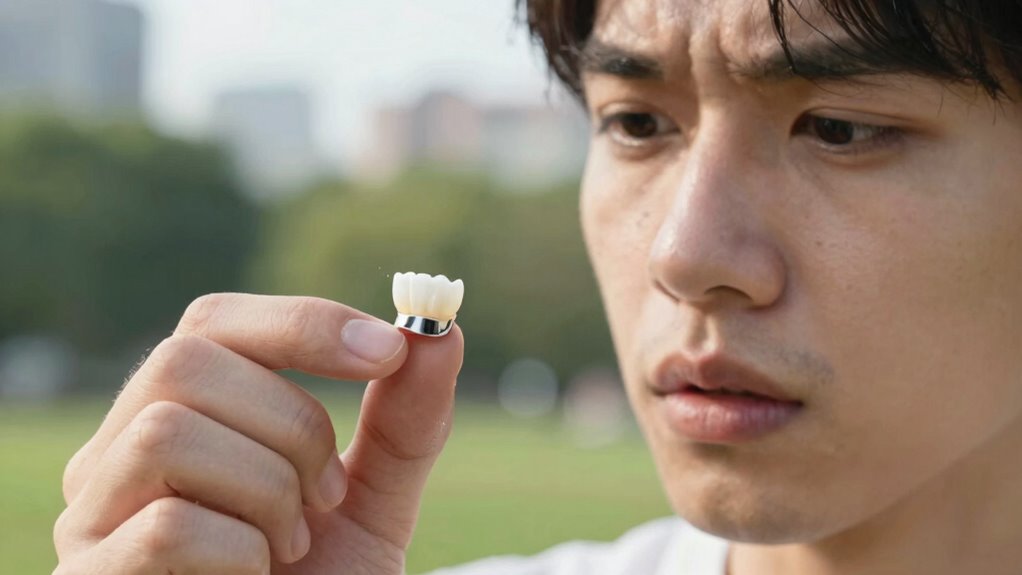

If your crown or filling falls out when you’re away from home, start by carefully cleaning the area with warm water and gently applying pressure to control bleeding. Find and keep the piece safe, and consider temporary reattachment with over-the-counter dental cement if it fits well. Avoid hard or sticky foods, and schedule a dental appointment as soon as possible. Acting quickly can save your tooth, and there’s more you should know to handle this effectively.

Turn the school run and nap time into listening time
- Thousands of audiobooks, podcasts and originals
- Listen on your phone, tablet or Echo — also offline
- Cancel anytime
Key Takeaways
- Collect and store the lost crown or filling in a safe container for potential reattachment.
- Clean the affected area gently with warm water to prevent infection.
- Use over-the-counter dental cement for temporary reattachment if appropriate and safe.
- Schedule an emergency dental appointment promptly for professional assessment and repair.
- Avoid chewing on the affected side and stick to soft foods until treated.
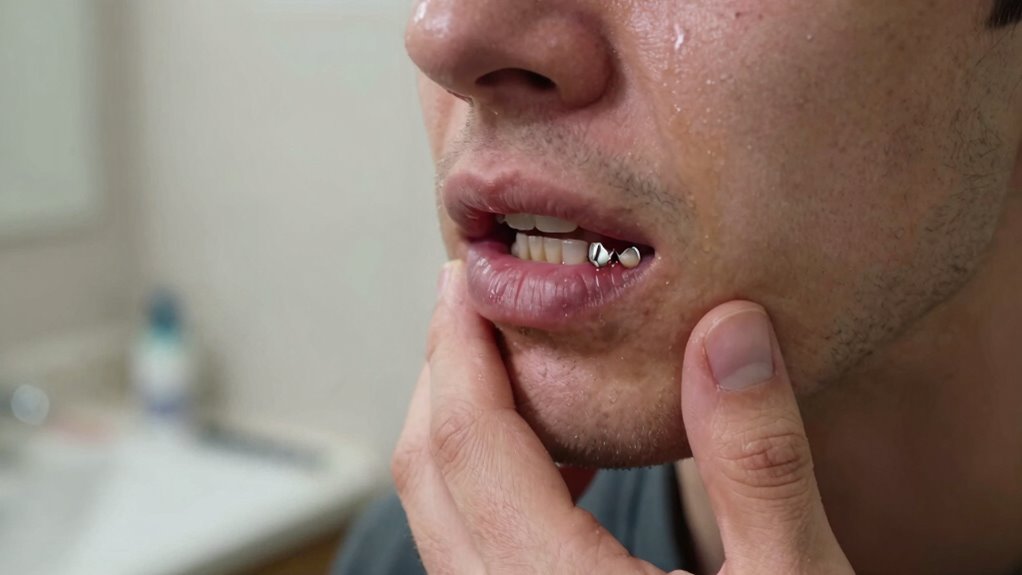
Losing a crown or filling while you’re away from home can be uncomfortable and stressful, but knowing what steps to take can make the situation less intimidating. When you realize a dental emergency like this has occurred, your first priority should be to protect the exposed tooth and prevent further damage or pain. The discomfort can be sharp or sensitive, so acting quickly is essential for achieving immediate relief.
Losing a crown or filling can be stressful; act quickly to protect the tooth and prevent further damage or pain.
Start by carefully cleaning the area with warm water to remove any debris, which helps prevent infection. If you notice any bleeding, gently apply pressure with a piece of gauze or a clean cloth. Avoid using any harsh chemicals or rinses that could irritate your gums or the exposed tooth. If you have access to over-the-counter pain relievers, take them as directed to manage discomfort until you can see a dentist. Avoid using any adhesive or glue to reattach the crown or filling yourself, as improper placement can cause additional issues.
Next, find the missing crown or filling if possible. Keep it safe in a small container or a plastic bag. Sometimes, a crown can be temporarily reattached using over-the-counter dental cement, which you can find at pharmacies, but only if the cement is specifically designed for this purpose and if the crown fits well. Using temporary cement can offer some immediate relief and help protect the tooth until you get professional help. Remember, this is only a temporary solution—never attempt to permanently fix it yourself. Knowing how to manage dental emergencies effectively can prevent further complications. Additionally, understanding proper tooth protection techniques can support your efforts to minimize damage. Familiarizing yourself with basic dental emergency procedures can also improve your response in unexpected situations. Being aware of common dental injuries can help you recognize the severity of the situation and seek appropriate care promptly.
Scheduling an appointment with a dentist should be your next step. Even if the pain subsides, you shouldn’t delay seeking professional advice. A dentist can properly assess the damage, reattach the crown, or replace the filling, and address any underlying issues. If you’re in a remote area or traveling, look for the nearest dental clinic or emergency facility. Many dental offices prioritize emergency cases, so don’t hesitate to contact them for guidance or urgent care.
While waiting for dental treatment, avoid chewing on the affected side, especially with sticky or hard foods that could dislodge the crown or filling further. Staying mindful of what you eat and drink can help you manage the situation better. Remember, acting swiftly and following these steps can make a big difference in reducing pain, preventing infection, and ultimately saving your tooth. Even when away from home, knowing how to handle a lost crown or filling can give you confidence and peace of mind until you can see your regular dentist. Being aware of proper dental emergencies and how to respond can significantly improve your chances of saving the tooth and avoiding further complications.
As an affiliate, we earn on qualifying purchases.
Frequently Asked Questions
How Can I Temporarily Protect My Exposed Tooth?
If you have an exposed tooth, you should temporarily protect it to reduce sensitivity and prevent further damage. Rinse your mouth with warm saltwater, then apply a piece of sugar-free gum or orthodontic wax over the exposed area. Avoid very hot, cold, or sugary foods, as they can trigger tooth sensitivity. These steps help manage dental emergencies until you can see your dentist for proper care.
Is It Safe to Eat With a Loose Crown or Filling?
You shouldn’t eat with a loose crown or filling because it can cause further damage or discomfort. If you need to eat, choose soft foods and avoid chewing on the affected side. Make certain your dental insurance covers emergency dental kits, which can help temporarily secure your crown or filling. Always see your dentist as soon as possible to guarantee your tooth stays protected and to prevent complications.
How Long Can I Wait Before Seeing a Dentist?
You should see a dentist as soon as possible, ideally within a day or two, especially if you experience pain, sensitivity, or if the crown or filling is completely loose. Using your dental insurance can help cover urgent visits, and keeping an emergency dental kit on hand guarantees you can manage discomfort temporarily. Don’t delay, as prompt care prevents further damage and ensures your dental health stays intact.
What Home Remedies Can Help Reduce Pain?
Coincidentally, natural remedies can be quite effective in easing dental pain when you’re away from a dentist. You can try rinsing your mouth with warm saltwater, which reduces inflammation, or applying a cold compress to your cheek for numbing relief. Over-the-counter pain relievers like ibuprofen also help. Clove oil is another natural option; dab it gently on the affected area to temporarily soothe pain.
Can I Fix a Lost Crown or Filling Myself?
You shouldn’t try fixing a lost crown or filling yourself, as it can cause further damage. Instead, use an emergency dental kit to protect the tooth and reduce discomfort temporarily. Check if your dental insurance covers emergency visits, and contact your dentist promptly. They can professionally re-cement or replace the crown or filling, ensuring your tooth remains healthy and protected. Avoid DIY fixes to prevent complications.
Conclusion
When you lose a crown or filling away from home, act quickly, stay calm, and protect your smile. Keep the area clean and avoid using the tooth, avoid hot or sticky foods, and contact your dentist as soon as possible. Remember, quick action prevents further damage, careful handling preserves your dental health, and prompt professional care restores your confidence. Stay prepared, stay proactive, and take control—your smile is worth it.
Columbus Day / Indigenous Peoples' Day Picks
long weekend sales
As an affiliate, we earn on qualifying purchases.