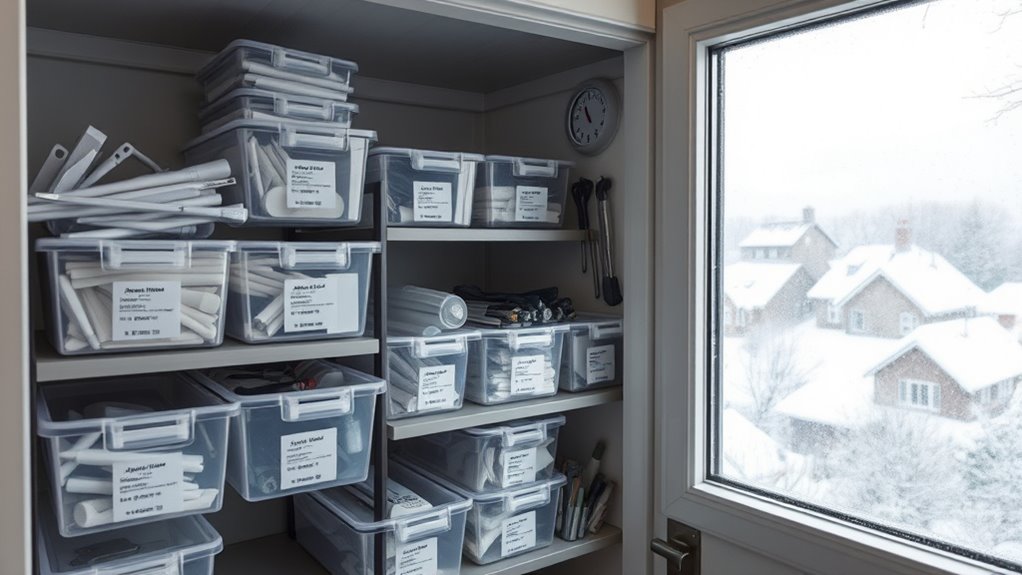

In cold weather, it’s important to store dental supplies in a stable, temperature-controlled environment between 15°C-25°C (59°F-77°F). Avoid placing items near windows, vents, or doors where drafts can cause temperature fluctuations. Regularly monitor storage conditions with a thermometer and keep supplies organized and protected from humidity and sunlight. Proper management prevents damage, preserves efficacy, and reduces waste. Keep exploring to learn more about how to guarantee your supplies stay safe and effective year-round.
Key Takeaways
- Keep supplies in a temperature-controlled environment between 15°C-25°C (59°F-77°F) to prevent freezing and temperature fluctuations.
- Avoid storing dental materials near windows, doors, or vents to minimize exposure to drafts and cold drafts.
- Use thermostats and portable heaters to maintain stable temperatures, especially in regions with harsh winters.
- Regularly monitor storage conditions with thermometers and check expiration dates to ensure supply efficacy.
- Store sensitive materials away from humidity and sunlight, and organize supplies to promote proper air circulation.
Proper storage of dental supplies is essential to maintain their effectiveness and make certain a safe environment in your practice. When temperatures drop, especially during cold weather, it’s crucial to pay extra attention to how you store your materials. Temperature control plays a vital role in preserving the integrity of dental supplies, ensuring they remain safe and effective for patient care. If supplies are exposed to freezing temperatures or sudden temperature fluctuations, their supply shelf life can be significantly reduced, leading to waste and potential safety issues. Therefore, you need to monitor storage conditions diligently, especially in areas prone to cold drafts or inconsistent heating.
Proper storage safeguards dental supplies, preserves their effectiveness, and ensures a safe environment for patient care.
First, identify the ideal storage environment for different types of supplies. Many materials, such as disinfectants, impression materials, and certain sterilization containers, require a stable, moderate temperature—typically between 15°C and 25°C (59°F-77°F). Avoid storing these items near windows, doors, or vents where temperature swings are common. If your practice is located in a region with harsh winters, consider installing a dedicated climate-controlled storage room or using portable heaters with thermostats to maintain a consistent temperature. This way, you prevent exposure to cold that could compromise the quality of your supplies. Additionally, understanding the shelf life of supplies and adhering to storage instructions is crucial for maintaining their efficacy over time.
It’s also essential to understand the impact of temperature fluctuations on the supply shelf life. Many dental products have specific storage instructions that, if not followed, can reduce their effectiveness. For example, certain adhesives or impression materials may become brittle or lose their adhesive qualities if exposed to cold temperatures. Over time, this can lead to compromised procedures or the need for reordering supplies sooner than expected. Regularly check expiration dates and storage instructions on product labels, and store items accordingly. Keeping track of the shelf life of your supplies helps you avoid using compromised materials, which could affect patient safety and treatment outcomes.
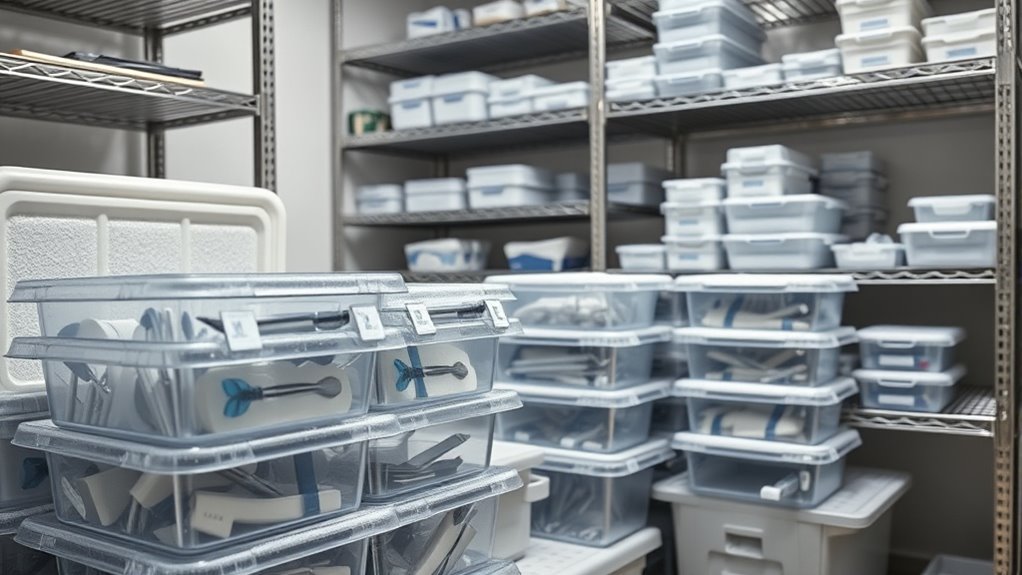
To guarantee proper temperature control, organize your storage areas strategically. Use thermometers to monitor conditions regularly, and adjust heating or cooling devices as needed. Avoid overcrowding shelves, which can restrict air circulation and cause uneven temperature distribution. Additionally, store temperature-sensitive supplies away from areas with high humidity or direct sunlight, as these factors also impact their stability. Implementing routine checks and maintaining a clean, organized storage space will help you extend the shelf life of your supplies and maintain high standards of safety and quality.
Frequently Asked Questions
Can Cold Weather Cause Dental Supplies to Freeze or Become Brittle?
Cold weather can cause dental supplies to freeze or become brittle if not stored properly. You should be aware of freezing risks, especially for items like impression materials or certain adhesives, as they can lose their effectiveness. When supplies freeze, they tend to become brittle, increasing the risk of breakage or damage. To prevent this, store your dental supplies in a temperature-controlled environment, avoiding exposure to extreme cold.
How Does Humidity Affect Dental Supplies in Cold Climates?
Humidity can substantially impact your dental supplies in cold climates. High humidity levels promote moisture buildup, risking mold growth or deterioration, while low humidity can cause materials to dry out and become brittle. To prevent this, you should implement humidity control measures and moisture prevention strategies. Maintaining a stable environment ensures your supplies stay in the best possible condition, avoiding damage caused by fluctuating humidity levels in cold weather.
Are There Specific Storage Containers Recommended for Winter Conditions?
Yes, you should use airtight containers and insulated storage for dental supplies during winter. Airtight containers prevent moisture from entering and damaging items, while insulated storage helps maintain a consistent temperature, protecting against cold fluctuations. Place these containers in a cool, dry, and stable environment, avoiding direct contact with windows or exterior walls. This approach guarantees your supplies stay dry, preserved, and ready for use when needed.
What Is the Ideal Temperature Range for Storing Dental Supplies?
Like a ship guided by a steady lighthouse, maintaining the right temperature keeps your dental supplies safe. Aim for a temperature range of 59-77°F, aligning with recommended temperature guidelines. Keep humidity considerations in mind—ideally between 30-60%—to prevent mold or deterioration. Consistently monitoring these factors ensures your supplies stay in ideal condition, avoiding damage caused by temperature fluctuations or excess moisture.
How Often Should Storage Areas Be Checked During Cold Months?
You should check your storage areas at least once a week during cold months to guarantee inventory management remains effective. Regular inspections help identify any issues caused by temperature fluctuations or condensation. Make sure your staff training emphasizes the importance of these checks, so everyone understands how to monitor supplies properly. Consistent oversight helps prevent damage to dental supplies, maintaining their quality and availability when needed.
Conclusion
Just like a treasure chest needs careful guarding, your dental supplies require proper storage in cold weather. When you take these simple steps, you protect your tools and guarantee they serve you well, just as a gardener safeguards precious blooms. Remember, neglecting these tips is like leaving a lighthouse unlit—risking chaos and damage. Stay vigilant, keep your supplies safe, and they’ll be ready to serve you when you need them most, just like a trusted friend in times of need.