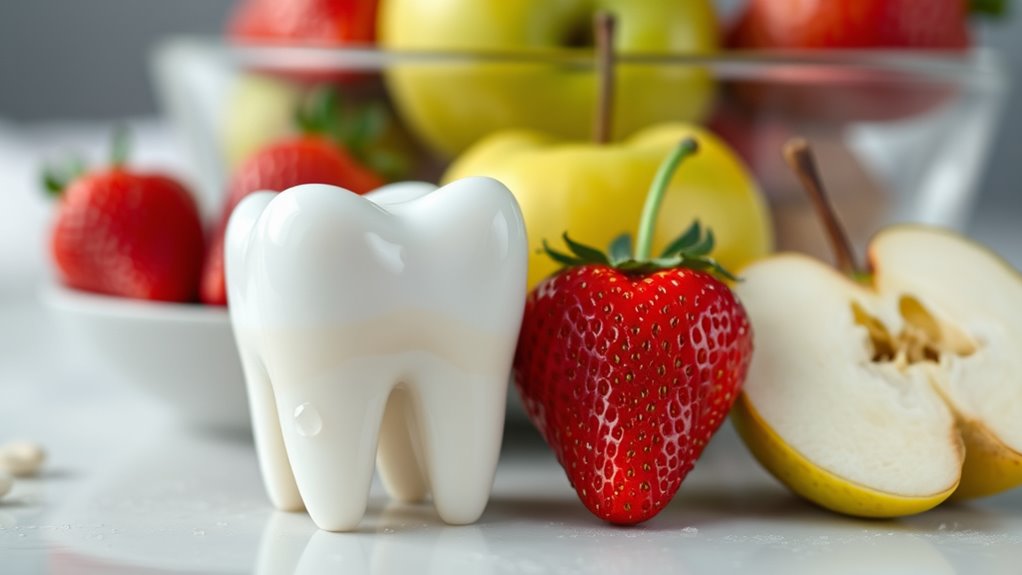

To protect your enamel from acidic winter fruits like citrus and berries, eat them with meals instead of snacks, and rinse your mouth with water afterward to neutralize acids. Using a straw when drinking fruit juices and waiting at least 30 minutes before brushing can also help prevent erosion. Incorporate fluoride toothpaste and stay well-hydrated to boost saliva production, which naturally fights acids. Staying mindful of these tips can keep your teeth healthy, and there’s more you can do to strengthen your enamel further.
Key Takeaways
- Consume acidic winter fruits during main meals and use a straw to minimize direct acid contact with teeth.
- Rinse your mouth with water after eating or drinking acidic fruits to neutralize acids and protect enamel.
- Wait at least 30 minutes before brushing to prevent enamel erosion caused by softened enamel from acids.
- Increase saliva production by chewing sugar-free gum or staying hydrated to naturally neutralize acids and remineralize enamel.
- Use fluoride toothpaste and schedule regular dental checkups to strengthen enamel and monitor erosion risks.
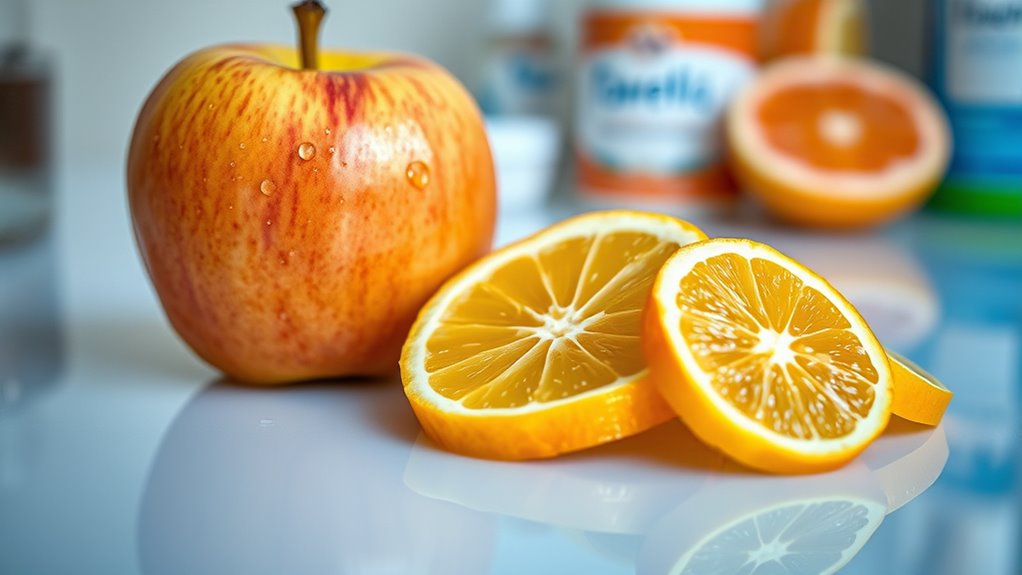
Have you ever wondered why your teeth sometimes feel sensitive after enjoying winter fruits? The answer often lies in the effects of dental erosion caused by fruit acidity. Many winter fruits, like citrus oranges, grapefruits, and certain berries, contain high levels of acid that can weaken your tooth enamel. When you bite into these fruits or sip on their juices, acids come into contact with your teeth’s surface, gradually eroding the protective enamel layer. Over time, this process can lead to increased tooth sensitivity and a higher risk of cavities, as the underlying dentin becomes exposed.
Fruit acidity is a double-edged sword. While these fruits provide essential vitamins and antioxidants, their natural acids, such as citric, malic, and tartaric acids, can be harsh on your enamel. The acids don’t just sit on the surface; they can penetrate the porous enamel and dissolve mineral content, weakening your teeth’s defenses. When enamel wears down, your teeth become more vulnerable to temperature changes and sugary or acidic foods, which can intensify sensitivity and discomfort.
To protect your enamel from the effects of fruit acidity, it’s vital to adopt smart eating habits. For example, try to consume acidic fruits during meals rather than as snacks. Eating them alongside other foods helps dilute the acids and reduces their impact on your teeth. Using a straw when drinking fruit juices can also direct acids away from your teeth, limiting exposure. After eating or drinking acidic fruits, avoid brushing your teeth immediately. Instead, rinse your mouth with water to help neutralize the acids, giving your saliva a chance to restore a more neutral pH balance. Wait at least 30 minutes before brushing, as brushing too soon can further abrade weakened enamel. Additionally, saliva production plays a crucial role in neutralizing acids and remineralizing enamel naturally, so staying hydrated and chewing sugar-free gum can support this process.
Maintaining good oral hygiene is essential, but it’s equally important to choose the right dental products. Use a fluoride toothpaste, which can help strengthen enamel and make it more resistant to acid attacks. Regular dental checkups allow your dentist to assess the health of your enamel and recommend personalized strategies to prevent erosion. Remember, protecting your enamel is not about avoiding winter fruits altogether but about implementing preventative measures that allow you to enjoy their benefits without risking damage.
Frequently Asked Questions
Can Enamel Repair Itself After Acid Erosion?
Enamel can’t fully repair itself after acid erosion, but you can promote enamel remineralization. Saliva plays a essential role by providing minerals like calcium and phosphate, which help strengthen and rebuild enamel. To support this process, avoid acidic foods, use fluoride toothpaste, and maintain good oral hygiene. While enamel won’t regenerate completely, these steps can help protect your teeth and minimize further damage.
Are There Specific Winter Fruits More Harmful to Enamel?
Did you know that citrus fruits like oranges and grapefruits have a pH level around 3, making them highly acidic? These winter fruits are more harmful to enamel due to their high acidity, which increases enamel vulnerability. If you’re not careful, frequent consumption can wear down your enamel over time. To protect your teeth, enjoy these fruits in moderation, use a straw, and rinse your mouth afterward to minimize acid contact.
How Quickly Does Acid Damage Enamel During Fruit Consumption?
Acid can start damaging your enamel almost immediately when you eat or drink acidic foods. The pH levels of these foods determine how quickly enamel erosion occurs; the lower the pH, the faster the damage. Typically, enamel begins to soften within just 5 to 20 minutes after exposure. To minimize this, rinse your mouth with water right after consuming acidic items, and avoid brushing immediately to prevent further erosion.
Do Dental Sealants Protect Against Fruit Acids?
Dental sealants do offer some protection against fruit acids by providing a barrier that enhances acid resistance on your teeth. They seal the grooves and pits, making it harder for acids to reach the enamel. However, they aren’t completely foolproof. You should still practice good oral hygiene and limit acidic fruit intake to keep your enamel strong and prevent erosion. Sealants are a helpful supplement, but not a substitute for proper care.
Are There Long-Term Effects of Eating Acidic Winter Fruits?
Did you know that frequent consumption of acidic winter fruits can decrease enamel mineralization over time? This can lead to weakened teeth and increased sensitivity. Long-term effects include enamel erosion and higher cavity risk. Fortunately, saliva buffering helps neutralize acids, protecting your enamel. To minimize damage, limit fruit intake, rinse your mouth afterward, and avoid brushing immediately after eating acidic foods. These habits help maintain healthy, strong teeth.
Conclusion
Remember, an ounce of prevention is worth a pound of cure. To protect your enamel from the acidity of winter fruits, rinse your mouth with water after consuming them, wait before brushing, and maintain good oral hygiene. Limit your intake of highly acidic fruits, and visit your dentist regularly. Staying proactive keeps your smile healthy and strong—don’t wait until it’s too late. After all, a healthy smile is a reflection of mindful choices.