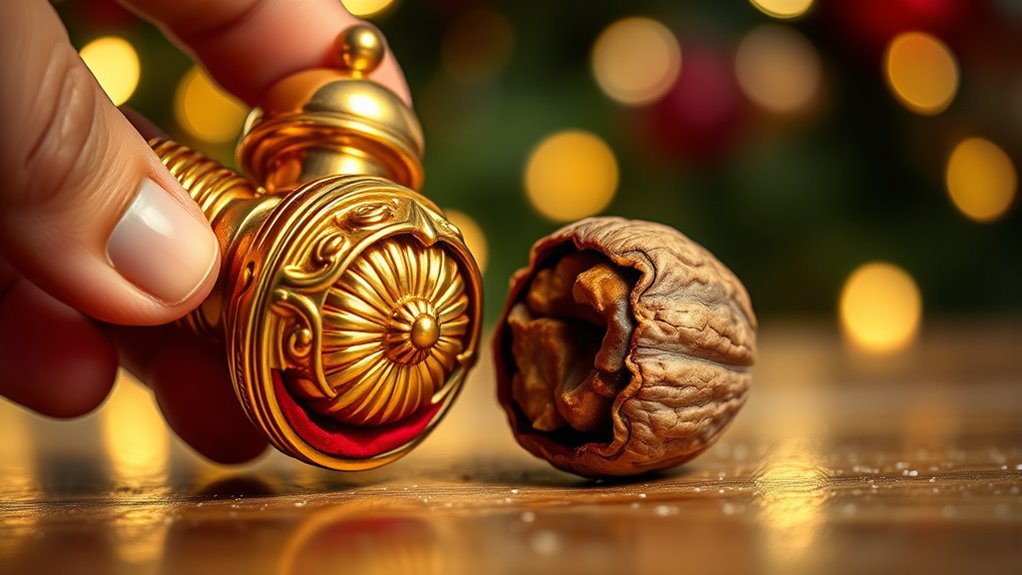

During the holiday season, biting into hard nuts can strain your jaw and cause injuries like joint inflammation or fractures. To avoid this, don’t use your front teeth or apply excessive force when cracking nuts. Use tools designed for nut-breaking or crack nuts gently with your back teeth. Watch for any discomfort, clicking, or pain afterward—taking breaks when needed. Staying cautious and mindful of your jaw health can help prevent injuries; explore more tips to keep your jaw safe during this festive time.
Key Takeaways
- Use nutcrackers or tools instead of teeth to minimize jaw strain during nut cracking.
- Apply gentle, controlled pressure rather than forceful biting to reduce injury risk.
- Avoid biting into hard nuts with front teeth; opt for molars and proper technique.
- Pay attention to jaw discomfort or clicking after eating nuts and rest the jaw if needed.
- Maintain good oral health and consider jaw-strengthening exercises to prevent injuries during holiday snacking.
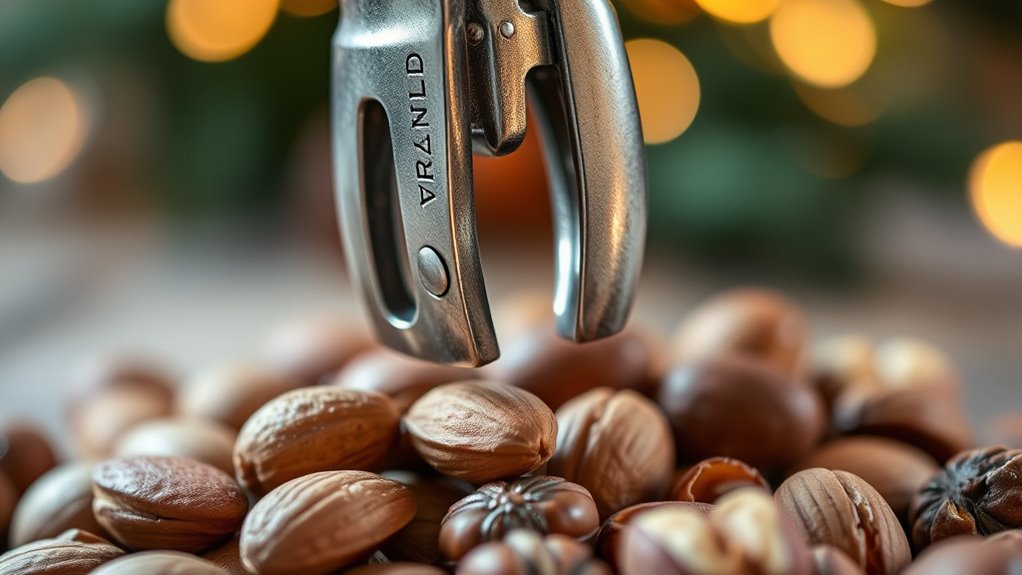
If you’ve ever experienced jaw pain or noticed a clicking sound when you chew, you might have what’s known as “Nutcracker Jaws.” This condition, also called temporomandibular joint disorder (TMD), affects the muscles and joints that control your jaw movement. During the holiday season, when nuts are a popular snack, you’re at increased risk of experiencing issues related to jaw strength and dental trauma. Biting into hard nuts can put significant stress on your jaw, especially if your muscles and joints aren’t in ideal condition. Over time, this strain can lead to joint inflammation, muscle soreness, or even injury to the teeth or surrounding tissues.
Jaw pain and clicking during chewing may indicate TMD, especially when cracking hard holiday nuts.
One key factor in avoiding dental trauma while cracking nuts is understanding your jaw’s capacity. If your jaw isn’t as strong as it should be, or if you’ve previously suffered dental trauma, you’re more vulnerable to injury. Weak jaw muscles can cause uneven pressure distribution when biting down on a hard nut, increasing the likelihood of joint misalignment or fractures. Similarly, if you’ve experienced dental trauma before, such as a cracked or chipped tooth, your teeth may be more sensitive to the excessive force required to open and break tough shells. That’s why maintaining good jaw strength through exercises or therapy can make a significant difference. Stronger muscles and healthier joints can better absorb the impact, reducing the risk of injury.
It’s also important to be mindful of how you bite into nuts. Using your front teeth or applying excessive force can lead to dental trauma, like chipped or cracked teeth, which might require dental repairs. Instead, try to crack nuts with controlled, gentle pressure, or use tools designed for nut-breaking. If you notice any pain, clicking, or discomfort in your jaw after tackling hard nuts, it’s a sign you should give your jaw a break. Ignoring these symptoms can worsen TMD or lead to further dental damage.
Additionally, dental checkups play a crucial role in identifying early signs of jaw or dental issues, helping prevent more serious problems down the line. Proper care, combined with cautious nut-cracking habits, can keep your jaw healthy throughout the holidays and beyond. Remember, protecting your jaw now can save you from painful problems later, so take care when biting into those holiday nuts.
Frequently Asked Questions
Can Children Safely Crack Nuts With Their Baby Teeth?
You should avoid children cracking nuts with their baby teeth to guarantee juvenile dental safety. Their teeth aren’t strong enough for nut cracking, which can cause chips or injuries. Instead, teach them safe nut cracking techniques, like using nutcrackers designed for children or adult supervision. This approach helps protect their delicate teeth while allowing them to enjoy nuts safely during the holidays. Always prioritize their dental health and safety.
Are There Specific Nuts More Likely to Cause Dental Injuries?
Some nuts are more likely to cause dental injuries because of their shell hardness, size, and shape. Hard-shelled nuts like walnuts, almonds, and pecans pose a higher risk, especially if you bite down too hard. Larger, rounder nuts can slip or require more force to crack, increasing injury chances. To stay safe, avoid using your teeth as tools, and consider cracking nuts with a nutcracker instead of biting into them directly.
How Can I Tell if I Have a Cracked Tooth From Nut Cracking?
If you have a cracked tooth from nut cracking, you’ll notice tooth pain or dental sensitivity when biting or chewing. You might also feel a sharp or lingering ache, especially with hot or cold foods. Check for visible cracks or chips, but sometimes damage isn’t obvious. If you experience these symptoms, see a dentist promptly to prevent further injury and get proper treatment.
What Are the Long-Term Effects of Nutcracker Jaw Injuries?
If you experience jaw misalignment or chronic pain after nut cracking, long-term effects may include ongoing jaw dysfunction and difficulty chewing. These injuries can lead to persistent muscle strain, joint issues like TMJ, and even misaligned teeth. Addressing these problems early with dental or medical care helps prevent worsening symptoms, so don’t ignore persistent discomfort or changes in your bite. Prompt treatment can protect your jaw’s health long-term.
Are There Safe Alternatives to Cracking Nuts With Teeth?
Ever wonder if there’s a safer way to crack those holiday nuts? Instead of risking damage to your teeth, try using proper nutcracker techniques or dedicated nut cracking tools. These tools are designed to handle tough shells without putting your smile on the line. Not only do they save your teeth, but they also make cracking nuts easier and more efficient. Why risk injury when a simple tool can do the trick?
Conclusion
So, as you crack those holiday nuts with your mighty jaws, remember—they’re not just tough treats but potential troublemakers. Ironically, your powerful bite might save the nut but could also land you a dental mishap. So go ahead, enjoy the festivities, but don’t forget: sometimes, the strongest jaws need a gentle hand. After all, the true holiday gift might just be a healthy smile—something you don’t want to crack.