Humidifiers do more than just make your bedroom more comfortable—they improve your air quality, protect your home, and boost your health. By adding moisture, they reduce airborne allergens, mold spores, and dust, which can cause respiratory issues. They also help prevent damage to walls, furniture, and floors caused by dry air. Plus, they support healthier, hydrated skin and lower energy costs by easing strain on your HVAC system. Keep exploring to find out how a humidifier can benefit you beyond comfort.
Key Takeaways
- Humidifiers improve indoor air quality by reducing airborne allergens, pollutants, and mold spores, benefiting respiratory health.
- Proper humidity levels protect home structures, preventing damage like wood warping or paint peeling.
- Maintaining optimal moisture supports skin health, preventing dryness and irritation beyond just comfort.
- Regular cleaning and maintenance prevent mold growth and bacteria buildup, ensuring safe, healthier air.
- Using humidifiers can reduce energy costs by easing strain on HVAC systems and improving overall home efficiency.
How Humidifiers Improve Indoor Air Quality and Reduce Allergens
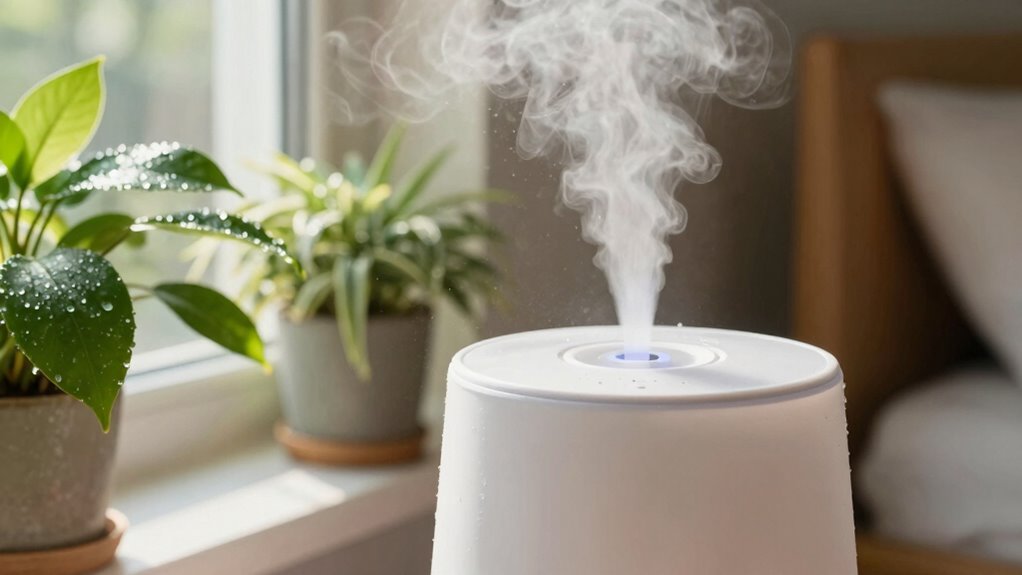
Humidifiers can substantially enhance indoor air quality by adding moisture to the air, which helps prevent dryness that can irritate your respiratory system. When humidity levels rise, airborne allergens like dust mites, mold spores, and pet dander become less likely to become airborne, reducing your exposure. Additionally, higher humidity can diminish indoor pollutants that settle on surfaces, keeping the air cleaner. By maintaining proper moisture levels, you create an environment where irritants are less likely to circulate freely, easing allergy symptoms and respiratory discomfort. This improvement in air quality supports your overall health, especially if you’re sensitive to airborne allergens. Using a humidifier effectively keeps indoor air fresher, cleaner, and less prone to harboring harmful pollutants.
Protect Your Home’s Structure by Maintaining Proper Humidity Levels
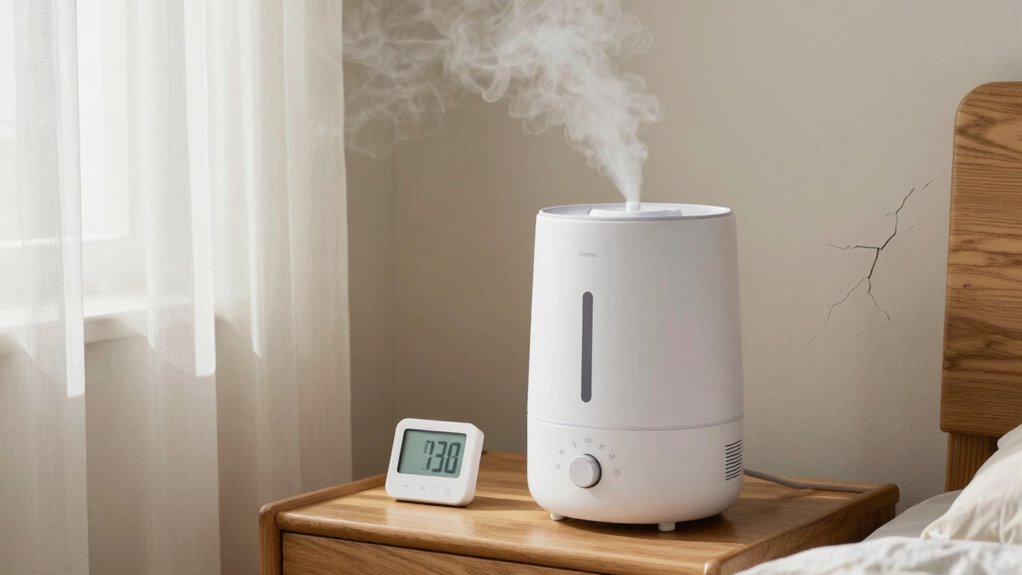
Maintaining proper humidity levels is essential for protecting your home’s structural integrity. When humidity is too low, wood can crack, floors may warp, and paint can peel, damaging your home decor and diminishing room aesthetics. Conversely, excessive moisture encourages mold growth and can weaken drywall and framing. Using a humidifier helps you keep humidity within the ideal range, preventing these issues. By preserving the stability of your walls, floors, and furniture, you guarantee your home stays visually appealing and structurally sound. Consistent humidity levels also reduce the likelihood of gaps forming around windows and doors, which can impact insulation and energy efficiency. Proper humidifier operation can also help prevent filter failures and improve overall efficiency, saving you money in the long run. Additionally, maintaining balanced humidity can help protect your home’s structural components from long-term damage, ensuring durability. Regularly monitoring humidity levels with a hygrometer can further enhance your ability to maintain optimal conditions. Keeping humidity within the recommended range can also minimize airborne allergens and improve indoor air quality, creating a healthier environment. Emerging studies highlight how climate control devices like humidifiers play a crucial role in safeguarding your home’s longevity and health. Overall, maintaining balanced humidity is a smart way to safeguard your home’s beauty and longevity.
How Humidifiers Keep Your Skin Hydrated and Healthy

Humidifiers help your skin retain moisture, keeping it soft and supple. When the air is more humid, your skin is less likely to become dry or flaky. This simple addition to your space can make a noticeable difference in your skin’s health. Additionally, maintaining proper humidity levels can help prevent issues like milky nails and other skin concerns associated with dry environments. Proper humidity can also reduce the presence of microplastics in dust, which can irritate your skin and respiratory system. By supporting a balanced environment, humidifiers can also enhance your overall urban traffic confidence and comfort.
Skin Moisture Retention
Have you noticed your skin feeling dry or flaky during the winter months? Humidifiers help improve moisture retention, which is crucial for maintaining healthy, hydrated skin. When the air is moist, your skin can better lock in hydration, reducing dryness and irritation. This boosts skin hydration levels, making your skin look plumper and smoother. To understand this better, consider the table below:
| Humidifier Benefits | How It Works | Your Skin’s Response |
|---|---|---|
| Adds Moisture | Increases ambient humidity | Locks in moisture |
| Prevents Dryness | Maintains natural oils | Reduces flakiness |
| Supports Skin Barrier | Enhances skin resilience | Keeps skin healthy |
Using a humidifier ensures your skin retains essential moisture, promoting a more radiant and comfortable complexion. Additionally, incorporating natural skincare practices can further enhance skin hydration and overall health. Recognizing the cultural significance of regional festivals and traditions can also inspire wellness routines that promote overall skin vitality. Proper air quality is also important, as it directly impacts your skin’s ability to stay hydrated and healthy.
Prevents Skin Dryness
When the air lacks moisture, your skin becomes more prone to dryness and irritation. Humidifiers help combat this by boosting skin hydration, ensuring your skin stays soft and smooth. By adding moisture to the air, they improve moisture retention in your skin cells, reducing flakiness and tightness. This not only prevents discomfort but also helps maintain your skin’s natural barrier, protecting against environmental damage. Proper humidity levels support your skin’s ability to stay hydrated throughout the day and night. Regular use of a humidifier can markedly decrease the chances of developing dryness-related issues like redness, cracking, or itchiness. Additionally, maintaining optimal humidity can support your skin’s barrier health by preventing excessive moisture loss. Maintaining appropriate humidity levels can also contribute to skin barrier health, helping your skin better resist external irritants. Recent studies highlight how environmental factors, such as humidity, play a crucial role in skin health, emphasizing the importance of controlled indoor environments. Overall, maintaining adequate moisture in the air keeps your skin healthier, more resilient, and better equipped to fight off dryness.
Prevent Dry Throat and Respiratory Irritation With Humidifiers
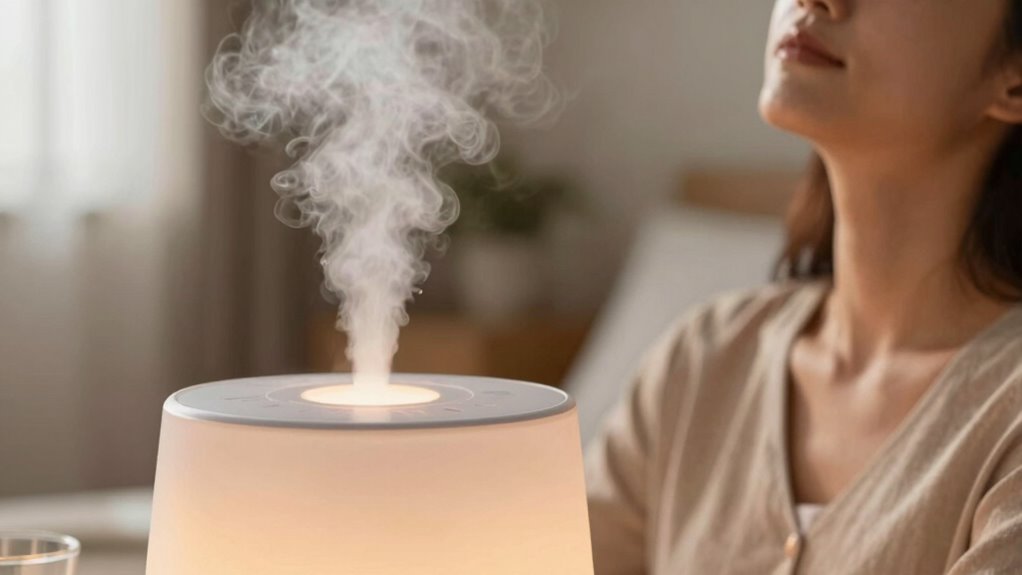
Dry air can easily lead to a sore throat and respiratory discomfort, especially during colder months or in heated environments. Using a humidifier helps maintain ideal moisture levels, soothing your throat and easing breathing. To prevent issues, prioritize humidifier safety by cleaning it regularly to avoid mold and bacteria buildup. Be mindful of noise levels, as some units can be loud and disrupt sleep or focus. Choosing a quiet humidifier ensures comfort without disturbance. Proper humidity not only prevents dryness but also reduces irritation in your airways, making it easier to breathe throughout the day and night. Maintaining the correct humidity levels can also help prevent mold growth in your living space. Additionally, maintaining proper indoor humidity can support air quality by reducing airborne pollutants and allergens. By maintaining the right humidity, you create a healthier, more comfortable environment that supports your respiratory health. Regular use of humidifiers can also help in maintaining skin hydration, which can be affected by dry indoor air. Ensuring optimal humidity levels can also contribute to overall health by reducing the likelihood of respiratory infections. Proper humidity levels also aid in reducing static electricity, which can be a common issue in dry indoor environments.
Choosing the Best Humidifier for Your Home and Needs
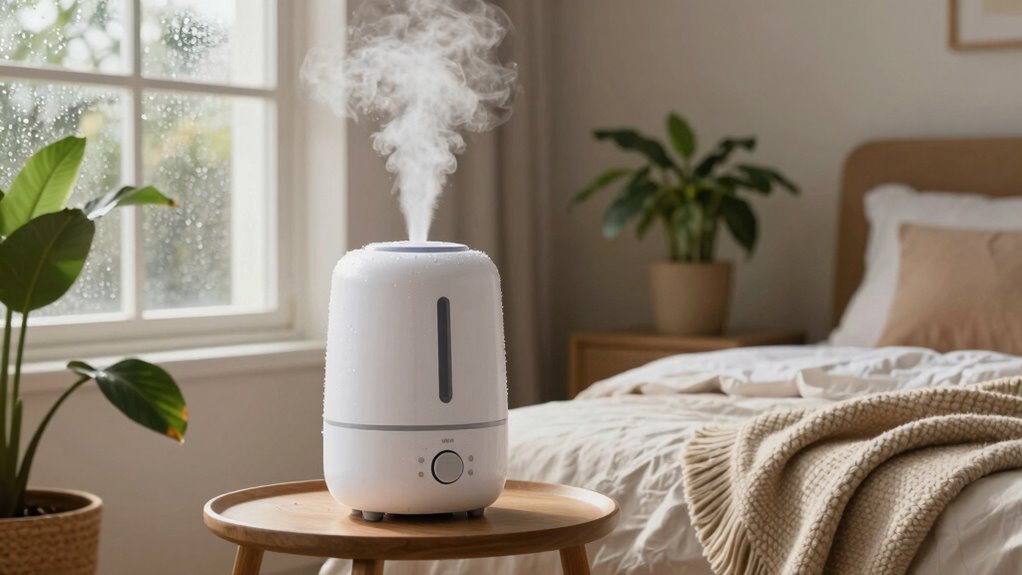
When choosing a humidifier, consider the different types available and how they fit your room size and lifestyle. Make sure to select one that’s compatible with your space and easy to maintain. Keeping these factors in mind helps you find a device that works effectively and stays clean with minimal hassle. Additionally, understanding indoor air quality and how humidity impacts it can help you select the most suitable humidifier for healthier living. Being aware of soundproofing options can also ensure your humidifier operates quietly, contributing to a more peaceful environment. Recognizing the importance of humidifier maintenance can further extend the life of your device and ensure it functions optimally. Paying attention to humidity levels can help prevent issues like mold growth and dry skin, enhancing your overall comfort. Properly managing air circulation within your space can also optimize the humidifier’s performance and ensure consistent humidity distribution.
Types of Humidifiers
Are you unsure which type of humidifier suits your home best? Understanding humidifier technology can help you decide. There are three main types: evaporative, ultrasonic, and steam vaporizer. Evaporative models use a wick filter to absorb water and a fan to disperse moisture into the air, making them self-regulating. Ultrasonic humidifiers use high-frequency vibration to create a fine mist, often quieter and energy-efficient. Steam vaporizers boil water to produce steam, which cools before release, making them effective for disinfecting. When choosing, consider filter types—some models have replaceable filters to trap impurities, while others rely on water quality. Selecting the right humidifier depends on your needs, preferences, and the specific features each technology offers.
Room Size Compatibility
Choosing the right humidifier depends heavily on the size of the room you want to humidify. The key factor is matching the humidifier capacity to your room size, ensuring effective moisture distribution. For smaller rooms, a compact humidifier with a lower capacity is sufficient, while larger spaces demand models with higher capacities. Consider these points:
- Room size: Larger rooms need humidifiers with higher capacity.
- Humidifier capacity: Check the output rate to match your space.
- Coverage area: Verify the manufacturer’s recommended room size.
- Portability: Smaller units are easier to move, but may lack capacity for big spaces.
Matching your humidifier’s capacity to your room size guarantees ideal humidity levels without overworking the device or wasting energy.
Maintenance Tips and Tricks
To guarantee your humidifier continues to operate efficiently and safely, regular maintenance is essential. Clean the tank and filters weekly to prevent mold, bacteria, and mineral buildup, which can compromise humidifier safety. Use distilled water to reduce mineral deposits and avoid spreading allergens. Change filters as recommended by the manufacturer to ensure best performance and allergy prevention. Wipe down surfaces and vents to reduce dust and allergens that could circulate in the air. Regularly inspecting for leaks or damage helps maintain safe operation. Proper maintenance not only extends your humidifier’s lifespan but also ensures healthier air quality. By staying consistent with these tips, you’ll enjoy the benefits of a safe, efficient device that improves comfort and reduces allergy symptoms.
Mistakes That Sabotage Your Humidifier’s Effectiveness and How to Avoid Them
Even small mistakes can markedly reduce your humidifier’s effectiveness, leaving your space feeling less comfortable and potentially causing issues like mold growth or dry air. To maximize performance, pay attention to humidifier placement; avoid placing it near vents or direct sunlight, which can affect humidity levels. Regular filter replacement is essential—neglecting this can lead to mold buildup and decreased efficiency. Also, make sure the device is on a flat, elevated surface for even mist distribution. Finally, don’t run your humidifier continuously without monitoring humidity levels; over-humidifying can cause condensation and mold. Keep these tips in mind:
Proper placement, regular filter changes, and humidity monitoring optimize humidifier performance and prevent mold.
- Proper humidifier placement
- Regular filter replacement
- Elevate the device off the ground
- Monitor humidity levels regularly
How Using Humidifiers Can Save Money on Repairs and Energy
Using a humidifier regularly can considerably cut down on repair costs and energy bills by maintaining ideal indoor humidity levels. When humidity stays balanced, your heating and cooling systems work less to control temperature, boosting energy efficiency and reducing utility costs. Proper humidity also prevents issues like dry air that can cause wood furniture, floors, and electronics to crack or warp, saving you money on repairs. Additionally, a well-maintained humidifier reduces strain on HVAC systems, lowering the chance of breakdowns and costly repairs. Over time, these cost savings add up, making your home more energy-efficient and less expensive to maintain. Investing in a humidifier isn’t just about comfort—it’s a smart financial move that helps you save money over the long run.
Environmental Benefits of Using Humidifiers in Your Home
Using a humidifier can improve your indoor air quality by adding moisture and reducing dust and allergens. It also helps you cut down on energy use, since better humidity levels make your heating and cooling systems work more efficiently. These benefits not only create a healthier home environment but also support eco-friendly living.
Improves Indoor Air Quality
Have you noticed how dry indoor air can cause discomfort and health issues? Humidifiers improve indoor air quality by adding moisture, which helps with air purification and allergen reduction. Moist air makes it harder for airborne irritants to stay suspended, reducing allergens like dust and pet dander. Proper humidity levels also prevent mold growth, decreasing mold spores in the air. Using a humidifier can:
- Enhance air purification by trapping particles
- Reduce airborne allergens and irritants
- Minimize dust and pet dander circulation
- Decrease mold spores and airborne pathogens
This creates a cleaner, healthier environment for you and your family. Better humidity levels support your respiratory health and make breathing easier. Overall, humidifiers do more than just add moisture—they actively improve the quality of the air you breathe daily.
Reduces Energy Consumption
Did you know that humidifiers can help lower your home’s energy consumption? When humidity levels are balanced, your heating and cooling systems don’t have to work as hard, improving energy efficiency. Proper moisture reduces the need for constant thermostat adjustments, leading to less energy use. This efficiency translates into cost savings over time, as your utility bills decrease. Humidifiers also help maintain consistent indoor temperatures, preventing temperature swings that demand more energy. By controlling humidity levels, you create an environment where your HVAC system operates more smoothly and efficiently. Overall, using a humidifier is an easy way to reduce energy consumption, benefiting both your wallet and the environment. It’s a simple step toward a more sustainable and cost-effective home.
Tips for Cleaning and Maintaining Your Humidifier for Optimal Performance

Regularly cleaning and maintaining your humidifier is essential to guarantee it works efficiently and safely. Proper upkeep prevents mold, bacteria, and mineral buildup, ensuring healthier air. To keep your device in top shape, focus on replacing humidifier filters as recommended and regularly cleaning the water tank. Use clean, filtered water whenever possible to improve water quality and reduce mineral deposits. Additionally, follow these tips:
Regular cleaning and filter replacement ensure your humidifier operates safely and efficiently.
- Empty and dry the water tank daily
- Use vinegar or manufacturer-approved cleaning solutions
- Check and replace filters regularly
- Wipe all surfaces to prevent mold growth
Common Questions About Humidifier Use and Troubleshooting
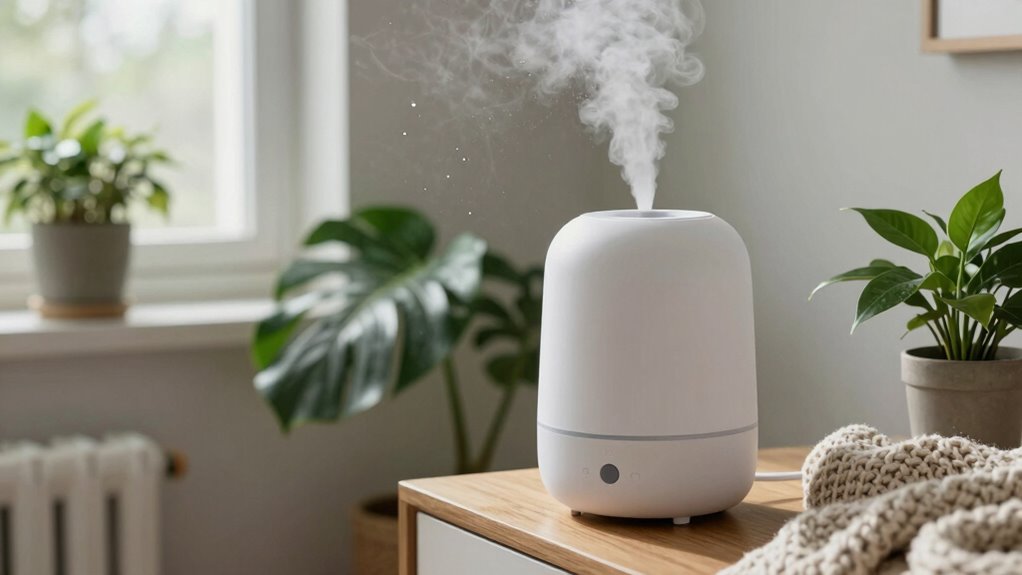
Understanding common questions about humidifier use and troubleshooting can help you maintain your device effectively and prevent issues before they arise. For example, you might wonder about humidifier aesthetics—choosing a model that complements your space can improve your environment’s look. Noise levels are also a concern; some units operate quietly, while others produce distracting sounds. If your humidifier isn’t working properly, check if it’s filled with water, cleaned regularly, and placed on a flat surface. If it’s making excessive noise, inspect for mineral buildup or loose parts. Addressing these questions proactively keeps your humidifier running smoothly, enhances its aesthetics, and minimizes disturbance, ensuring you enjoy healthier, more comfortable air without unnecessary frustration.
Frequently Asked Questions
Can Humidifiers Help Reduce Static Electricity in My Home?
Yes, humidifiers can help reduce static electricity in your home. By increasing indoor humidity levels, they promote electrostatic reduction, making static buildup less likely. This static mitigation benefits your skin, clothing, and electronic devices by decreasing static shocks and cling. When you maintain proper humidity, you create a more comfortable environment and minimize static-related issues, especially during dry seasons.
Do Humidifiers Affect Indoor Plants or Indoor Gardening?
Humidifiers can positively influence indoor plants and gardening by maintaining ideal indoor humidity levels. While dry air can cause plants to wilt or develop brown leaf edges, increased humidity supports plant health and growth. You’ll notice healthier, more vibrant leaves and fewer issues caused by dry air. Just make sure you don’t over-humidify, as excessive moisture can lead to mold or fungal problems, disrupting your indoor gardening success.
Are There Safety Concerns for Pets When Using a Humidifier?
Pet health can be impacted by humidifier safety, so you need to monitor its use carefully. Make sure the humidifier is clean to prevent mold or bacteria growth, which could harm your pets. Keep the device out of pets’ reach to avoid accidental spills or burns. Using distilled water can reduce mineral dust. By following safety tips, you protect your pets and maintain a healthy indoor environment, making humidifier use safe for everyone.
How Do Humidifiers Influence Indoor Mold Growth?
Humidifiers can influence indoor mold growth by increasing moisture levels, which may promote mold if not properly maintained. To prevent mold, you should regularly clean your device and monitor indoor humidity, keeping it below 60%. Proper use helps mold prevention and improves air quality. By controlling humidity, you reduce the risk of mold spores thriving, ensuring a healthier environment and better air quality for you and your family.
Can Humidifiers Improve Sleep Quality Beyond Comfort?
Imagine you’re struggling with dry throat and disrupted sleep, but using a humidifier restores moisture. This can positively impact your sleep cycle and respiratory health, leading to deeper, more restful sleep. By maintaining ideal humidity, you reduce breathing discomfort and congestion, which helps you fall asleep faster and stay asleep longer. So, beyond comfort, a humidifier can support overall sleep quality and respiratory well-being.
Conclusion
Humidifiers are more than just bedroom luxuries—they’re your home’s silent guardians, nurturing your health, protecting your space, and saving you money. By maintaining proper humidity, you’re weaving a shield around your environment, much like a gardener tending to delicate blooms. Embrace their benefits, keep them clean, and watch as your home transforms into a sanctuary of comfort and wellness, proving that sometimes, the smallest changes make the biggest difference.