To make flossing easier for kids with tight teeth, choose gentle tools like floss picks with curved handles or pre-threaded flossers to improve reach and control. Use flavored or thinner floss options to reduce frustration, and teach them to use a gentle, C-shaped motion to avoid discomfort. Patience and consistent practice help build good habits, making flossing feel less like a chore. Keep exploring for more helpful tips to guarantee smooth, comfortable flossing sessions.
Key Takeaways
- Use flavored or thinner unwaxed floss to reduce difficulty and make the experience more enjoyable.
- Choose floss picks or pre-threaded flossers with curved handles for better reach in tight spaces.
- Teach gentle, guided movements in a C-shape around each tooth to prevent gum injury.
- Incorporate fun, positive reinforcement to build a consistent flossing routine.
- Practice patience, ensuring the process is comfortable and stress-free to encourage regular habits.
If your child’s teeth are tightly packed, flossing can feel like a formidable task. When space between teeth is limited, it’s easy to worry about whether you’re doing it right or if the floss is even reaching all the areas that need cleaning. Luckily, understanding the different dental floss types and mastering proper flossing techniques can make this process much easier and more effective for your child.
Tightly packed teeth require the right floss and technique for effective, gentle cleaning.
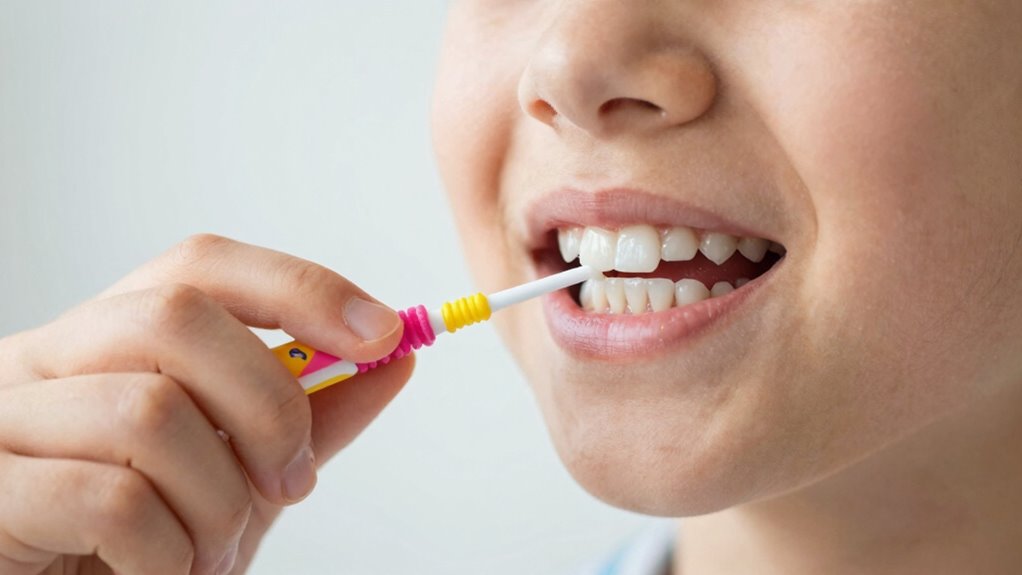
There are several types of dental floss to consider, and choosing the right one can significantly impact how smoothly flossing goes. Waxed floss tends to glide more easily between crowded teeth, reducing the risk of snagging or breaking. Unwaxed floss, while thinner and sometimes more affordable, can be tougher to maneuver through tight spaces. For kids with tight teeth, floss picks or pre-threaded flossers with a curved handle can be a game-changer. These tools help you reach difficult areas more comfortably, giving you better control and making the experience less frustrating for your child. Additionally, there are flavored floss options that make the routine more appealing, encouraging kids to floss regularly.
When it comes to flossing techniques, patience and precision are key. Start by breaking off about 18 inches of floss, winding most of it around your middle fingers, leaving a few inches to work with. Gently guide the floss between the teeth with a slow, sawing motion—avoid snapping it in, as this can irritate gums or damage enamel. For tight spaces, curve the floss into a C-shape around each tooth, ensuring you’re cleaning just below the gumline without forcing the floss. If the floss keeps breaking or seems too tough to work through, try a different type of floss or use a floss pick to give yourself more leverage. It’s also helpful to floss in a gentle, consistent manner, moving the floss up and down to dislodge plaque without causing discomfort. Using the right tools and technique are crucial in making the process smoother and more effective. Selecting appropriate floss can significantly reduce flossing frustration, especially for children with tight teeth. It’s also important to be aware that flossing effectiveness depends on using the right tools and technique, which can help you stay motivated and ensure your child’s oral health routine is successful.
Choosing the right floss and technique also involves understanding how dental floss types are designed to work best in different scenarios, making your efforts more efficient. Encourage your child to develop the habit of flossing daily, emphasizing that patience and the right tools make the task easier and more effective over time. With the proper floss type and technique, you’ll find that even tight teeth can be cleaned thoroughly without much fuss. Remember, the goal isn’t just about getting the floss between teeth but doing so in a way that’s gentle, comfortable, and sustainable for your child’s oral health routine.
kids floss picks with curved handles
As an affiliate, we earn on qualifying purchases.
As an affiliate, we earn on qualifying purchases.
Frequently Asked Questions
When Should I Start Flossing My Child’s Teeth?
You should start flossing your child’s teeth as soon as they have two teeth that touch. Incorporate flossing into their daily routine along with brushing techniques, making it a regular habit. Schedule dental visits regularly so your dentist can guide you on proper flossing methods and check for any issues. Starting early helps your child develop good oral hygiene habits and keeps their teeth healthy as they grow.
Are Flavored Floss Options Better for Kids?
Flavored floss options can make flossing more appealing for kids, aligning with their flavor preferences, which encourages better dental habits. While some believe flavored floss offers extra dental benefits, the main advantage is increased willingness to floss regularly. Ultimately, choosing a flavor your child enjoys helps establish a positive routine, making flossing less of a chore and more of a fun, beneficial part of their oral care.
How Often Should Kids Floss Daily?
You should floss your kid’s teeth at least once daily to support tooth decay prevention and strengthen their oral hygiene routines. Regular flossing removes plaque and food particles between teeth, reducing the risk of cavities. Making it a consistent habit helps your child develop good oral care habits early, ensuring healthier teeth and gums. Encourage gentle, thorough flossing, and choose a fun, engaging approach to keep them motivated.
Can Flossing Cause Gum Damage in Children?
Flossing won’t cause gum damage if you do it correctly, even if your kid has tight teeth. However, improper flossing can lead to gum irritation and tooth sensitivity, so be gentle and use the right technique. Think of it like a delicate dance—slow and careful. Make sure to guide your child in flossing properly, avoiding snap motions that could hurt their gums or cause discomfort.
What Alternatives Exist if Flossing Is Too Difficult?
If flossing is too difficult, you can try alternative tools like floss picks, water flossers, or interdental brushes. These options often make cleaning between tight teeth easier and more comfortable. You might also explore different flossing techniques, such as gently sliding the floss rather than snapping it, to reduce discomfort. Encouraging your child to use these alternative tools and techniques can help maintain good oral hygiene without frustration.
Conclusion
Remember, making flossing easier for kids with tight teeth can set them up for a lifetime of healthy habits. Did you know that children with good oral hygiene are 40% less likely to develop cavities? By using gentle techniques and fun tools, you can help your child enjoy flossing and keep their smile bright. Consistency is key—your support makes all the difference in building their confidence and dental health. Keep encouraging them, and they’ll thank you later!