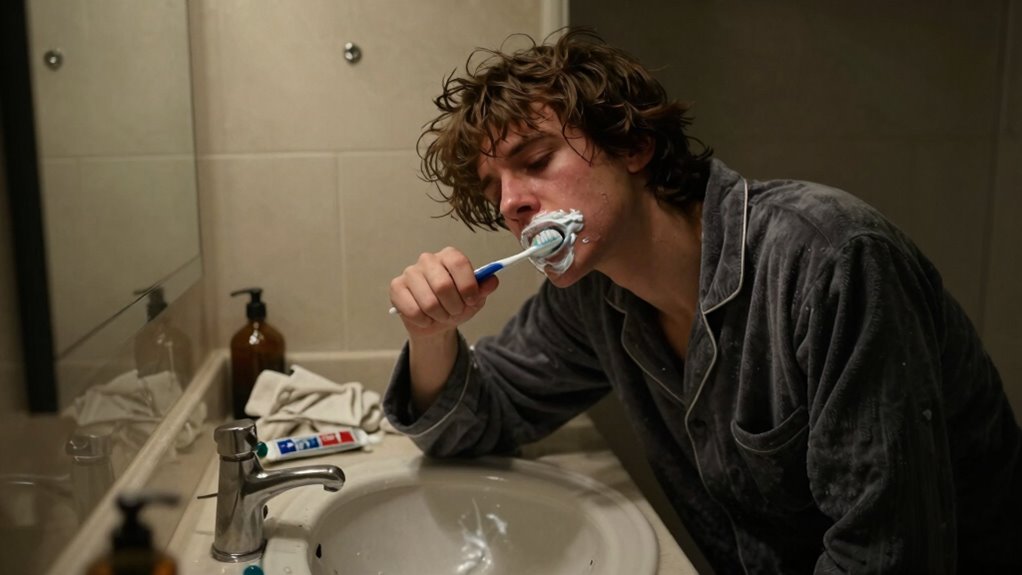

Late bedtimes often make you rush through your brushing, especially when you’re tired. Fatigue lessens your focus, leading to superficial cleaning and missed spots like back molars and gum lines. As a result, plaque and bacteria can build up, increasing the risk of cavities and inflammation. Speed takes priority over thoroughness, making it easy to forget flossing or rinsing. Keep going, and you’ll discover simple strategies to improve your routine even on busy or exhausting nights.

Turn the school run and nap time into listening time
- Thousands of audiobooks, podcasts and originals
- Listen on your phone, tablet or Echo — also offline
- Cancel anytime
Key Takeaways
- Tiredness reduces focus, leading to superficial brushing and missed areas like molars and gum lines.
- Late bedtimes often cause rushing, compromising thorough plaque removal and increasing decay risk.
- Fatigue decreases motivation to floss and rinse, allowing bacteria to thrive in neglected areas.
- Consistently hurried routines from late nights weaken long-term oral health and increase dental problems.
- Lack of energy hampers proper technique, making sloppier brushing habits a common consequence.
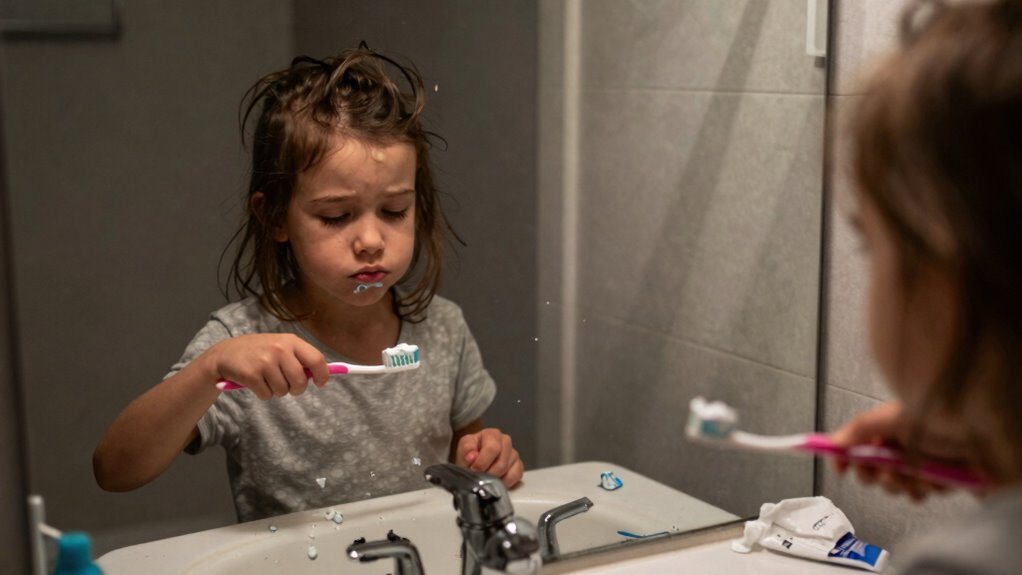
When you’re tired, you tend to brush less thoroughly, missing key areas like the back molars or along the gum line. These spots are prime real estate for dental plaque to develop, and if left unchecked, they can cause decay and inflammation. Because late nights often mean you’re in a hurry, you might skip brushing for the full two minutes or neglect flossing altogether. This hurried approach doesn’t give your mouth enough time to clear away plaque, leaving bacteria to thrive overnight. Over time, sloppy brushing habits accumulate, leading to more dental problems and costly dental visits. Additionally, neglecting proper oral hygiene can contribute to the development of bacteria that thrive in dental plaque, increasing the risk of serious dental issues. Your bedtime habits significantly influence your overall oral health. When you’re tired, your focus wanes, and you may just go through the motions rather than actively removing plaque. This is why establishing a consistent, mindful routine is crucial, even on nights when you’re exhausted. Use a soft-bristled toothbrush, and spend at least two minutes thoroughly cleaning every surface of your teeth. Consider using an antimicrobial mouthwash to help reduce bacterial buildup, especially if you’re rushing. Remember, good oral hygiene habits aren’t just about brushing; they involve flossing and rinsing to keep dental plaque under control. Establishing a routine that emphasizes quality over speed can make a significant difference in maintaining your dental health. Ensuring your oral hygiene routine includes proper technique and consistency can prevent many common dental problems. If you often stay up late, it’s vital to prioritize your oral health by making your bedtime routine as efficient and effective as possible. Setting a reminder to brush properly can help reinforce good habits, especially when you’re feeling tired. The effort you put into your oral hygiene habits tonight directly impacts your dental health tomorrow and in the years to come. Neglecting this step, especially when you’re tired, can lead to a cycle of neglect and dental issues. So, even when you’re exhausted, remember that diligent brushing is your best defense against dental plaque and its damaging effects.
soft bristled toothbrush for thorough cleaning
As an affiliate, we earn on qualifying purchases.
As an affiliate, we earn on qualifying purchases.
Frequently Asked Questions
How Does Late Bedtime Affect Overall Dental Health?
Late bedtimes can negatively impact your overall dental health because irregular sleep patterns often lead to rushed or skipped dental hygiene routines. When you stay up late, you’re more likely to neglect proper brushing and flossing, increasing plaque buildup and risk of cavities. Poor sleep also weakens your immune system, making it harder for your body to fight off oral infections. Prioritizing regular sleep patterns helps maintain better dental health and hygiene.
Can Late Bedtimes Cause Specific Dental Issues?
Yes, late bedtimes can cause specific dental issues. When your nighttime routines are rushed due to sleep deprivation, you might skip or rush brushing, leading to plaque buildup and cavities. Sleep deprivation also weakens your immune system, making it harder to fight off gum infections. Over time, these factors increase your risk of periodontal disease and tooth decay. Prioritizing consistent bedtimes helps guarantee thorough brushing and better oral health.
Are There Age Differences in Sloppy Brushing Due to Late Bedtimes?
You might notice that age related habits influence sloppy brushing, especially when late bedtimes disrupt bedtime routines. Younger kids often rush through brushing due to limited attention spans, while teens and adults might skip or do a quick job after late nights. These habits, shaped by your age and routine, lead to inconsistent oral hygiene. Recognizing this pattern helps you adjust your habits for better dental health, regardless of age.
What Are the Long-Term Effects of Inconsistent Brushing?
Inconsistent brushing harms your oral hygiene over time, increasing the risk of dental decay. When you don’t brush regularly, plaque builds up, leading to cavities and gum disease. These long-term effects can cause tooth loss and expensive dental treatments. To protect your teeth, maintain a consistent brushing routine, especially before bed, and visit your dentist regularly. Good oral hygiene habits are essential for long-term dental health.
How Can Parents Encourage Better Brushing Habits?
Think of your child’s smile as a shining lighthouse guiding their health. You can encourage better brushing habits through reward systems that motivate them and by establishing routine consistency, making brushing a daily adventure rather than a chore. Praise small victories and keep routines predictable, so brushing becomes a natural part of their day. Your encouragement turns routine into a cherished habit, helping their smile stay bright and strong.
Conclusion
If you stay up late, your brushing routine might become a tangled mess, like a thread unraveling at the ends. Skipping or rushing your nightly clean can leave plaque lurking in corners, setting the stage for cavities and gum issues. Remember, your bedtime isn’t just about sleep—it’s also your last line of defense against dental trouble. Keep a steady routine, even when the night calls for late hours, and your smile will thank you for it.
Cold & flu season Picks
humidifiers
As an affiliate, we earn on qualifying purchases.