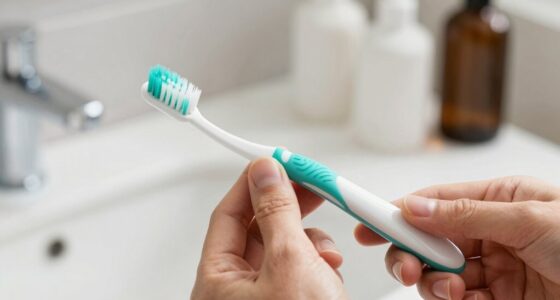

To create a kids’ dental health milestone checklist for the new year, you’ll want to track when your child’s baby teeth erupt, fall out, and are replaced by permanent teeth. Regular dental visits are vital to monitor development and catch issues early. Make certain your child develops good brushing habits using proper techniques and fluoride products. If you stay consistent and attentive, you’ll set the foundation for healthy teeth. Keep exploring these tips to help your child’s smile stay bright all year long.
Key Takeaways
- Track eruption and fall-out of primary and permanent teeth to monitor normal dental development.
- Include regular dental check-ups for professional advice and early detection of issues.
- Establish consistent brushing routines twice daily with proper techniques suited for children.
- Use age-appropriate fluoride products to strengthen enamel and prevent cavities.
- Promote positive oral hygiene habits through engaging activities and setting a good example.
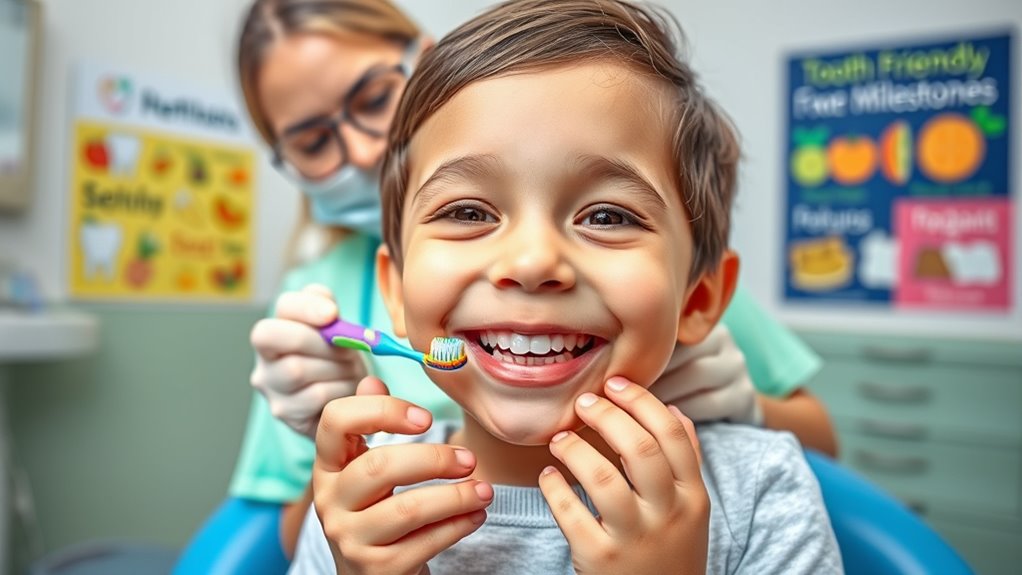
Understanding your child’s dental health milestones is essential for guaranteeing they develop strong, healthy teeth from an early age. As a parent, you’re the first line of defense in establishing good oral hygiene habits. One of the key areas to focus on is teaching proper brushing techniques, which play a vital role in preventing cavities and gum disease. When guiding your child, show them how to brush twice daily with gentle, circular motions, making sure to reach all areas of the mouth, including the backs of their teeth and along the gumline. Using a child-sized toothbrush with soft bristles helps make the experience comfortable and effective. As your child gets older, encourage them to take ownership of their brushing routine, promoting independence while maintaining proper technique. Remember, consistent brushing removes plaque, a sticky film of bacteria that causes tooth decay, and lays the foundation for lifelong oral health.
In addition to good brushing habits, understanding the benefits of fluoride is crucial. Fluoride strengthens tooth enamel, making it more resistant to acid attacks from sugary foods and beverages. This mineral can be found in many dental products, such as toothpaste and mouth rinses, and in community water supplies in some areas. When your child begins brushing with fluoride toothpaste, you’re providing an extra layer of protection against cavities. It’s important to supervise their use to guarantee they don’t swallow excess toothpaste, but also to guarantee they get enough fluoride to benefit from its protective properties. Fluoride not only helps in remineralizing early signs of decay but also helps prevent new cavities from forming, especially during the cavity-prone years of childhood. Staying informed about dental health innovations can help you adopt new strategies for maintaining your child’s oral health effectively.
As your child grows, keep an eye on their dental milestones, such as the eruption of baby teeth and their eventual fall-out, making sure they’re developing normally. Regular dental visits are essential, as they allow your child’s dentist to monitor their progress, provide professional cleanings, and offer personalized advice on brushing techniques and fluoride use. Teaching your child about the importance of maintaining good oral hygiene from an early age helps instill habits that last a lifetime. Set a positive example by practicing good dental routines yourself, and make brushing fun with songs or timers to ensure they brush for the recommended two minutes. Ultimately, staying proactive about your child’s dental health in the new year will help them enjoy healthy smiles for years to come.
Frequently Asked Questions
When Should My Child First Visit the Dentist?
You should take your child to the dentist by age one or within six months of their first teething milestone. Early dental visits help monitor teething progress and establish good oral hygiene habits. Regular checkups allow the dentist to spot any issues early and provide guidance. Starting early guarantees your child develops a positive attitude toward dental care and sets the foundation for healthy teeth as they grow.
How Can I Prevent Cavities in Toddler Teeth?
Imagine a toddler named Emma who loves fruit snacks. To prevent cavities, you can offer tooth-friendly snacks like cheese or crunchy vegetables instead. Regular fluoride treatments strengthen her enamel, making it resistant to decay. Also, guarantee she brushes twice daily with fluoride toothpaste and limit sugary drinks. These simple steps help protect her teeth and promote healthy dental habits early on.
What Are Common Signs of Dental Problems in Kids?
You should watch for signs like tooth discoloration, which can indicate decay or infection, and gum bleeding, often a sign of gum disease or irritation. If you notice your child’s teeth looking discolored or their gums bleeding during brushing or eating, schedule a dental check-up promptly. These signs shouldn’t be ignored, as early intervention helps prevent more serious dental problems and keeps your child’s smile healthy.
How Often Should My Child Have Dental Checkups?
You should take your child for dental checkups every six months. During these visits, the dentist will assess their tooth brushing habits and provide fluoride treatments if needed to strengthen enamel. Regular checkups help catch problems early and keep their smile healthy. Encourage good tooth brushing practices at home, and schedule visits consistently to guarantee your child’s dental health stays on track throughout the year.
Are Dental Sealants Recommended for Young Children?
Yes, dental sealants are recommended for young children, especially on molars to prevent cavities. Along with fluoride varnish treatments, sealants provide extra protection by sealing out food and bacteria. Encourage your child to wear mouthguards during sports to prevent injuries. Regular checkups help your dentist monitor these protections’ effectiveness and make sure your child’s dental health stays on track, reducing future dental issues.
Conclusion
As you gently guide your child through these early dental milestones, you’re helping set the stage for a lifetime of bright, healthy smiles. Remember, each tiny step forward is a precious chapter in their oral health story. Keep nurturing good habits and stay vigilant—your caring touch makes all the difference. Before long, those small victories will blossom into confident, happy grins that light up every room they enter.