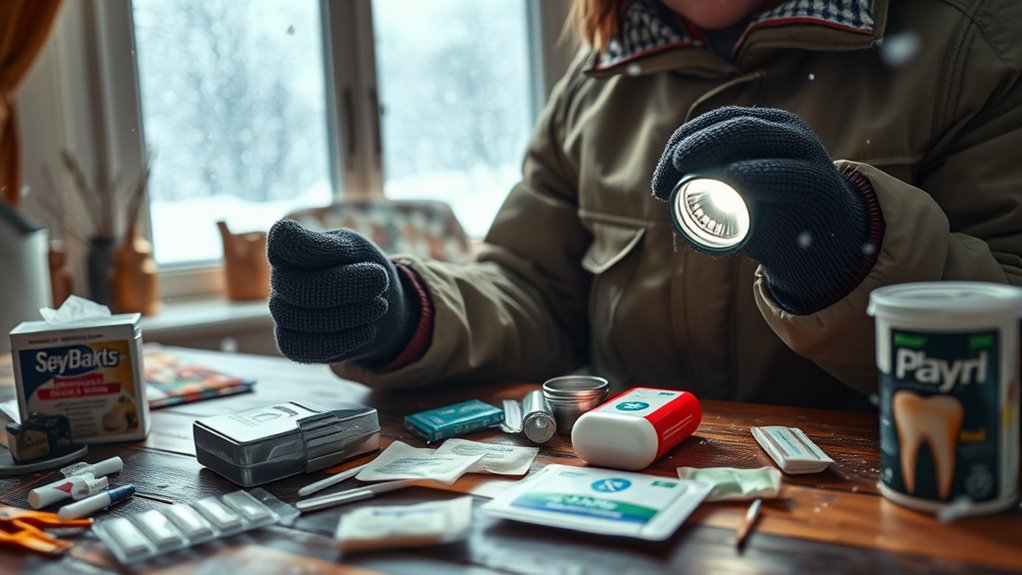
To prepare for dental emergencies during snowstorms, assemble a kit with sterile gauze, dental wax, pain relievers, and saline solution, and keep it in an accessible spot. Know your emergency dental contacts and identify clinics open nearby. Practice basic first aid, like handling knocked-out teeth and managing toothaches, so you’re ready to act quickly. Proper planning helps reduce pain and damage until professional help is available; keep exploring for more helpful tips.
Key Takeaways
- Assemble a dental emergency kit with sterile supplies, pain relievers, and contact info, and check it regularly.
- Identify nearby open dental clinics and plan transportation routes before a snowstorm hits.
- Learn basic dental first aid skills, like handling knocked-out teeth and managing chipped or cracked teeth.
- Keep emergency contact numbers and dental resources easily accessible during severe winter weather.
- Proactively prepare to manage dental issues promptly, reducing pain, damage, and stress during snowstorm disruptions.
Snowstorms can quickly disrupt your access to dental care, making it vital to be prepared for emergencies. When winter weather hits hard, you might find yourself unable to reach your dentist or emergency services promptly. That’s why having a plan for dental emergencies during snowstorms is essential. One of the best ways to do this is by focusing on dental first aid and ensuring your emergency kit preparation is thorough and accessible. Being ready can make all the difference in managing pain, preventing further damage, and maintaining your oral health until professional help is available.
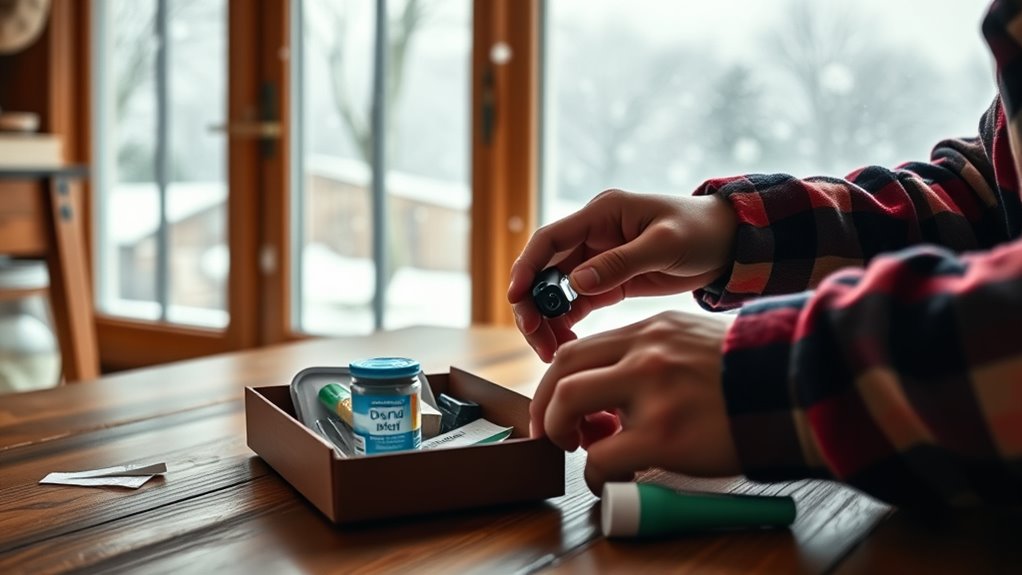
Start by assembling an emergency kit that includes essential dental supplies. This should contain items like sterile gauze, dental wax, pain relievers, and a small container of saline solution. Keep these supplies in a waterproof, easy-to-carry bag that you can grab quickly if needed. Also, include a copy of your dental history and contact information for your dentist, so you’re prepared to provide details if you need to reach out for advice remotely. Remember, your kit should be stored in a place that’s easily accessible during snowstorms, such as your main living area or a designated emergency cabinet. Additionally, understanding local healthcare resources can help you navigate available options during severe weather conditions.
Assemble a waterproof emergency dental kit with supplies like gauze, pain relievers, and your dentist’s contact info for quick access during snowstorms.
Knowing basic dental first aid is equally important. If you experience a knocked-out tooth, handle it carefully by the crown, avoiding the roots, and try to keep it moist by placing it in milk or saline solution. Time is critical in such cases, so act swiftly to preserve the tooth for potential reimplantation. For a chipped or cracked tooth, rinse your mouth gently with warm water, and apply a cold compress to reduce swelling. If you have a toothache, over-the-counter pain medications can help, but avoid placing aspirin directly on your gums, as it can burn tissue. This kind of immediate care can help stabilize the situation until you can see a dentist.
Preparation isn’t just about having supplies; it’s also about planning how you’ll respond. Keep emergency contact numbers handy, and have a plan for traveling if necessary. Know the location of the nearest emergency dental services or clinics that might be open during snowstorms. Practicing your dental first aid skills before an emergency strikes ensures you’re confident in managing minor issues yourself, reducing pain and preventing complications. By taking these proactive steps—carefully preparing your emergency kit and learning basic dental first aid—you’ll be better equipped to handle unexpected dental issues during snowy weather, ensuring your safety and comfort until professional care is accessible.
Frequently Asked Questions
How Can I Prevent Dental Injuries During Snowstorm Activities?
To prevent dental injuries during snowstorm activities, focus on winter sports safety and snow gear protection. Always wear a helmet and a mouthguard to shield your teeth from impacts. Use proper snow gear, like goggles and padded clothing, to reduce falls and collisions. Stay alert and avoid risky maneuvers. By following these safety tips, you can enjoy snow activities without risking dental injuries.
What Should I Do if a Tooth Gets Knocked Out in Snow?
Imagine a tiny miracle slipping from your grasp—if a tooth gets knocked out in snow, act fast. Rinse the tooth gently, avoiding touching the root, and try to keep it moist with milk or saliva. Carefully place it in emergency packaging, like a sterile container, to preserve tooth preservation. Seek dental help immediately; quick action can save your smile from the cold wilderness.
Are There Any Temporary Home Remedies for Severe Tooth Pain?
If you experience severe tooth pain, try natural remedies like rinsing with warm salt water to reduce inflammation and applying a cold compress to numb the area. Over-the-counter pain relievers can help manage discomfort. You might also dab clove oil on the affected tooth for natural pain relief. Remember, these are temporary solutions—see a dentist as soon as possible for proper diagnosis and treatment.
How Can I Keep Dental Supplies Accessible During a Storm?
Think of your emergency kit as a treasure chest you want easily accessible. Store dental supplies in a designated, waterproof container near your main living area. Keep it stocked and check it regularly. Use clear, labeled containers for quick identification. During a storm, this guarantees your dental supplies stay within reach, so you’re ready to handle any dental emergency swiftly without rummaging through chaos.
When Should I Seek Emergency Dental Care After a Snow Injury?
If you experience dental trauma with emergency symptoms like severe pain, bleeding, or a knocked-out tooth, seek emergency dental care immediately. Don’t wait if you notice swelling, persistent pain, or if the tooth is displaced. Prompt action helps prevent infection and further damage. Call your dentist right away, and if necessary, visit the emergency room to address serious injuries, especially if bleeding won’t stop or pain worsens quickly.
Conclusion
By staying prepared, staying calm, and staying informed, you can effectively handle dental emergencies during snowstorms. Keep your dental kit stocked, know your emergency contacts, and maintain good oral hygiene to prevent issues. Remember, preparation, awareness, and quick action are your best tools. Don’t wait for trouble to strike—take these steps now to protect your smile and ensure you’re ready to face any winter weather challenge with confidence.