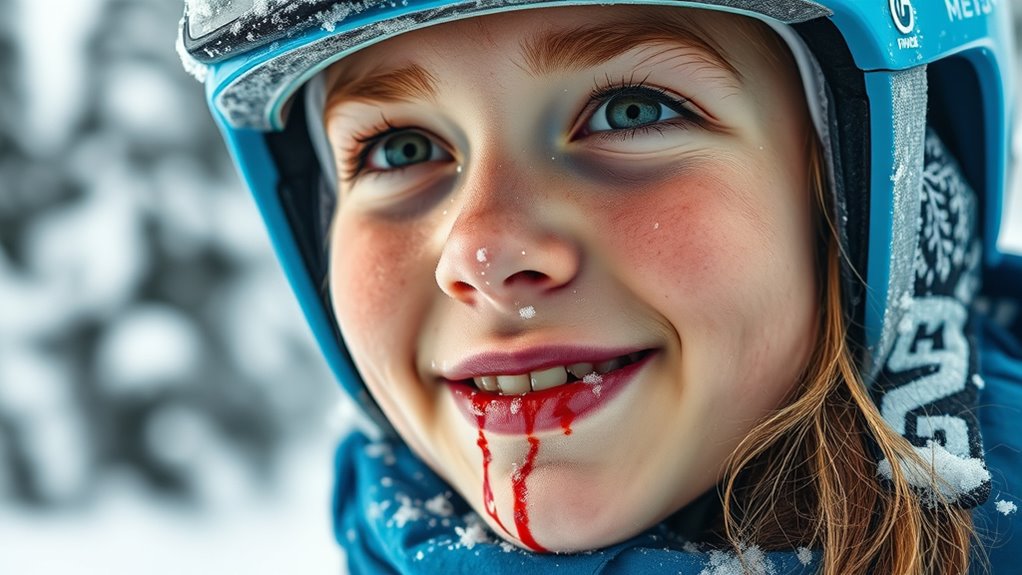

If you sustain a dental injury during winter sports, act quickly by rinsing your mouth gently and locating any knocked-out teeth, keeping them moist in milk or saline. Use a small sterilized container to transport lost teeth and apply pressure with gauze for bleeding. Seek immediate dental care to prevent long-term damage, and consider wearing a custom mouth guard in future activities. Find out more tips to protect yourself and handle injuries efficiently.
Key Takeaways
- Keep a basic emergency dental kit handy, including sterile gauze, a container for knocked-out teeth, and pain relievers.
- Rinse the injured area gently with water and store any knocked-out teeth in milk or saline until professional help is available.
- Seek immediate dental care for chipped, broken, or knocked-out teeth to prevent long-term damage or infections.
- Use a properly fitted mouth guard during winter sports to prevent dental injuries.
- Follow up promptly with a dental professional after an injury to assess damage and ensure proper healing.
Winter sports can be exhilarating, but they also increase your risk of dental injuries. Whether you’re skiing down a slope or snowboarding through fresh powder, protecting your teeth should be a priority. One of the best ways to do this is by wearing a mouth guard. A properly fitted mouth guard absorbs the impact from falls or collisions, markedly reducing the chance of chipped, broken, or knocked-out teeth. Custom mouth guards, made by your dentist, offer the best fit and protection, but if you’re in a pinch, over-the-counter options can serve as a temporary solution. Always ensure your mouth guard is comfortable and stays in place during activity, so you don’t risk it slipping or causing discomfort that might distract you on the slopes.
Wearing a properly fitted mouth guard protects your teeth during winter sports and reduces injury risk.
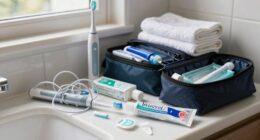
In addition to wearing a mouth guard, it’s wise to keep an emergency dental kit in your gear or car. This kit should contain essentials like sterilized gauze, a small container with a lid, pain relievers, and instructions for dental emergencies. If you suffer a dental injury, like a knocked-out tooth or a severe chip, quick action is vital. Rinse the affected area gently with clean water, and if a tooth gets knocked out, try to find it and keep it moist—placing it in milk or saline solution until you can see a dentist. Using an emergency dental kit helps you manage the situation until professional care is available, reducing the risk of further damage or infection.
Always remember, prevention is your best defense. Besides wearing a mouth guard, avoid risky maneuvers or rough play that could lead to falls or collisions. Be aware of your surroundings and steer clear of overly crowded or dangerous slopes. After a fall or blow to the face, inspect your mouth carefully for damage and seek dental attention promptly if you notice chipped or broken teeth, bleeding gums, or persistent pain. Ignoring dental injuries can lead to long-term problems like infections or tooth loss, which are especially inconvenient during winter sports season when dental clinics might have limited hours.
Keeping a proactive approach by wearing protective gear and having an emergency dental kit on hand ensures you’re prepared for any dental mishap. With these measures, you can focus on enjoying your winter activities while minimizing the risk of lasting dental harm. Remember, quick response and proper protection can make all the difference in preserving your smile during your snowy adventures. Additionally, being aware of the top-rated dental care options available can ensure timely treatment if needed.
Frequently Asked Questions
How Can I Prevent Dental Injuries During Winter Sports?
You can prevent dental injuries during winter sports by always wearing proper protective gear, like a mouthguard, to shield your teeth from impact. Make sure your gear fits well and is designed for your specific sport. Additionally, stay prepared for emergencies by carrying a dental first aid kit and knowing how to handle dental injuries. Being proactive keeps your smile safe while you enjoy winter activities.
What Should I Do if My Tooth Gets Knocked Out?
If your tooth gets knocked out, act quickly. Handle it by the crown, avoid touching the root, and gently rinse it with water if dirty. Try tooth reimplantation by placing it back into the socket if possible, and hold it steady with a clean cloth. Seek emergency dental care immediately to increase chances of saving your tooth. The sooner you get professional help, the better your chances for successful reimplantation.
Are Mouthguards Necessary for All Winter Sports?
You should definitely wear a mouthguard for winter sports, as they’re essential for sports safety. There are different mouthguard types, like custom-fitted, boil-and-bite, and stock options, which offer varying levels of protection. Even if your sport isn’t high-contact, a mouthguard can prevent dental injuries. Investing in the right mouthguard helps protect your teeth and gums, making your winter sports experience safer and more enjoyable.
How Long Should I Wait to See a Dentist After an Injury?
You should see a dentist immediately after any injury, especially if you experience bleeding, pain, or loosened teeth. Even if the injury seems minor, don’t delay—timing for checkup is vital for proper injury severity assessment. Prompt dental visits help prevent complications like infections or permanent damage. If symptoms worsen or new issues arise, seek emergency care right away to guarantee timely treatment and preserve your dental health.
Can Cold Weather Worsen Existing Dental Issues During Sports?
Cold weather can definitely worsen existing dental issues, especially if you have dental sensitivity. When temperatures drop, your teeth may become more sensitive to cold, leading to discomfort or pain. This is because cold weather can cause your teeth to react more intensely to temperature changes. To protect your dental health, avoid exposing sensitive teeth to extreme cold and consult your dentist if you notice increased discomfort during winter.
Conclusion
As you hit the slopes this winter, remember that dental injuries are surprisingly common, with up to 20% of snow sports injuries involving the face. Staying vigilant and wearing proper gear can protect your smile. If an accident happens, quick action can save your teeth and prevent long-term damage. Keep these tips in mind, and enjoy your winter adventures safely—your smile will thank you for it!