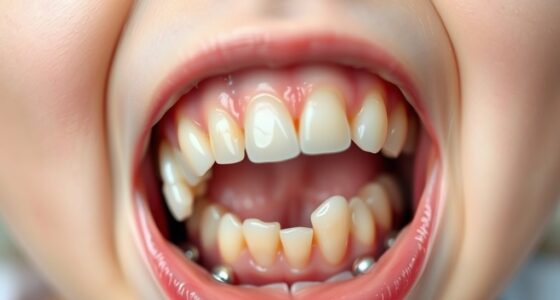
Sugary cough syrups can harm your child’s teeth by weakening enamel and increasing cavities, especially with frequent use or poor oral habits. The sugar feeds bacteria that produce acids, leading to erosion and sensitivity. To safeguard their teeth, consider sugar-free options or give medication during mealtime and ensure proper rinsing or brushing afterward. Staying aware of these risks can help you find better approaches—keep going to discover more helpful tips.
Key Takeaways
- High sugar content in cough syrup can erode enamel and increase cavity risk in children’s teeth.
- Frequent use of sugary syrups feeds oral bacteria, producing acids that damage tooth enamel over time.
- Sugar-free alternatives with xylitol or sorbitol reduce the risk of dental erosion and cavities.
- Rinsing or brushing teeth after medication, preferably 30 minutes later, helps minimize sugar’s harmful effects.
- Regular dental checkups and improved oral hygiene practices are essential for preventing long-term dental damage in kids.
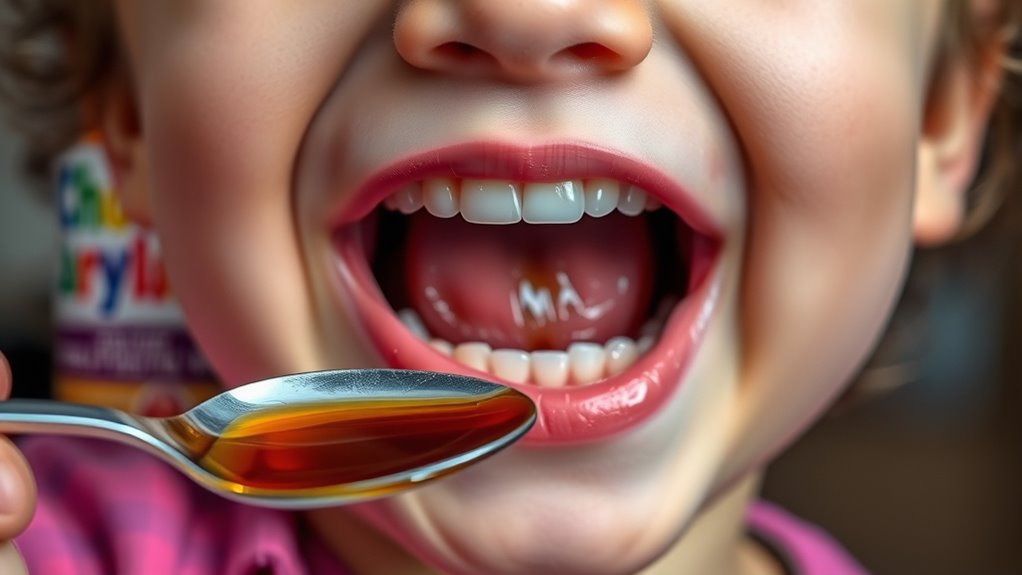
If your child needs cough syrup, you might not realize how its high sugar content can harm their teeth. Many over-the-counter remedies are loaded with sugar, which can lead to dental erosion if given frequently or left on teeth for too long. Dental erosion occurs when acids, including those from sugary medications, wear away the enamel—the protective outer layer of your child’s teeth. This damage makes teeth more vulnerable to cavities, sensitivity, and discoloration. The problem isn’t just the sugar itself but how it interacts with oral bacteria. When sugar stays in the mouth, bacteria feed on it, producing acids that further erode enamel. Over time, repeated exposure to sugary cough syrup can substantially weaken your child’s teeth, especially if they don’t rinse or brush afterward.
Frequent sugary cough syrup can erode enamel and harm your child’s teeth.
Understanding the sugar content in cough syrup is essential. Many formulations contain high amounts of sugar to improve taste, making them more appealing to children but increasing the risk of harm. Even small doses, if taken multiple times daily, can accumulate and cause considerable damage. Consistent exposure to sugary liquids creates an environment where acid attacks happen repeatedly, accelerating dental erosion. If you’re not careful, this can result in persistent tooth sensitivity and increased cavity formation, leading to costly dental treatments later in life. To minimize this risk, it’s vital to be aware of the sugar content in medicinal syrups and to take steps to protect your child’s teeth.
One effective way to reduce the risk is to opt for sugar-free cough remedies whenever possible. Many brands now offer formulations sweetened with non-cariogenic sweeteners like xylitol or sorbitol, which do not contribute to dental erosion. If your child must take a sugary syrup, try to give it during mealtime, as saliva production increases then, helping to dilute and wash away sugars and acids. Encourage your child to rinse their mouth with water afterward or brush their teeth after a suitable waiting period—about 30 minutes—to help neutralize acids and remove residual sugar. Additionally, maintaining good oral hygiene and scheduling regular dental checkups can catch early signs of erosion before they become serious.
Recent advances in AI-driven solutions are also exploring new ways to detect early dental erosion, allowing for more proactive preventative care. Ultimately, being mindful of the sugar content in cough syrup and adopting healthier alternatives can protect your child’s teeth from unnecessary damage. Small changes, like choosing sugar-free options and promoting good oral habits, go a long way in preventing dental erosion and maintaining their oral health. Your awareness and proactive approach can help guarantee that your child’s cough remedies soothe their symptoms without compromising their beautiful smile.
Frequently Asked Questions
Are Sugar-Free Cough Syrups Better for Dental Health?
Yes, sugar-free cough syrups are better for your child’s dental health. They reduce the risk of tooth sensitivity caused by sugar, which feeds bacteria and leads to cavities. By choosing sugar-free options, you support better oral hygiene and help prevent damage to teeth. Always remind your child to rinse their mouth after taking syrup to further protect their teeth from acids and sugars.
How Does Sugar in Cough Syrup Affect Children’s Overall Oral Health?
Sugar in cough syrup can harm your child’s oral health by causing dental erosion and enamel demineralization. When your child takes sugary syrup, the bacteria in their mouth feed on the sugar, producing acids that wear down tooth enamel. Over time, this can lead to cavities and sensitive teeth. To protect their smile, consider sugar-free options or encourage rinsing their mouth after medication.
Can Brushing Immediately After Medicating With Cough Syrup Prevent Cavities?
Think of your child’s teeth as a delicate balance beam, easily tipped by sugar and plaque. Brushing immediately after medicating with cough syrup can help remove residual sugar and reduce dental plaque, preventing cavities. Saliva pH naturally neutralizes acids, but if you brush too soon, it might interfere. Wait about 30 minutes to let saliva do its job, then brush to effectively protect against cavities and maintain healthy teeth.
Are There Flavorings in Cough Syrup That Increase the Risk of Tooth Decay?
Yes, some flavor additives and artificial sweeteners in cough syrup can increase the risk of tooth decay. These substances often contain sugars or sugar-like compounds that feed cavity-causing bacteria in your child’s mouth. Even if they’re sugar-free, artificial sweeteners can still impact oral health. To minimize decay risk, consider choosing medicated options with fewer sweeteners or use a dosing syringe to limit contact with teeth.
What Are the Long-Term Effects of Regular Sugary Cough Syrup Use on Teeth?
Regularly using sugary cough syrup can lead to long-term damage to your child’s teeth. The sugar contributes to bacterial growth, which produces acids that erode enamel, increasing the risk of cavities and sensitivity. Over time, this enamel erosion weakens teeth, making them more prone to decay. To protect their dental health, consider alternatives like sugar-free options or consult your dentist for advice on reducing sugar exposure.
Conclusion
Just like a steady drip can wear down stone, sugary cough syrup slowly chips away at your child’s teeth. Imagine brushing away sugar’s damage like scrubbing mud off a bike—you can protect their smile with good alternatives. When your little one’s cough persists, choosing sugar-free options or consulting a dentist can save their teeth from a silent erosion. Remember, small changes today keep their bright smile shining tomorrow.