Exposing your teeth to cold water can cause immediate sensitivity, making you feel sharp pain or discomfort, especially if your enamel is worn or you have cracks. While short exposure might temporarily boost blood flow and could strengthen gums and enamel over time, prolonged or repeated cold contact risks increasing sensitivity and damaging vulnerable teeth. To learn how to protect your oral health while trying cold water challenges, keep exploring these insights.
Key Takeaways
- Cold water can cause temporary discomfort or sensitivity, especially in teeth with existing vulnerabilities like worn enamel.
- Brief cold exposure may stimulate blood flow and nerve activity, potentially offering minor oral health benefits.
- Overexposure to cold water risks worsening dental issues such as sensitivity, enamel erosion, or existing decay.
- Proper oral hygiene and dental checkups are essential to prevent cold-induced damage and manage sensitivity.
- Moderation and monitoring are key; cold water might invigorate oral tissues but needs careful management to avoid harm.
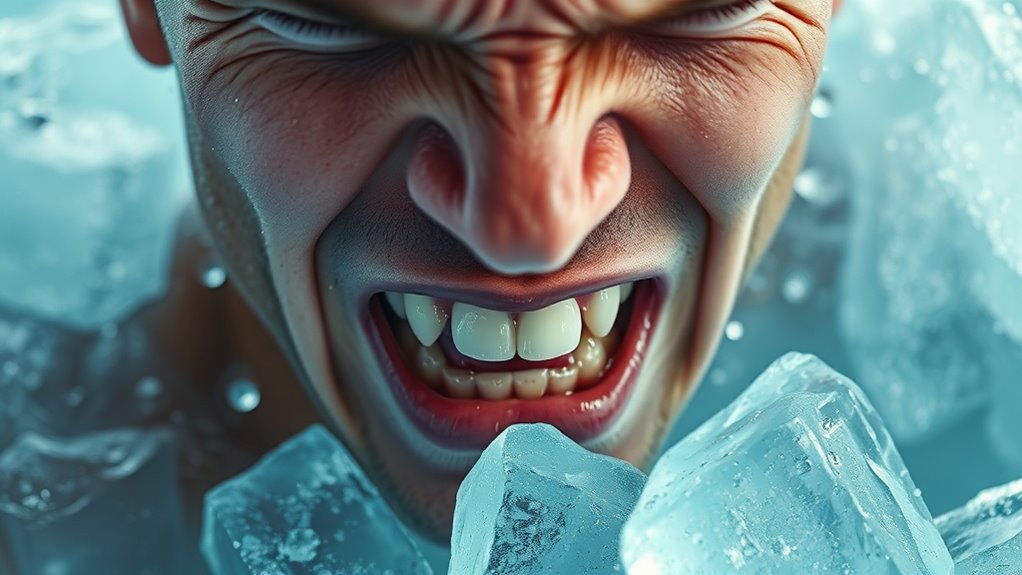
Taking on a cold water challenge might seem like just a test of endurance, but it can also have surprising effects on your teeth. When you plunge into icy water, you might notice an immediate jolt of shock or discomfort, especially if you have dental sensitivity. Cold temperatures can cause your teeth to react sharply, revealing underlying issues with your oral health. For some, this sensation is fleeting, but for others, it can be quite painful, highlighting existing vulnerabilities like exposed dentin or tiny cracks. The impact on your dental sensitivity depends largely on your current oral health and how your teeth respond to sudden temperature changes.
Cold water exposure can influence your dental health in different ways. On one hand, brief, controlled exposure might temporarily strengthen your teeth by promoting increased blood flow in the gums and stimulating the nerves. Some believe that exposure to cold can help strengthen the enamel, making teeth more resilient over time. However, if you have pre-existing dental issues such as worn enamel, receding gums, or dental decay, the cold might exacerbate these problems rather than improve them. Prolonged or repeated exposure can lead to heightened dental sensitivity, making everyday activities like eating or drinking hot, cold, or sweet foods uncomfortable. This discomfort is a clear sign that your oral health may need attention.
Brief cold exposure may strengthen teeth but can worsen sensitivity if you have existing dental issues.
It’s essential to to contemplate how the cold water challenge affects your overall oral health. If you notice increased sensitivity or discomfort after participating in the challenge, it could be a sign that your teeth need better protection. Using desensitizing toothpaste or consulting your dentist can help manage these symptoms. Regular dental checkups are crucial, especially if you plan to engage in cold exposure frequently. A professional can assess your oral health, identify issues like enamel erosion or gum recession, and recommend suitable treatments to prevent further damage. Remember, while some believe cold exposure might have benefits, overdoing it without proper care could harm your teeth more than it helps.
In the end, the impact of the cold water challenge on your teeth hinges on your current dental condition and how you approach it. If you decide to take the plunge, do so mindfully—monitor how your teeth react and prioritize protecting your oral health. Proper hygiene, regular dental visits, and awareness of your sensitivity levels are key to ensuring that this challenge doesn’t turn into a risk for your teeth. While cold water can invigorate your senses, it’s imperative to respect your teeth’s limits and maintain good oral health practices to keep your smile strong and healthy.
Frequently Asked Questions
Can Cold Water Exposure Cause Tooth Sensitivity Over Time?
Yes, cold water exposure can cause tooth sensitivity over time. When you frequently expose your teeth to cold temperatures, thermal shock can occur, leading to tiny cracks or nerve irritation. This repeated stress can make your teeth more sensitive to hot, cold, or sweet foods and drinks. To protect your teeth, avoid prolonged cold exposure and consider using desensitizing toothpaste or consulting your dentist for personalized advice.
Does Temperature Affect the Enamel’s Strength During the Challenge?
Temperature considerably impacts enamel resilience during cold water exposure. When you immerse your teeth in cold water, the thermal conductivity causes rapid temperature changes, which can weaken enamel over time. Sudden temperature shifts stress the enamel’s structure, reducing its strength and making it more susceptible to damage. To protect your teeth, avoid prolonged exposure to extreme cold, allowing your enamel to maintain its integrity and resilience against thermal fluctuations.
Are There Specific Dental Conditions That Worsen With Cold Water?
You might notice that cold water worsens dental erosion or pulp inflammation if you already have sensitive teeth or existing dental issues. The sudden temperature change can aggravate these conditions, causing pain or further damage. Even if you think you’re resilient, cold water can intensify discomfort or inflammation, so it’s wise to consult your dentist before participating in cold water challenges, especially if you have known dental problems.
How Does Cold Water Impact Dental Restorations Like Fillings or Crowns?
Cold water can cause dental restorations like fillings or crowns to contract slightly, which might lead to discomfort or even cracks over time. It can also weaken the bond in dental bonding procedures, reducing filling durability. You should be cautious with very cold drinks or water, especially if you have restorations, to prevent sensitivity or damage. Regular dental checkups help make sure your restorations stay strong and effective.
Is There a Safe Way to Participate Without Damaging Teeth?
Like walking a tightrope, you can enjoy ice water safely if you prioritize dental safety. To avoid damaging your teeth, don’t dunk your head or hold ice water in your mouth for too long. Instead, take quick sips and avoid extreme cold exposure. If you have dental restorations, consult your dentist beforehand. Moderation and caution help you participate without risking harm to your teeth.
Conclusion
As you face the cold water challenge, remember the story of Icarus—pushing limits can lead to unintended damage. While a quick dip might invigorate, prolonged exposure risks harm to your teeth’s delicate enamel. Think of your smile as a precious gem; exposing it to extreme cold without caution could tarnish its shine. Stay mindful, and choose to strengthen your teeth safely, rather than risking a fall like Icarus chasing the thrill.