Both candy corn and caramel pose risks to your teeth, but they affect them differently. Candy corn dissolves quickly, reducing contact time and limiting damage, though its high sugar content can still cause cavities if you don’t brush afterward. Caramel sticks and takes longer to chew, which prolongs sugar exposure and encourages plaque buildup, making it potentially worse for your enamel. To understand how each impacts your dental health and what you can do to protect your smile, keep exploring.
Key Takeaways
- Caramel’s sticky texture causes longer adherence to teeth, increasing cavity risk; candy corn dissolves quickly, reducing contact time.
- Candy corn’s high sugar content promotes rapid bacterial growth, but its quick melting limits prolonged enamel exposure.
- Caramel’s prolonged contact fosters plaque buildup and extended acid production, leading to greater enamel erosion.
- Eating candy corn rapidly minimizes sugar exposure duration, while longer chewing with caramel heightens decay potential.
- Maintaining good oral hygiene and moderation is essential to minimize the dental risks posed by both treats.
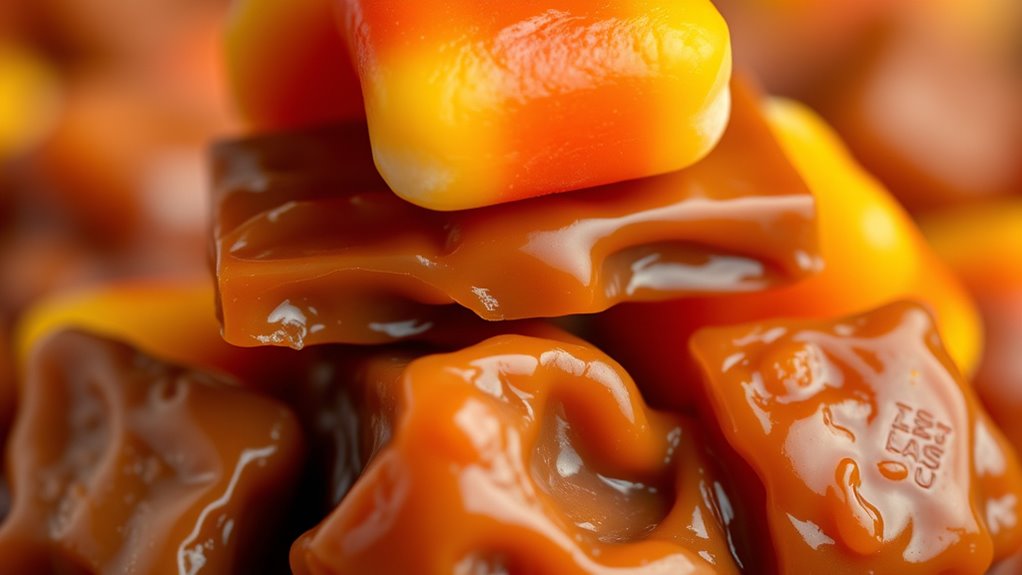
When it comes to classic Halloween treats, candy corn and caramel often steal the spotlight, each offering a distinct flavor and texture that appeal to different sweet tooths. However, when it comes to your dental health, these sweets can have very different impacts. Candy corn is primarily made of sugar, corn syrup, and wax, which means it’s high in sugar content but tends to dissolve quickly in your mouth. Caramel, on the other hand, is rich, chewy, and sticky, which means it can cling to your teeth longer, increasing the risk of dental decay. Both treats pose problems, but in different ways.
Candy corn’s high sugar content means it can cause a rapid spike in the bacteria that produce acids in your mouth. When you eat candy corn, the sugar feeds these bacteria, leading to acid production that erodes enamel. Because candy corn melts fairly quickly, it doesn’t stay on your teeth long enough to do significant damage, but the quick sugar rush can still contribute to cavity formation if you’re not careful. If you indulge without brushing soon after, the acids and sugar residues remain, increasing your risk of decay.
Candy corn’s quick melting reduces damage, but sugar still risks cavities if not brushed away promptly.
Caramel’s main problem lies in its sticky, chewy texture. When you bite into a piece of caramel, it often sticks to your teeth, especially in hard-to-reach areas. This prolonged contact means the sugar and sticky residue stay on your teeth longer, providing a perfect environment for bacteria to thrive. Over time, this can lead to the formation of plaque, which accelerates dental decay. If you frequently snack on caramel and neglect proper oral hygiene, the prolonged sugar exposure can cause cavities and weaken your enamel more than a quick, dissolving treat like candy corn.
Another aspect to contemplate is how these treats are consumed. Candy corn is usually eaten quickly, which limits the duration of sugar contact with your teeth. Caramel, however, often takes longer to chew and dissolve, giving bacteria more time to act. This means that even if both treats have similar sugar content, caramel generally poses a bigger risk for dental decay due to its sticky nature and longer exposure time. If you’re concerned about your oral health, it’s best to enjoy these treats in moderation and to brush thoroughly afterward. Drinking water to rinse your mouth can also help wash away residual sugars and reduce the risk of decay.
Frequently Asked Questions
Which Candy Dissolves Faster in Saliva?
Candy corn dissolves faster in saliva because it has a lower sugar concentration and melts quickly due to its waxy texture. Your saliva’s pH level also plays a role; a more neutral pH accelerates dissolution. As you chew, saliva interacts with the candy, breaking down sugars faster. So, candy corn’s composition and your saliva’s pH make it dissolve more rapidly than caramel.
Are Sugar-Free Options Less Harmful?
You’re on the right track thinking sugar-free options are better, but they’re not a silver bullet. While artificial sweeteners reduce the risk of dental erosion compared to sugar, they can still harm your teeth if consumed excessively. Remember, no candy is completely harmless. Moderation is key, and maintaining good oral hygiene helps keep your smile healthy, even when indulging in sugar-free treats.
How Does Sticky Texture Affect Dental Decay?
Sticky textures increase your cavity risk because they leave a sticky residue on your teeth, making it easier for bacteria to produce acids that damage enamel. When you eat sticky candies, the residue clings to your teeth longer, giving bacteria more time to create decay. To protect your dental health, brush thoroughly after consuming sticky treats, and try to limit their frequency to reduce cavity risk.
Can Eating Candy With Meals Reduce Damage?
Eating candy with meals can help reduce damage because your saliva production increases, which helps neutralize acids and wash away sugar and debris. Choose candies with lower sugar content and acidity levels to minimize tooth decay. By doing so, you lessen the risk of enamel erosion and cavities. Just remember, moderation is key, and maintaining good oral hygiene after indulging is essential for protecting your teeth.
What Are Healthy Alternatives to Traditional Candies?
You can choose healthier options like natural sweeteners and fruit-based treats instead of traditional candies. Opt for dried fruit, fresh berries, or fruit leather to satisfy your sweet tooth without the added sugars and acids that harm your teeth. These alternatives boost your health, reduce cavity risk, and still let you enjoy a sweet flavor naturally. Incorporate them into your snacks for a smarter, tooth-friendly choice.
Conclusion
So, now you see it—candy corn and caramel aren’t just sweet treats; they’re tiny monsters attacking your teeth! One’s like a relentless sugar tsunami, while the other’s a sticky, cavity-causing villain. If you want your smile to survive this sugar war, choose wisely—because ignoring these sugary foes could turn your perfect teeth into a battlefield of cavities and decay. Protect your smile before it’s too late—your teeth deserve better than this sugary nightmare!