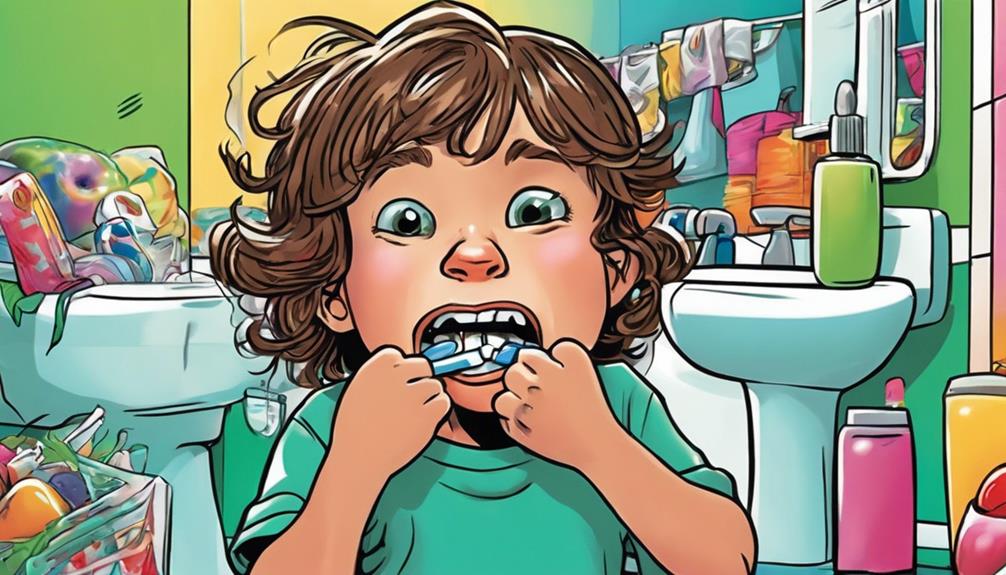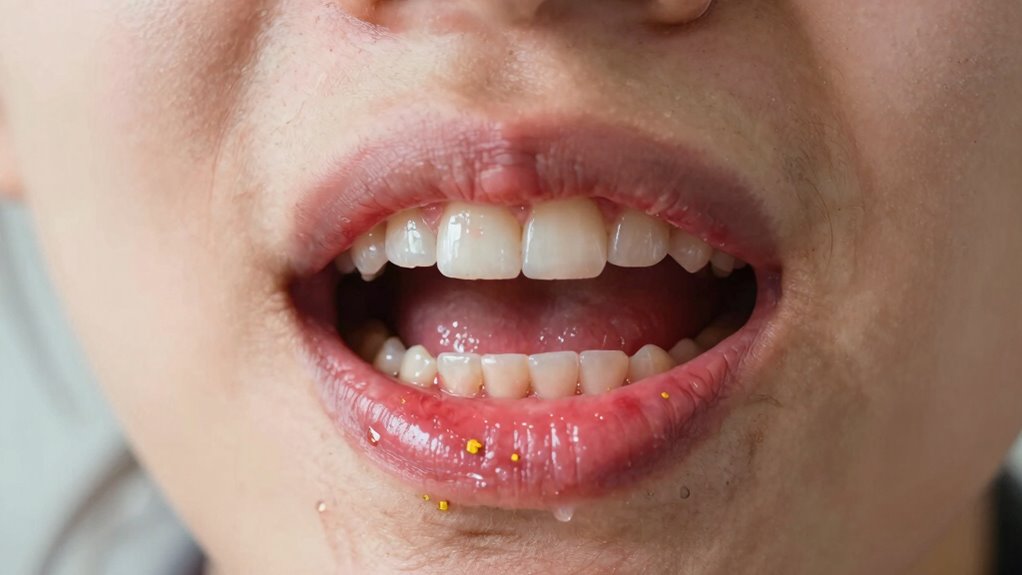

Yes, seasonal allergies can make your gums more irritated by triggering inflammation and causing dryness in your mouth. When you’re exposed to allergens like pollen, your body releases histamines, leading to swollen and tender gums. Nasal congestion may cause you to breathe through your mouth, reducing saliva and increasing irritation. If you want to understand how allergies affect your oral health and discover tips for relief, keep exploring this important connection.

Turn the school run and nap time into listening time
- Thousands of audiobooks, podcasts and originals
- Listen on your phone, tablet or Echo — also offline
- Cancel anytime
Key Takeaways
- Pollen allergies trigger immune responses that cause gum inflammation and tenderness.
- Histamines released during allergic reactions increase gum redness and swelling.
- Mouth breathing from nasal congestion causes dry mouth, worsening gum irritation.
- Allergic inflammation can heighten sensitivity, making gums more prone to bleeding.
- Managing allergies and maintaining oral hygiene can reduce gum irritation during allergy season.
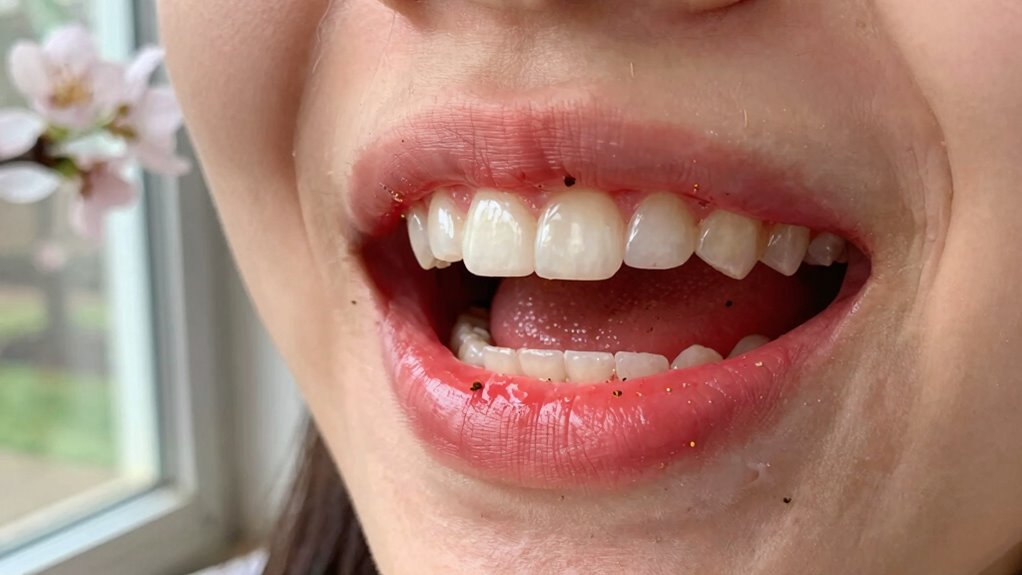
As seasonal allergies ramp up, many people notice more than just sneezing and itchy eyes—they also experience gum irritation that can be uncomfortable and frustrating. If you suffer from pollen allergies, you might find that your gums become more sensitive or inflamed during allergy season. This isn’t just a coincidence; the connection between allergies and oral health is more intertwined than you might think. When your immune system reacts to pollen, it triggers a cascade of responses that can affect your entire body, including your gums. It’s common to notice oral sensitivity, which makes eating, brushing, or even talking a bit more painful or uncomfortable.
Pollen allergies lead to the release of histamines, which are chemicals your body produces to fight off what it perceives as threats. These histamines cause inflammation not only in your nasal passages but also in other tissues, including your gums. When your immune system overreacts, it can increase blood flow and swelling in the soft tissues of your mouth, leading to gum redness, tenderness, or even swelling. This inflammation can make your gums feel more tender and prone to bleeding, especially when you brush or floss. If you already have some gum issues, allergy season can exacerbate the problem, making your oral health feel more fragile. Additionally, increased inflammation can sometimes make existing gum disease worse.
Your oral sensitivity might also be heightened because of increased mucus production and nasal congestion. When you breathe through your mouth more often, especially during allergy flare-ups, your mouth tends to dry out. Saliva plays a crucial role in protecting your gums and maintaining oral health, so a dry mouth can lead to more irritation and discomfort. This dryness, combined with inflamed gums from allergic responses, creates a cycle of discomfort that’s tough to break. dry mouth is a common symptom during allergy season, and it can significantly contribute to oral health issues. You may notice that your gums are more reactive to everyday stimuli, like hot or cold foods, or even your own toothbrush. Recognizing the impact of allergies on oral health can help you take steps to prevent further irritation and maintain your oral hygiene more effectively. Furthermore, managing allergy symptoms effectively can reduce the severity of oral discomfort during this period.
Understanding this link can help you manage your symptoms better. Using antihistamines can reduce overall allergic reactions, including oral sensitivity. Good oral hygiene becomes even more critical during allergy season, so brushing gently and flossing carefully helps prevent additional irritation or infection. Drinking plenty of water keeps your mouth moist, reducing dryness-induced discomfort. Maintaining oral health is essential, especially since allergies can make gums more prone to issues. If gum irritation persists or worsens, consulting your dentist or allergist can help determine whether your symptoms are purely allergy-related or if an underlying gum condition is contributing. Recognizing that pollen allergies can influence your oral health empowers you to take proactive steps, easing the discomfort and maintaining better overall well-being during allergy season.
As an affiliate, we earn on qualifying purchases.
Frequently Asked Questions
Can Seasonal Allergies Cause Permanent Gum Damage?
Seasonal allergies typically don’t cause permanent gum damage, but allergy triggers can lead to gum sensitivity and irritation. When your immune system reacts to allergens, it increases inflammation, which may temporarily affect your gums. If you notice persistent discomfort or swelling, see a dentist to rule out other issues. Managing allergy triggers and maintaining good oral hygiene can help reduce gum irritation and prevent long-term damage.
Are Certain Allergy Medications Better for Gum Health?
Certain allergy medications are better for gum health because they have fewer side effects that irritate your gums. Antihistamines like loratadine or cetirizine tend to cause less dryness and inflammation, making them gentler on your gums. Always consider the allergy medication effects on oral tissues, and consult your dentist or doctor to choose options that support your gum health while effectively managing allergy symptoms. Your smile deserves the best care!
How Can I Differentiate Between Allergy-Related Gum Irritation and Infection?
You can differentiate allergy-related gum irritation from infection by noting allergy symptoms like sneezing, runny nose, and itchy eyes that accompany gum inflammation. Allergy-related irritation often causes mild, diffuse redness and swelling, whereas infection typically leads to more severe pain, pus, or persistent swelling. If your gums remain swollen or painful despite allergy treatment, or if you notice pus or bleeding, it’s best to consult a dentist or healthcare provider for proper diagnosis.
Do Seasonal Allergies Affect Dental Procedures or Treatments?
Like a knight facing a dragon, seasonal allergies can complicate dental treatments. Allergy symptoms, such as swelling and congestion, may increase dental sensitivity and make procedures more uncomfortable. You might notice heightened gum irritation or dryness, which can affect healing. Inform your dentist about your allergies beforehand, so they can adjust anesthesia or medication, ensuring your treatment goes smoothly despite the seasonal battles happening inside your body.
Can Diet Changes Reduce Allergy-Induced Gum Irritation?
Yes, diet modifications can help reduce allergy-induced gum irritation. By avoiding common allergy triggers like dairy, nuts, or processed foods, you can decrease your body’s allergic response. Incorporate anti-inflammatory foods like fruits, vegetables, and omega-3-rich fish to soothe your gums. Staying hydrated and limiting sugary foods also support oral health, making it easier to manage irritation caused by seasonal allergies.
Conclusion
Think of your gums as a delicate garden, vulnerable to the storms of seasonal allergies. When allergens arrive, they stir up irritation—like a sudden gust that shakes the fragile blooms. But remember, with proper care and attention, you can shield your garden from these tempests. Keep your oral health in check, and let your gums stand resilient, blossoming anew each season—proof that even amidst chaos, beauty can flourish.
Fall Picks
fall essentials
As an affiliate, we earn on qualifying purchases.