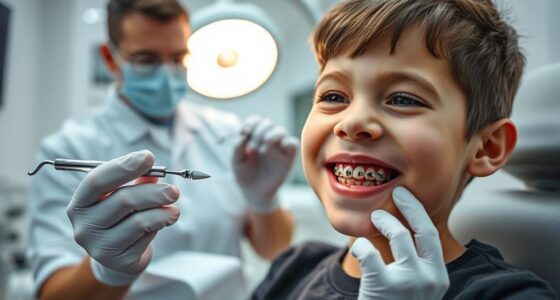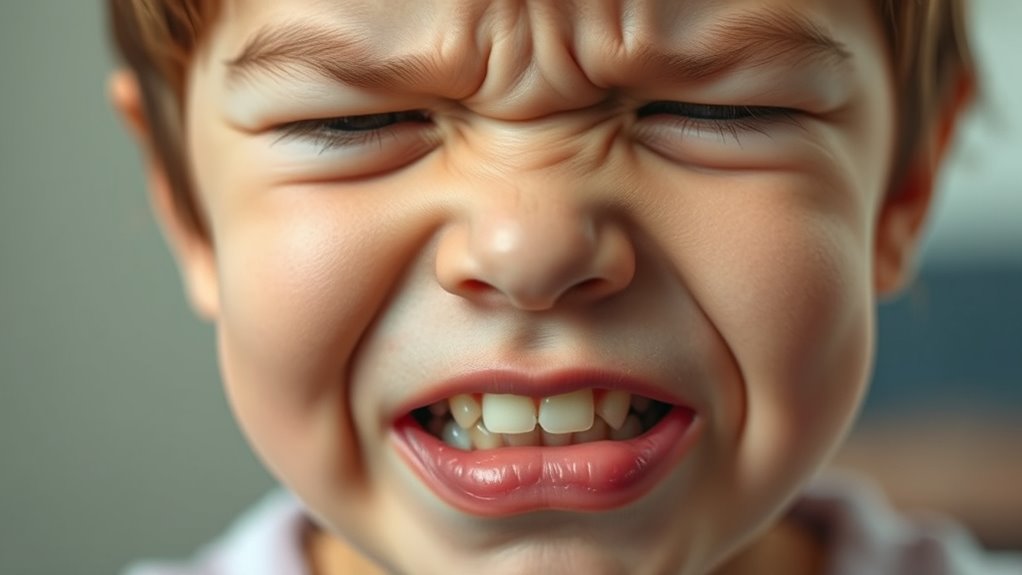
During exam stress, you might notice your child grinding their teeth or clenching their jaw even when they’re awake. They may wake up with morning jaw pain or headaches, and you could see signs like flattened or chipped molars, worn edges, or shiny, translucent spots on their teeth. These signs can be subtle at first but tend to worsen over time. Keep an eye out for these indicators so you can act early and protect their oral health.
Key Takeaways
- Observe for teeth grinding or jaw clenching, especially during stressful exam periods.
- Look for dental wear patterns like flattened or chipped molars and uneven tooth edges.
- Notice if your child reports morning jaw pain, headaches, or shows signs of restlessness during sleep.
- Monitor for behavioral cues such as increased teeth grinding during stressful times or exam periods.
- Schedule regular dental checkups to detect early signs of wear and discuss stress management or protective measures.

If you’re noticing your child’s teeth grinding or jaw clenching, it’s important to recognize the signs of bruxism early. During periods of exam stress, children may develop behaviors that aren’t immediately obvious but can be identified through specific signs. Behavioral indicators are often subtle but telltale signs that your child might be experiencing bruxism. For instance, you might observe your child grinding their teeth during sleep or even while awake, especially when they’re focused or anxious. They might also be involuntarily clenching their jaw or biting their cheek or tongue. Restlessness during sleep, frequent complaints about jaw pain, or headaches in the morning can also suggest bruxism. Sometimes, kids might even be unaware of their grinding, so paying attention to these behavioral cues becomes important. Recognizing dental wear patterns provides more concrete evidence of bruxism. Over time, habitual grinding and clenching can cause noticeable changes to your child’s teeth. You might see flattened or chipped tooth surfaces, especially on the molars and premolars. These wear patterns can result in shortened teeth or uneven edges, which are clear indicators of ongoing grinding. In some cases, the enamel may appear worn down, exposing the softer dentin underneath, making the teeth look shiny or translucent at the edges. Such dental wear patterns are often symmetrical, affecting both sides of the mouth equally. These signs might be subtle initially, but with persistent bruxism, they become more apparent. It’s crucial to regularly check your child’s mouth or have a dentist monitor their dental health during routine visits. During exam stress, these behaviors and dental changes can intensify. Stress and anxiety often heighten the frequency or severity of bruxism episodes. Your child might not fully realize they’re grinding their teeth, but these signs can be easily missed without close observation. Recognizing behavioral indicators and dental wear patterns early can help you intervene before the issue worsens. If you notice persistent jaw pain, headaches, or visible dental wear, it’s wise to consult a pediatric dentist or healthcare professional. They can recommend appropriate treatment options, such as mouthguards or stress management techniques, to protect your child’s teeth and reduce discomfort. By staying vigilant and attentive to these signs, you can help ensure your child’s oral health stays intact during stressful times like exams.
Frequently Asked Questions
Can Bruxism Cause Long-Term Dental Damage in Children?
Yes, bruxism can cause long-term dental damage in children. When kids grind their teeth, it wears down the dental enamel, weakening their teeth over time. It can also affect jaw alignment, leading to discomfort and potential bite issues. If you notice signs of grinding, it’s important to consult a dentist promptly to prevent further damage and make sure your child’s dental health stays protected.
Are There Specific Age Groups More Prone to Stress-Related Bruxism?
You might notice that children aged 7 to 12 are more prone to stress-related bruxism, as studies show this age group experiences heightened academic pressures. Age-related tendencies and developmental factors play a role, with kids in this stage often facing increased anxiety and emotional changes. During exam stress, these factors can trigger teeth grinding, making it important for parents to recognize signs early and seek preventive care.
How Can Parents Differentiate Between Normal Teeth Grinding and Problematic Bruxism?
You can tell the difference between normal teeth grinding and problematic bruxism by observing stress indicators and the frequency of teeth grinding. If your child exhibits persistent teeth grinding, especially during sleep, along with other stress signs like anxiety or jaw pain, it’s likely problematic. Normal grinding happens occasionally, but ongoing, forceful grinding may cause dental damage or discomfort, signaling you should consult a dentist for further evaluation.
What Are Effective Strategies to Reduce Exam-Related Stress in Kids?
To reduce exam-related stress, you should encourage your child to practice mindfulness techniques like deep breathing or meditation to calm their mind. Help them develop effective time management skills, creating a study schedule that prevents last-minute cramming. Additionally, guarantee they get enough sleep, eat healthy, and take regular breaks. These strategies can lower anxiety, promote focus, and make exam periods more manageable for your child.
When Should Parents Seek Professional Dental or Medical Advice for Bruxism?
Think of your child’s teeth as delicate dice—if you notice frequent grinding or jaw pain during exam stress, it’s time to roll the dice for professional assessment. You should seek dental intervention or medical advice promptly if symptoms persist, worsen, or cause discomfort. A timely professional assessment helps identify underlying issues and guarantees proper treatment, safeguarding your child’s oral health and preventing potential long-term damage.
Conclusion
So, next time your kid is under exam stress, watch closely—bruxism might be trying to turn their teeth into tiny, unbreakable steel traps! Ignoring these signs is like inviting a secret army of tooth warriors to wage war in their mouth. Catch it early, or you could be looking at a future filled with endless dental battles and tooth fairy emergencies. Stay alert, stay proactive—your kid’s smile depends on it!